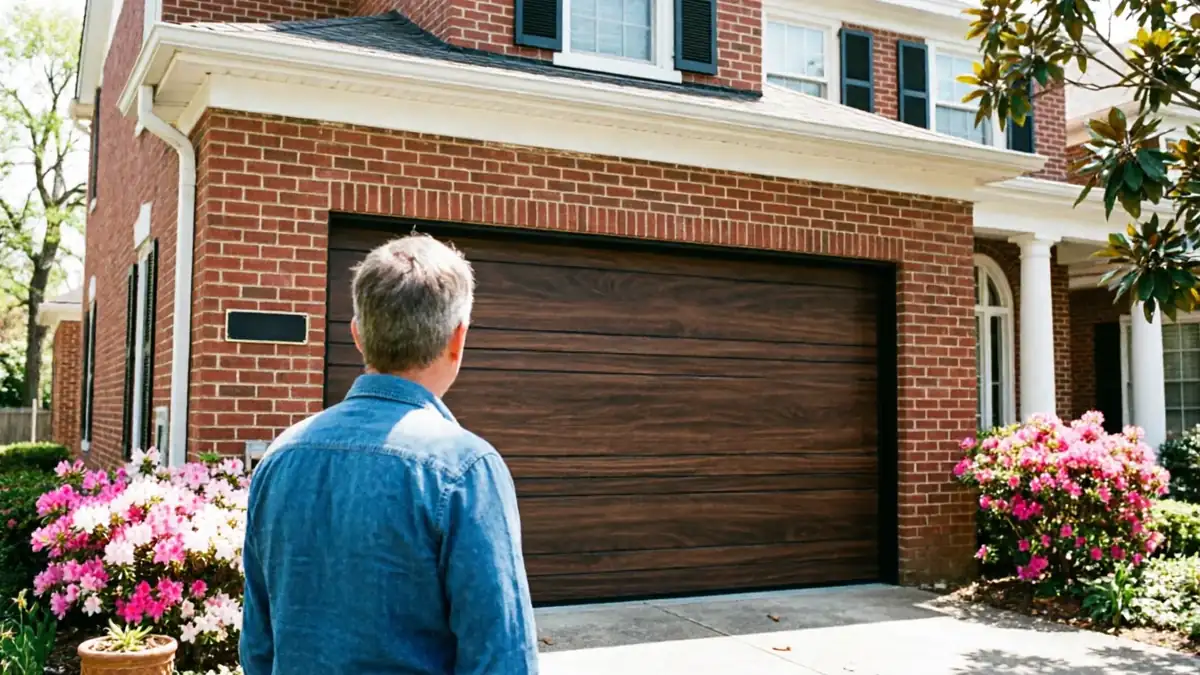
Checking It Yourself
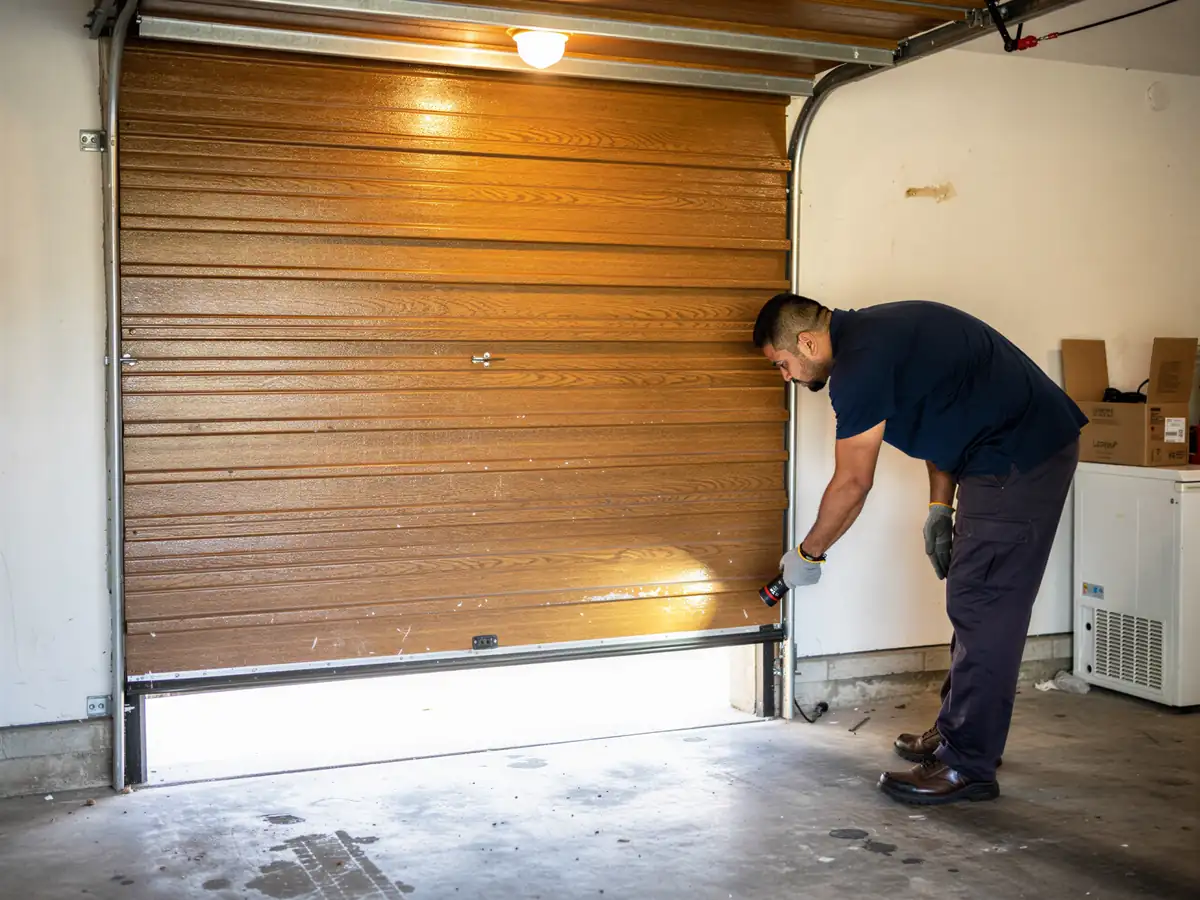
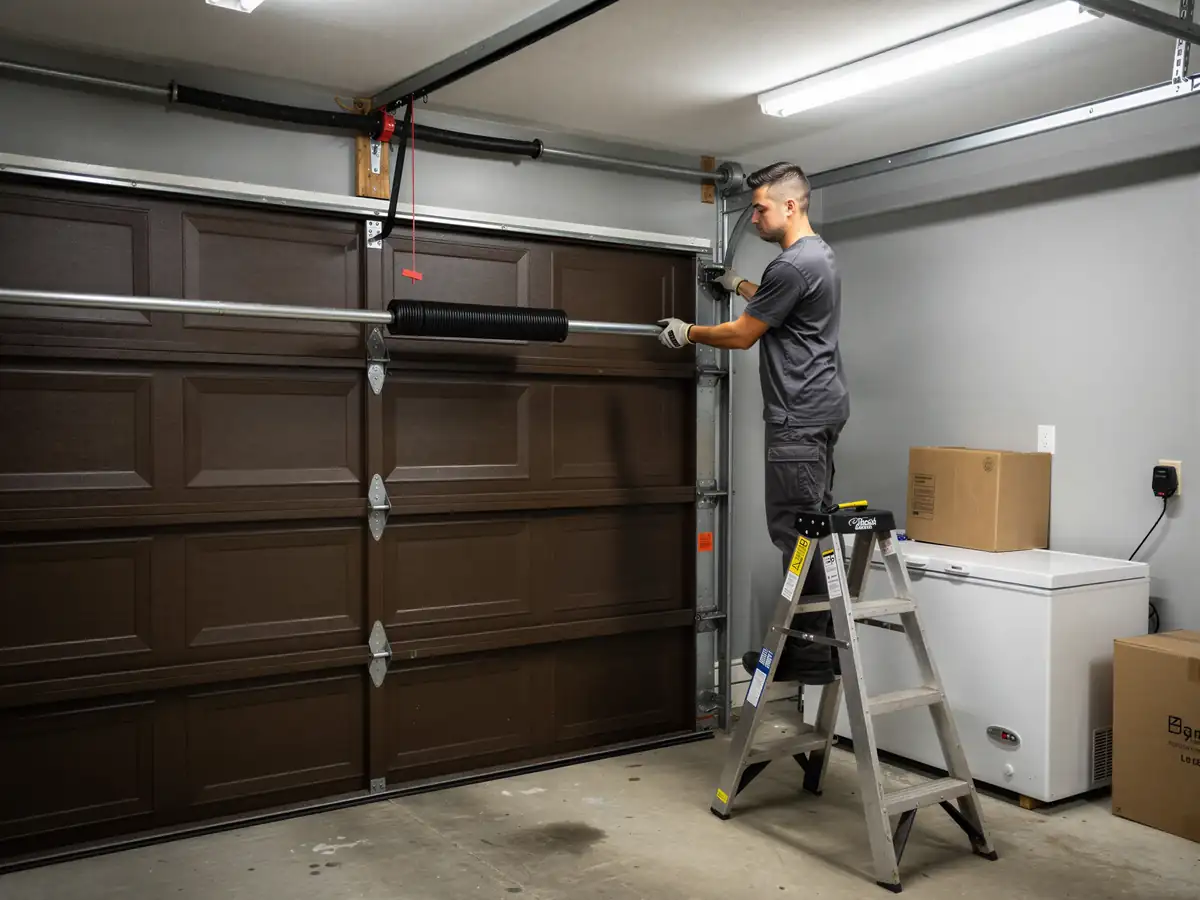
Before you call anyone, pull the door's release and lift it by hand. If it's heavy, uneven, or drops fast, the springs are tired - that's not a buy-a-new-door problem by itself, but it tells you a lot about what you're dealing with.
Housing in the Greer service area went up anywhere from 1938 to 2013, with the median build year sitting around 1983. If your house falls near that median, chances are good the door is original or close to it, meaning the torsion hardware and track were sized for a lighter door than anything sold today. Look at the bottom panel seam for rust bubbling through the paint - on steel doors from the 1980s and 90s this is one of the first places it shows, especially where the weather seal has worn thin.
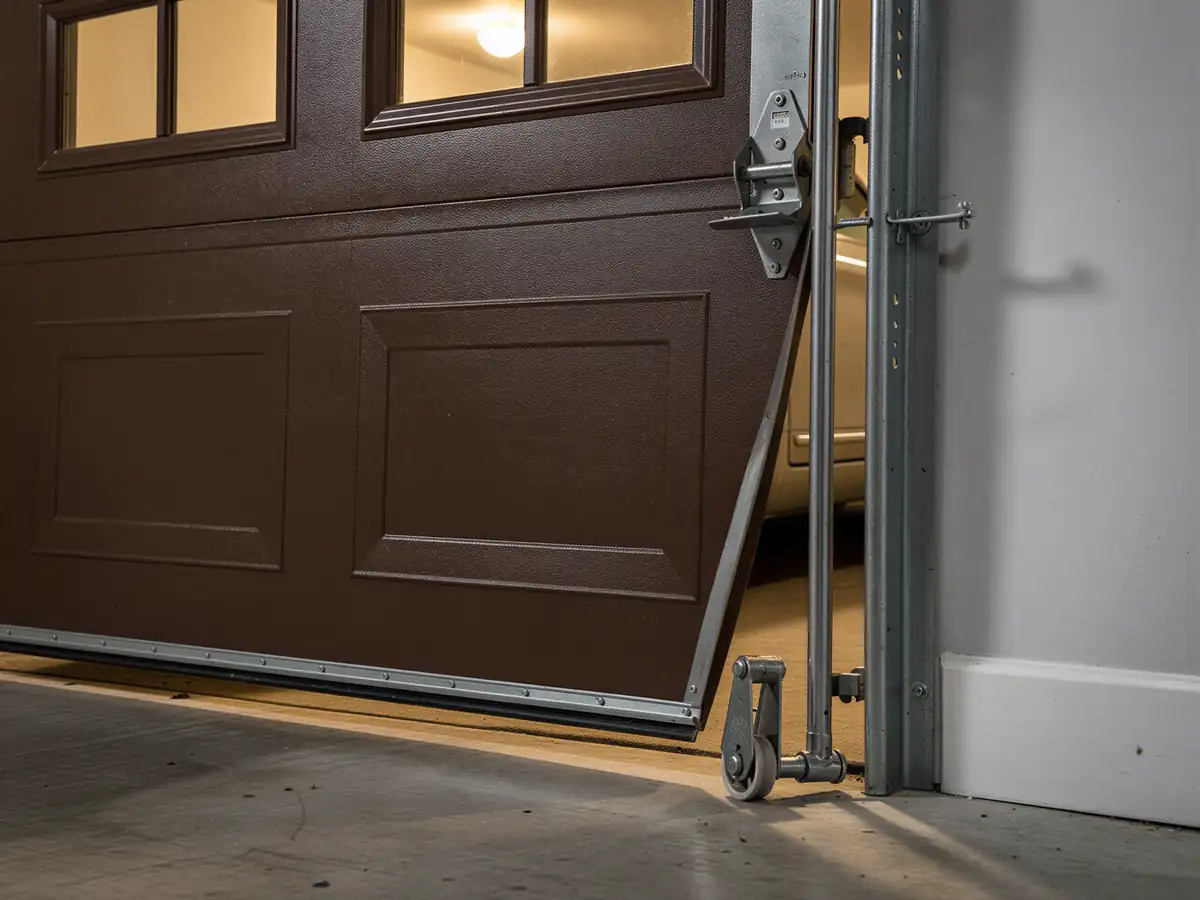
Check the rollers next. Nylon rollers on older doors often crack at the stem before they ever look worn on the wheel. If you're hearing a grinding pop on the way up, that's usually it.
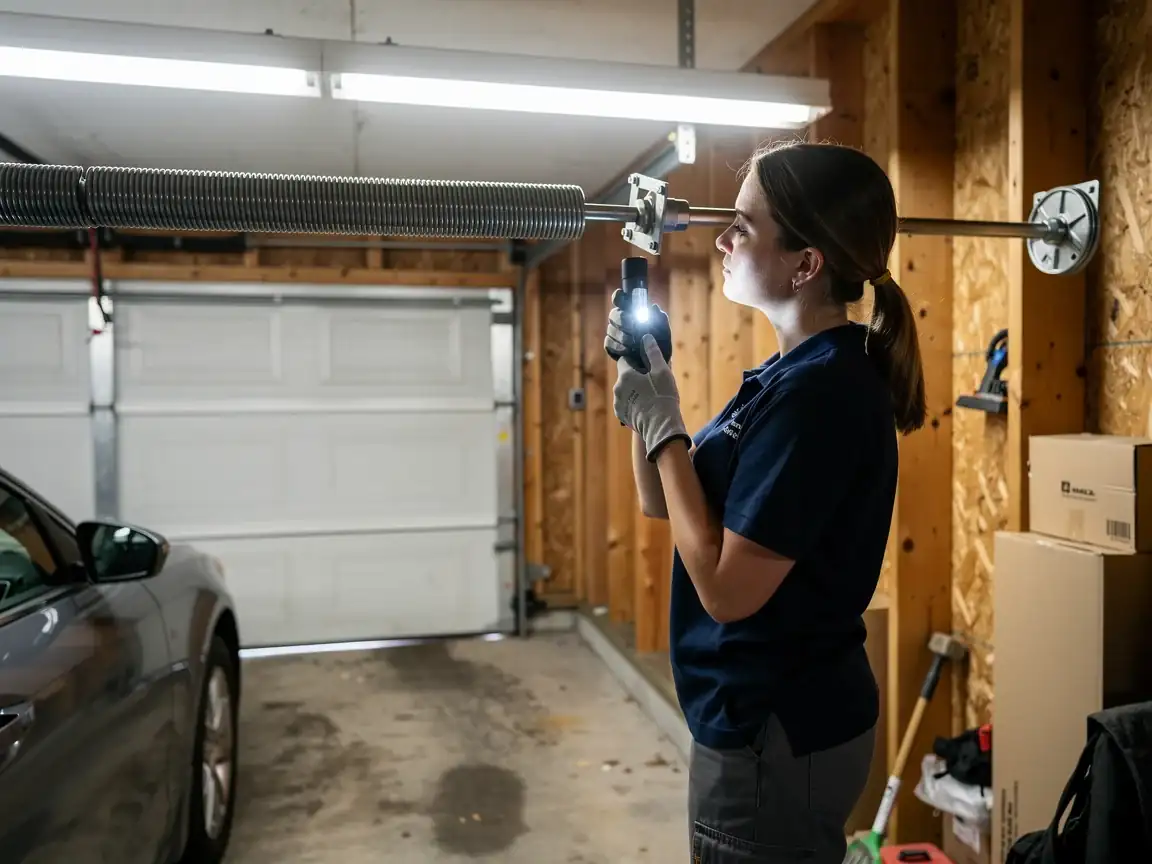
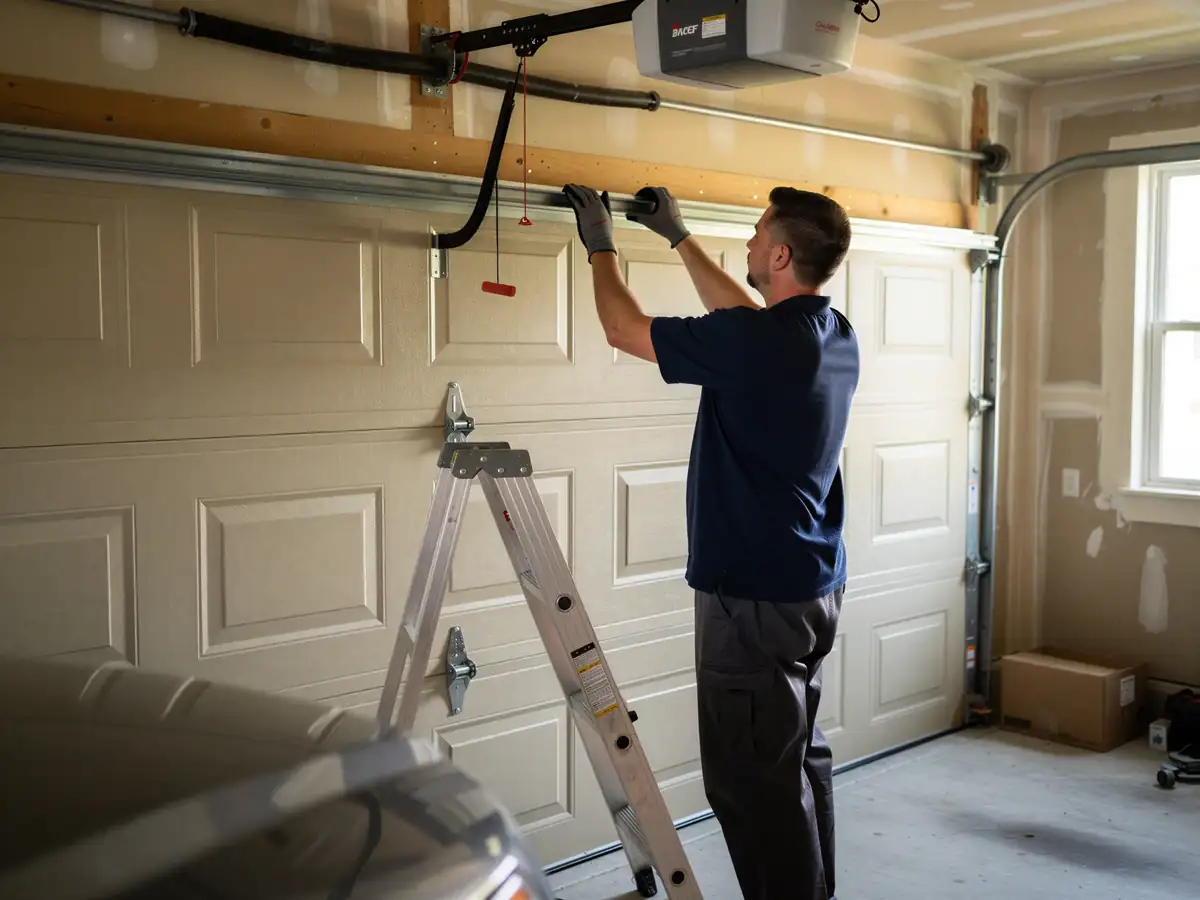
One honest limitation: a visual check from the garage floor won't tell you whether the torsion spring is wound to the right cycle count for a heavier insulated replacement door. That's a measurement job, not a guess job, and getting it wrong is how springs fail hard.
If the door is original to a house built well before 1983, budget for a full hardware swap, not just a panel replacement.
How Local Conditions Play In
Greer sits in a cold-moderate climate band
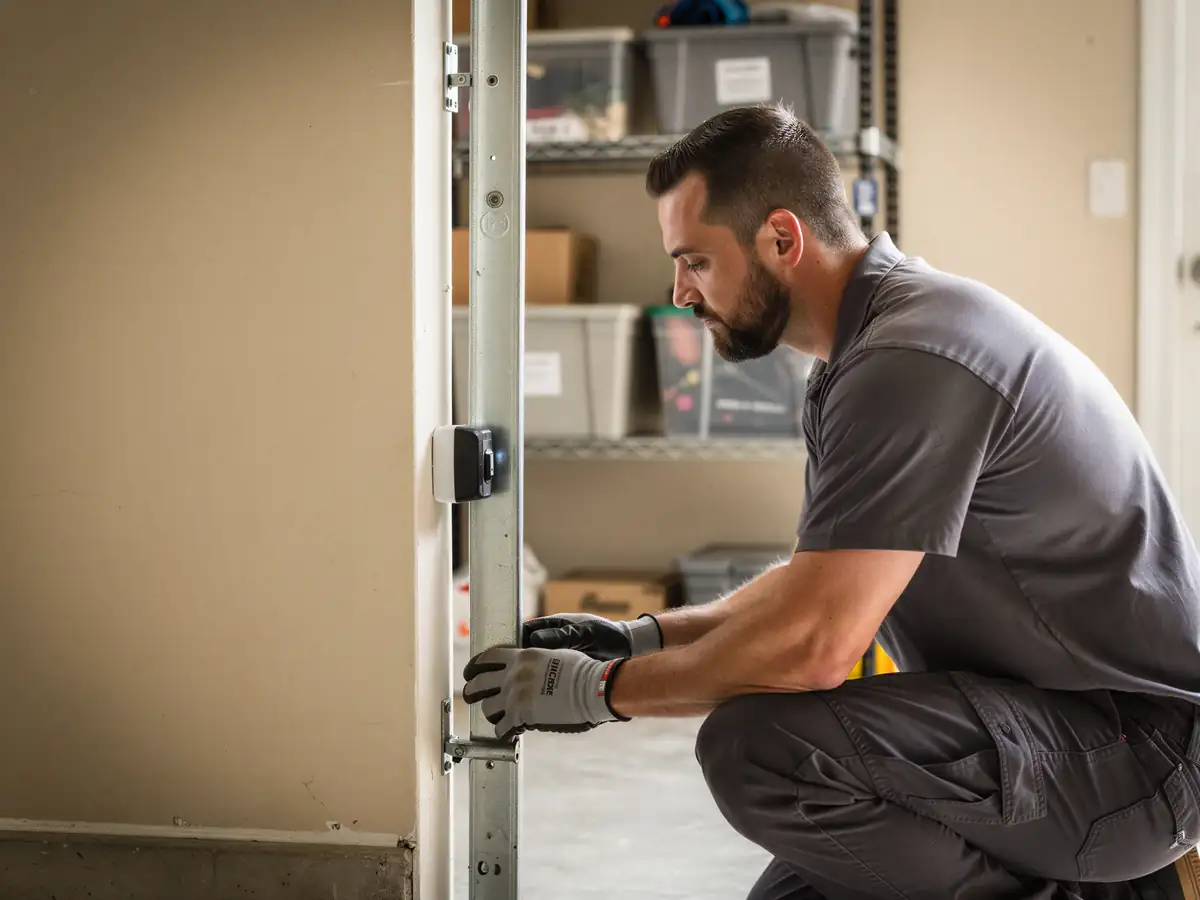
Not the deep freezes you get further north, but enough cold to matter for a door that moves on metal track twice a day. Steel contracts in cold weather, and on older torsion systems that means bolts that were snug in July can work loose by January. It's a small shift, but it's the kind of thing that turns a quiet door into a rattling one over a few winters.
That same cold-moderate swing affects the weatherstripping along the bottom and sides of the door more than people expect
Vinyl seals that were fine for Greer's share of mild days get brittle faster once the temperature starts dropping and climbing through a typical fall and winter here. A seal that's cracked lets cold air and moisture into the garage, which matters more if the space is finished or shares a wall with living space.
Humidity swings through the warmer months do the opposite job
They're what feed the rust along panel seams on older steel doors mentioned earlier. Between the two, a door in this climate band is working against both cold-metal contraction and warm-season moisture in the same twelve months, which is a harder cycle than either condition alone.
None of this means the door fails faster here than somewhere milder
It means the failure points are specific, and worth checking twice a year instead of once.
What Is Going On
Most of the garage doors in the Greer area came up during the same stretch of home construction - the 1980s and 90s - across the 32 named areas that make up this service territory. That matters because it means a huge share of doors are hitting the same age at roughly the same time: springs rated for a 10,000-to-15,000 cycle life that are now well past it, and steel panels whose factory coating has had three decades of seasonal swing to work against.
With 97,161 households in the area and 48,742 of them owner-occupied, a meaningful chunk of these are original garages on original hardware - never upgraded, never resprung, just maintained enough to keep working. That's not a criticism; it's just what happens when a door does its job quietly for 30 years. The problem shows up when a spring that's been fine for 29 years lets go in year 30, often without much warning beyond a louder-than-usual close.
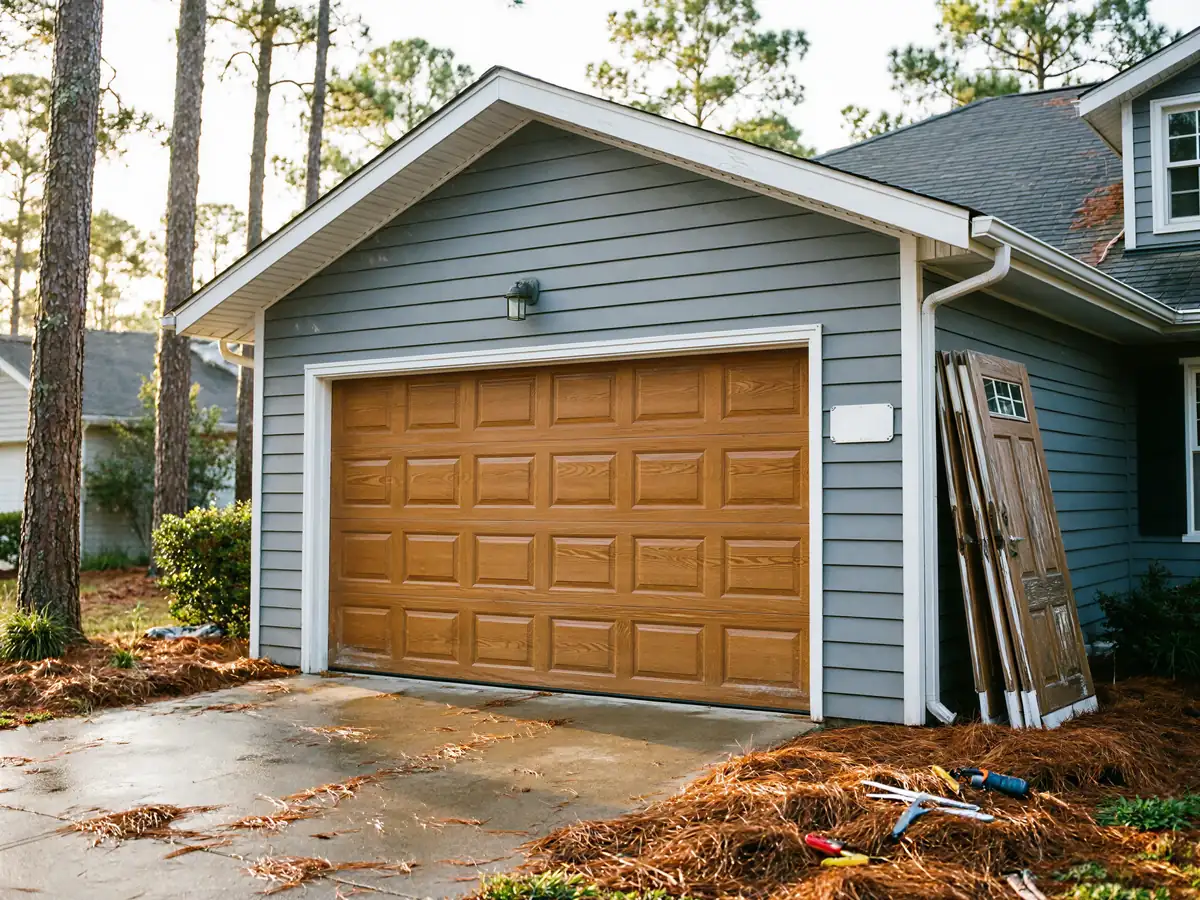
Replacement, when it's the right call, usually comes down to whether the track and opener can support a heavier, better-insulated door or whether the whole system needs to come out together. A single bent panel on an otherwise sound door is a repair. A door that's original to a house built decades ago, with rusted seams and a stiff opener straining to lift it, is usually a replacement.
What Changes With the Season
In the colder months here, lubricant that was fine in September can stiffen enough by January to make the opener work harder than it should - you'll hear it in a slower, grindier close. This is worth checking before cold weather sets in fully, not after the door's already struggling.
Spring and early summer bring the moisture that feeds rust on older steel panels, especially along the bottom seam where water sits after rain. If your door is from that common 1980s-90s stretch of local construction, this is the season to actually look at the bottom two feet of the panel, not just glance at it from inside the car.
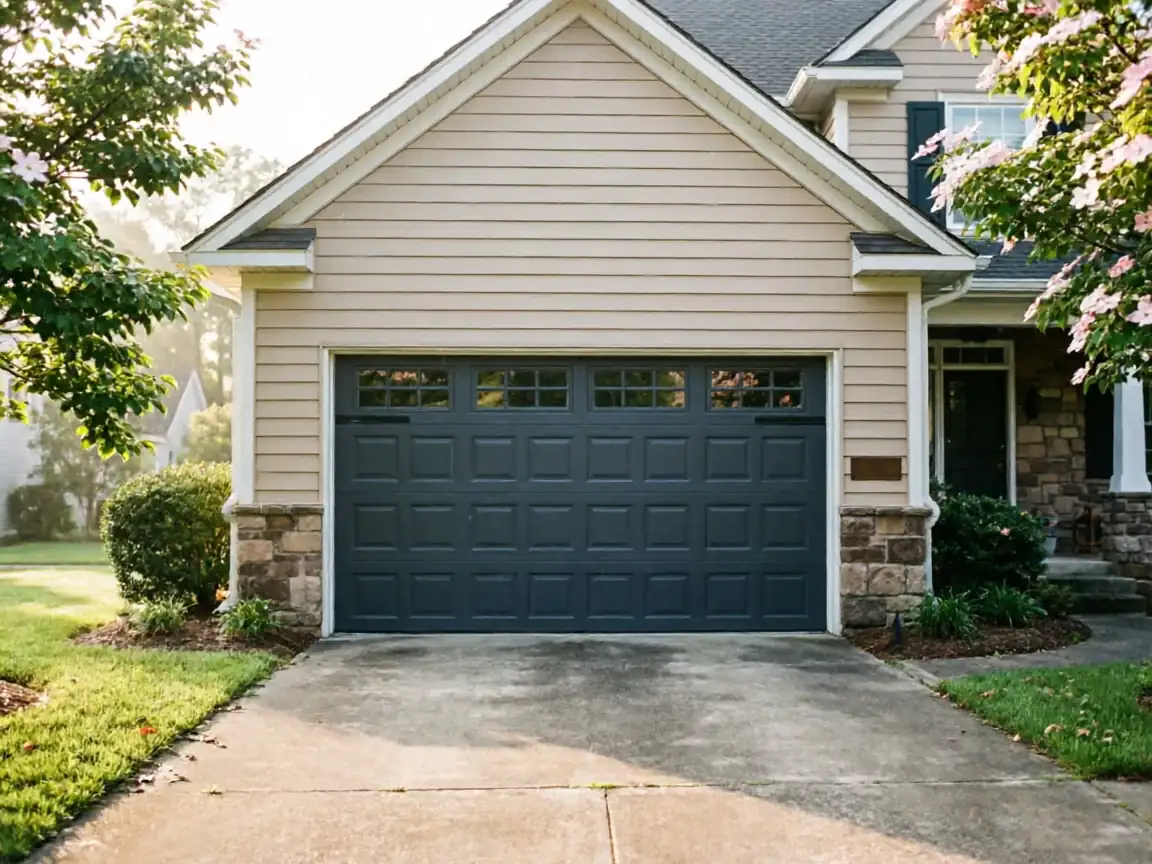
At a median household income of $55,671 across the service area, most replacement decisions here land on a solid steel door with decent insulation rather than a premium custom option - a practical call, and a reasonable one given what a door in this climate band actually needs to do. It doesn't need to survive deep freezes; it needs to handle a yearly swing between cold enough to stiffen metal and humid enough to start rust.
If you're weighing repair against replacement heading into a season change, it's worth getting the hardware looked at before the weather makes the decision for you. More at Greer Garage Door Pros.