Checking It Yourself
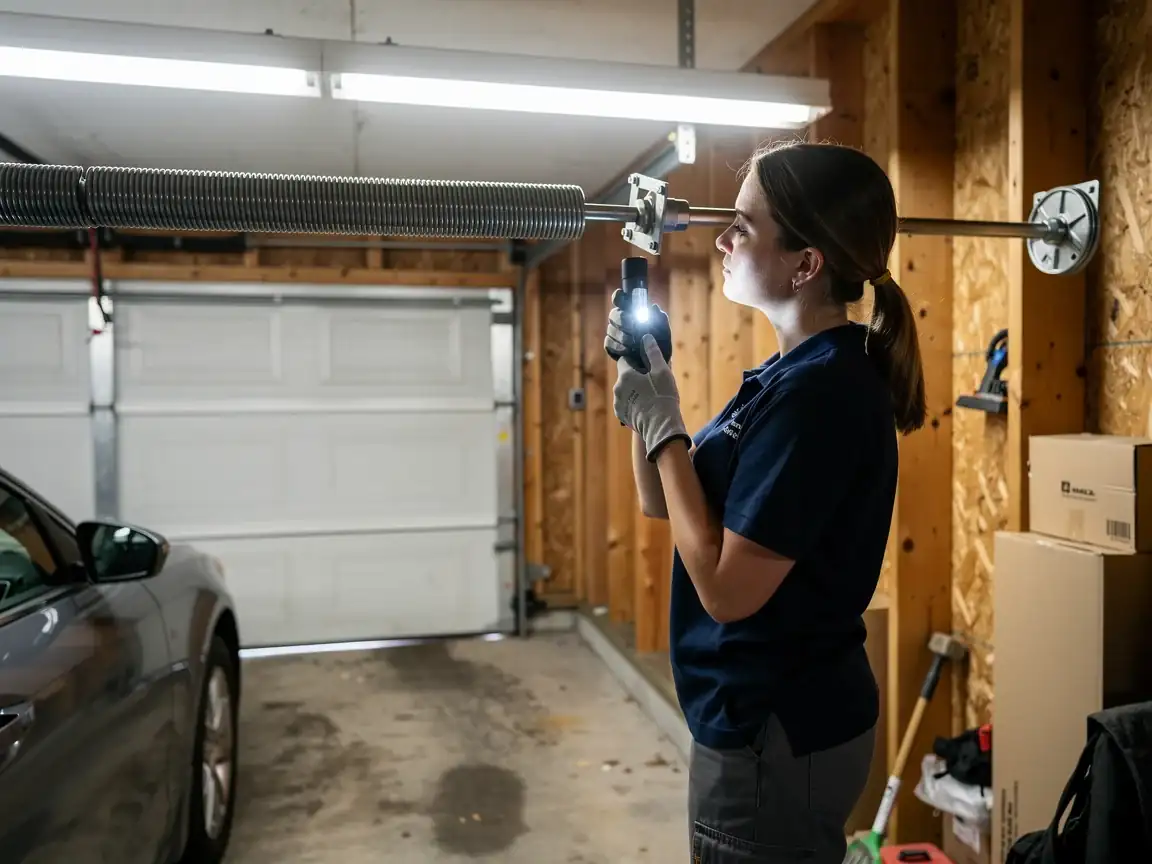
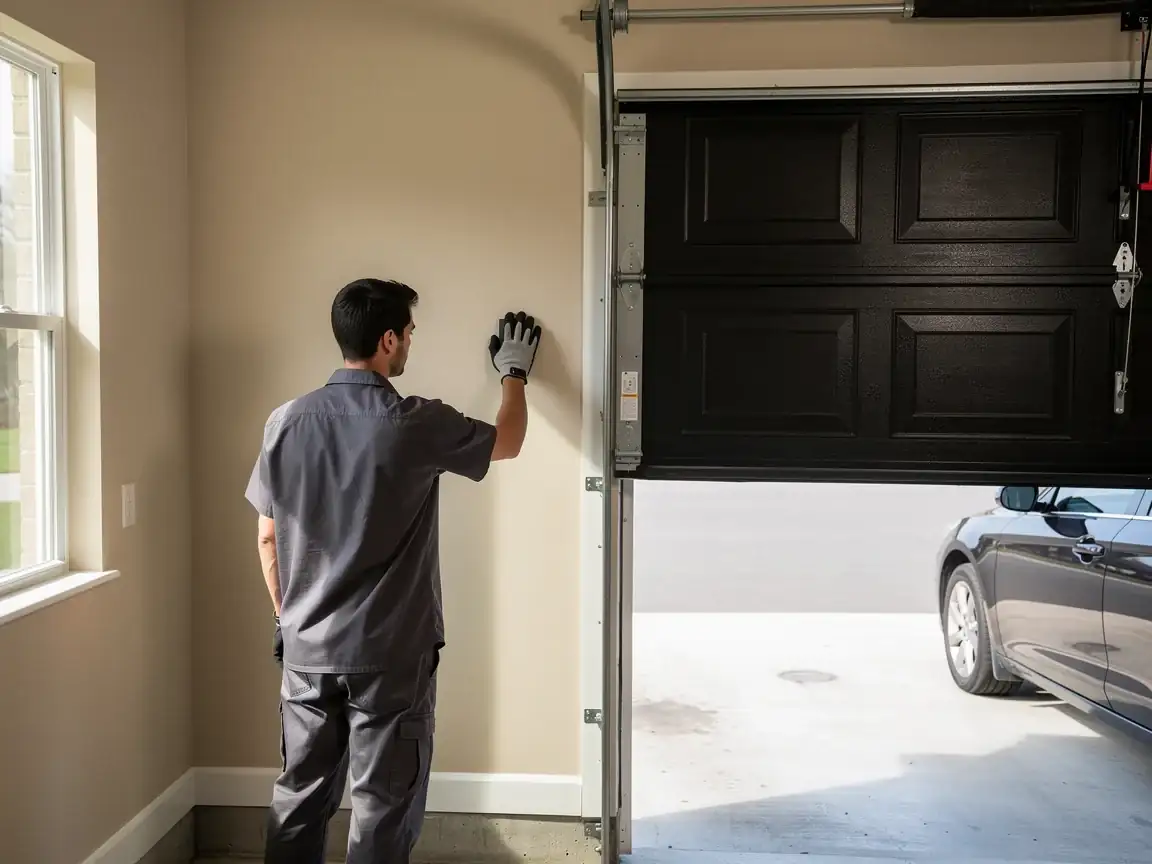
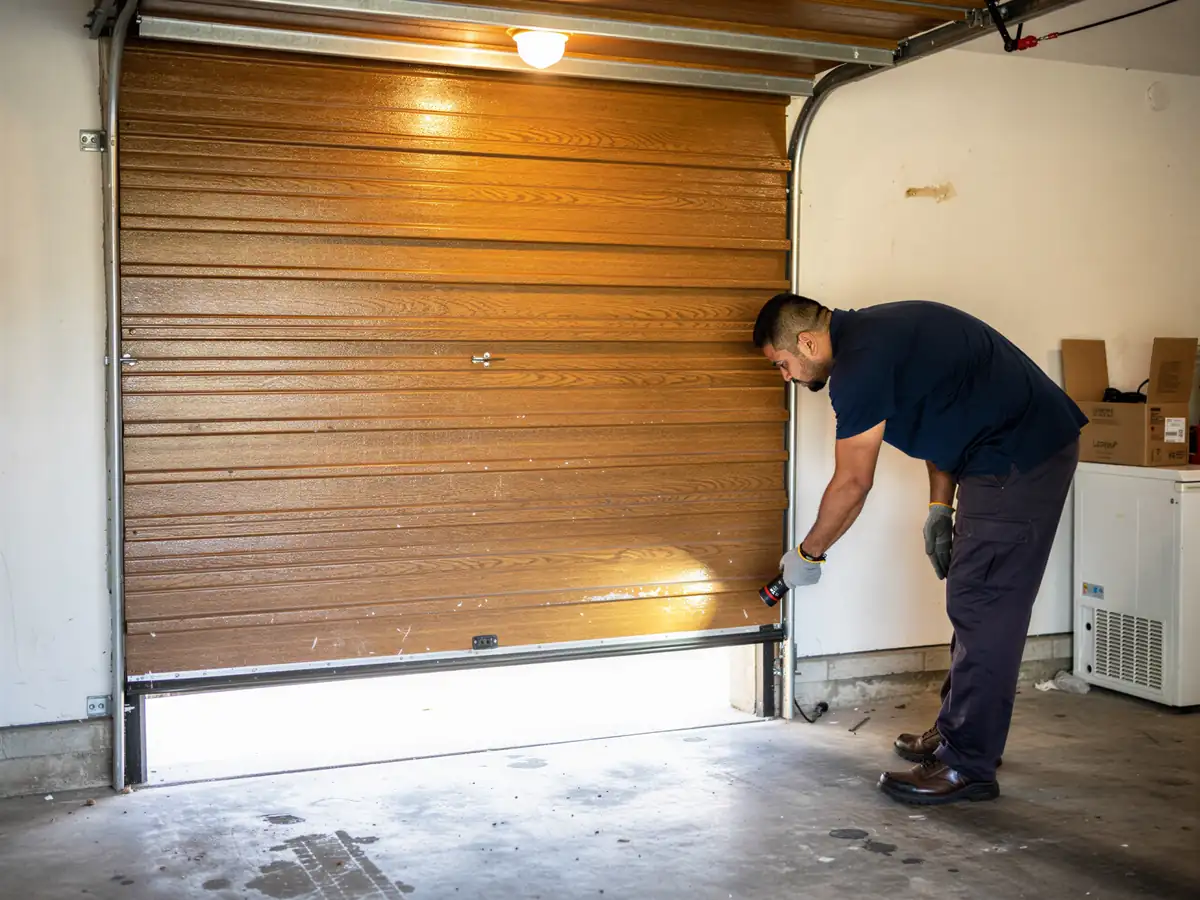
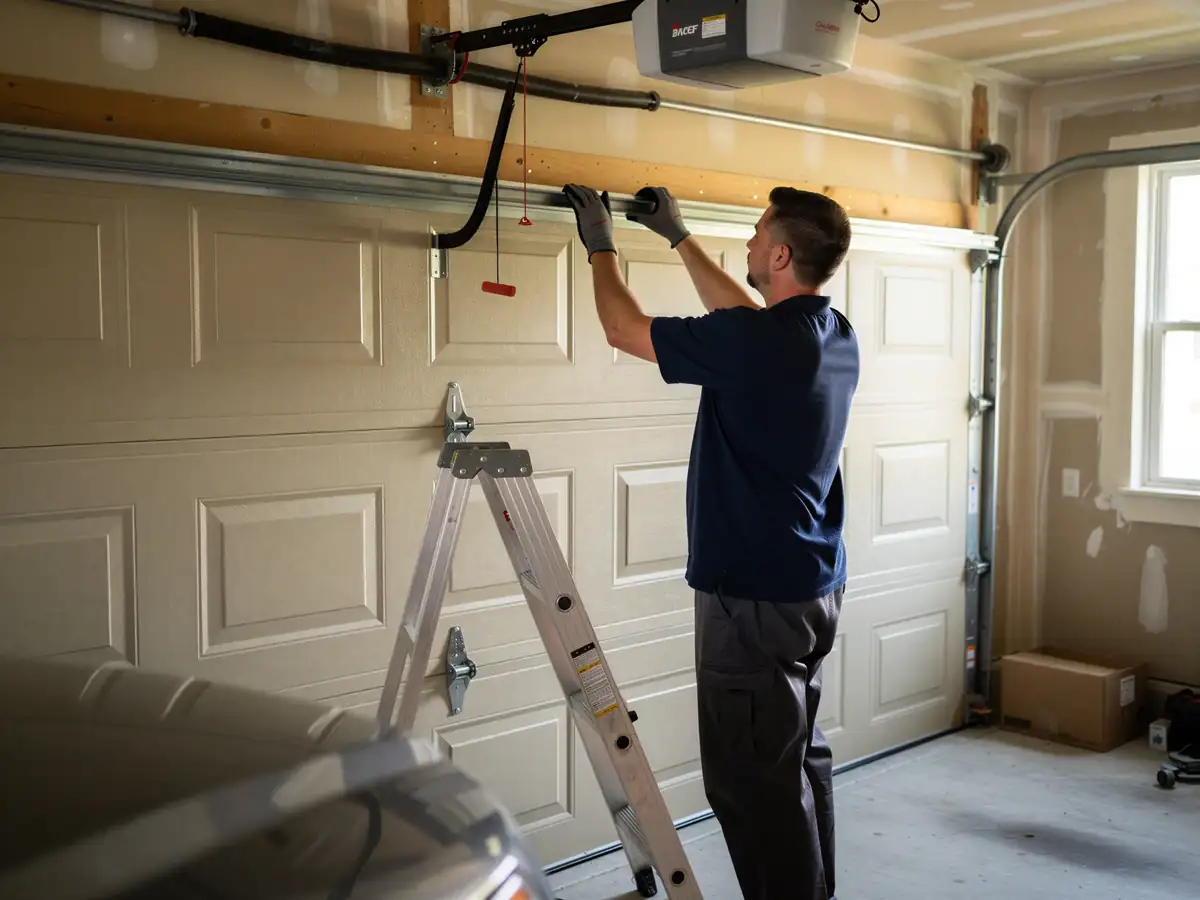
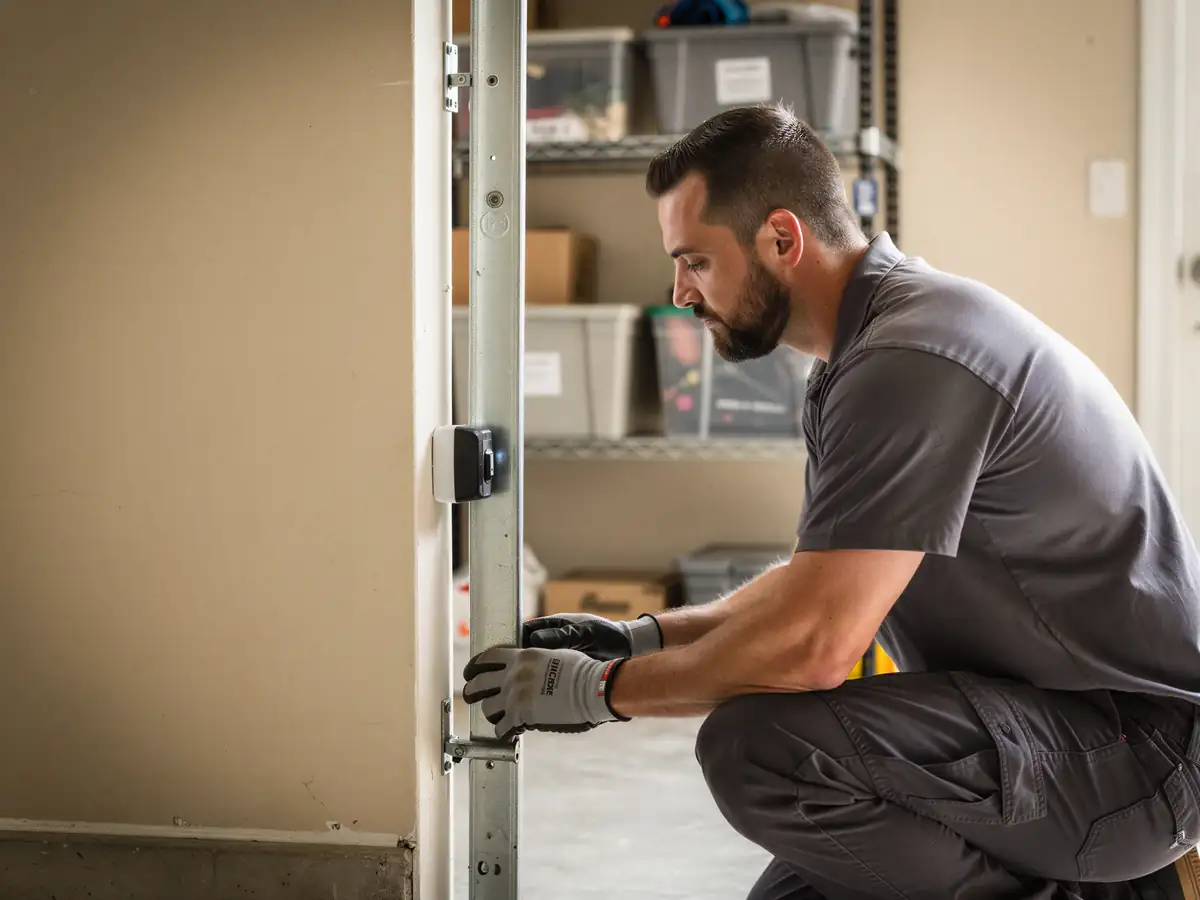
Start with your ears before you start with tools. A good share of Greer's housing went up between 1938 and 2013, with the median build year sitting at 1983, so a lot of these doors are still running original torsion hardware from that era. Open and close the door slowly with the opener disconnected, and listen for where the sound happens, not just what it sounds like. A rhythmic thump every few feet usually means a flat spot on a roller. A sharp metallic pop near the top of the track is often a loose hinge bolt working against an old panel. Grinding that follows the full travel of the door points at the track itself, bent or just packed with old grease and grit.
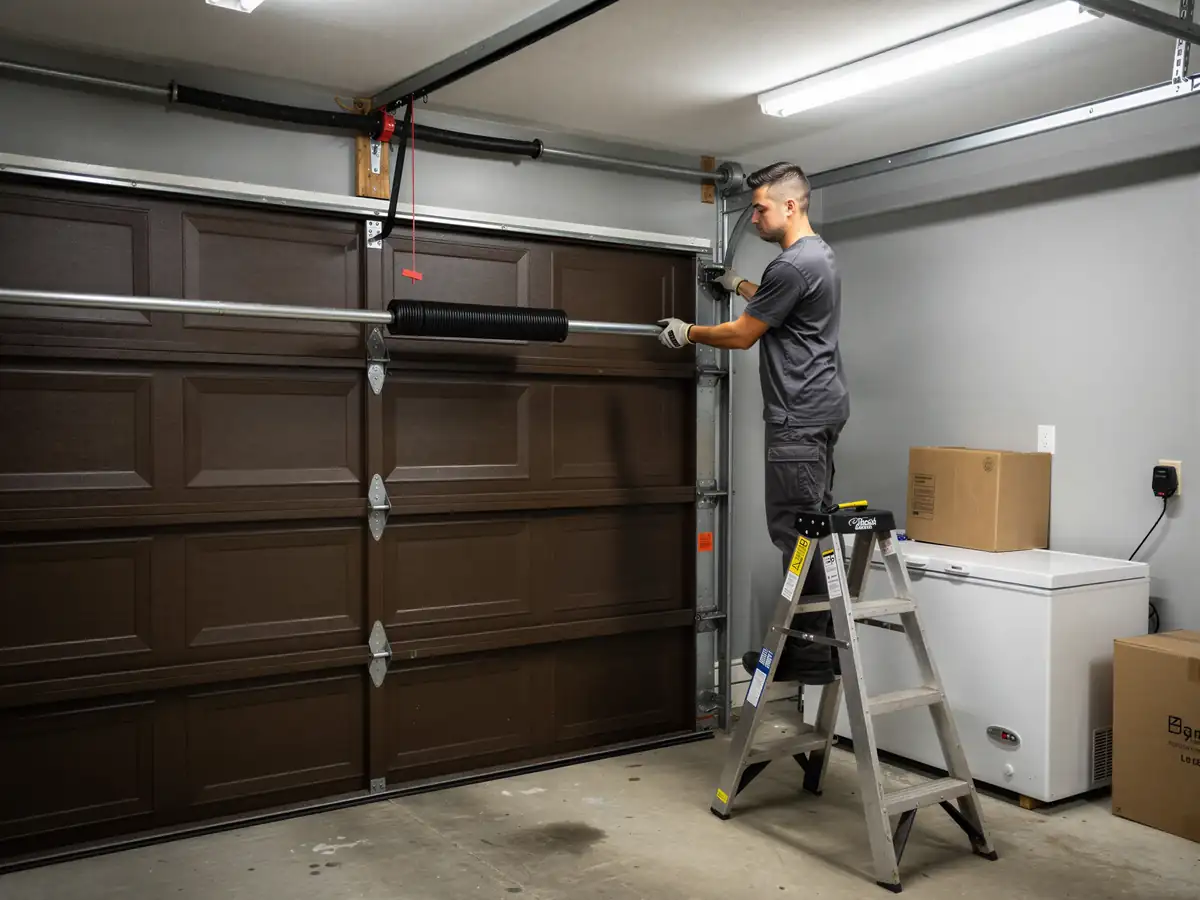
Here's the honest limit: you can spot which roller or hinge is noisy, but you can't safely judge how much tension is left in a torsion spring by eye or by ear, and you shouldn't try to loosen or remove one yourself. Springs on doors this old are often original or close to it, and they don't give warning before they let go. Note what you hear and where, then call it in. That's the one piece of this job that isn't a homeowner project, no matter how many videos say otherwise.
How Local Conditions Play In
Greer sits in a cold-moderate climate band, not the deep freeze you get further north
But enough temperature swing through the year to matter for steel and lubricant. Winter mornings bring real contraction in the track and in the spring coil itself, and that's when a door that ran quiet all summer suddenly pops or catches on the way up. The metal shrinks a hair, tolerances tighten, and anything already a little worn makes itself known.
The flip side shows up in the heat
Grease that moves fine in a cool garage in January turns thin and runs off the rollers by August, leaving metal-on-metal contact that squeals. Neither extreme here is severe enough to crack a panel or snap a cable on its own, but the back-and-forth, year after year, is exactly what tires out rollers, hinges, and spring coils ahead of schedule. A door that's quiet in May and loud in January, or the reverse, is usually telling you about temperature, not about a sudden failure.
What Is Going On
Most of the housing in this market was built across the 1980s and 90s, spread over 32 named pockets of the area, and a lot of those doors are still paired with the chain-drive openers and steel rollers that came standard back then. Chain drives are loud by nature once the chain stretches even a little, and you'll hear a slapping or rattling sound at the opener head rather than down at the door. That's a tensioning adjustment, not a mystery.
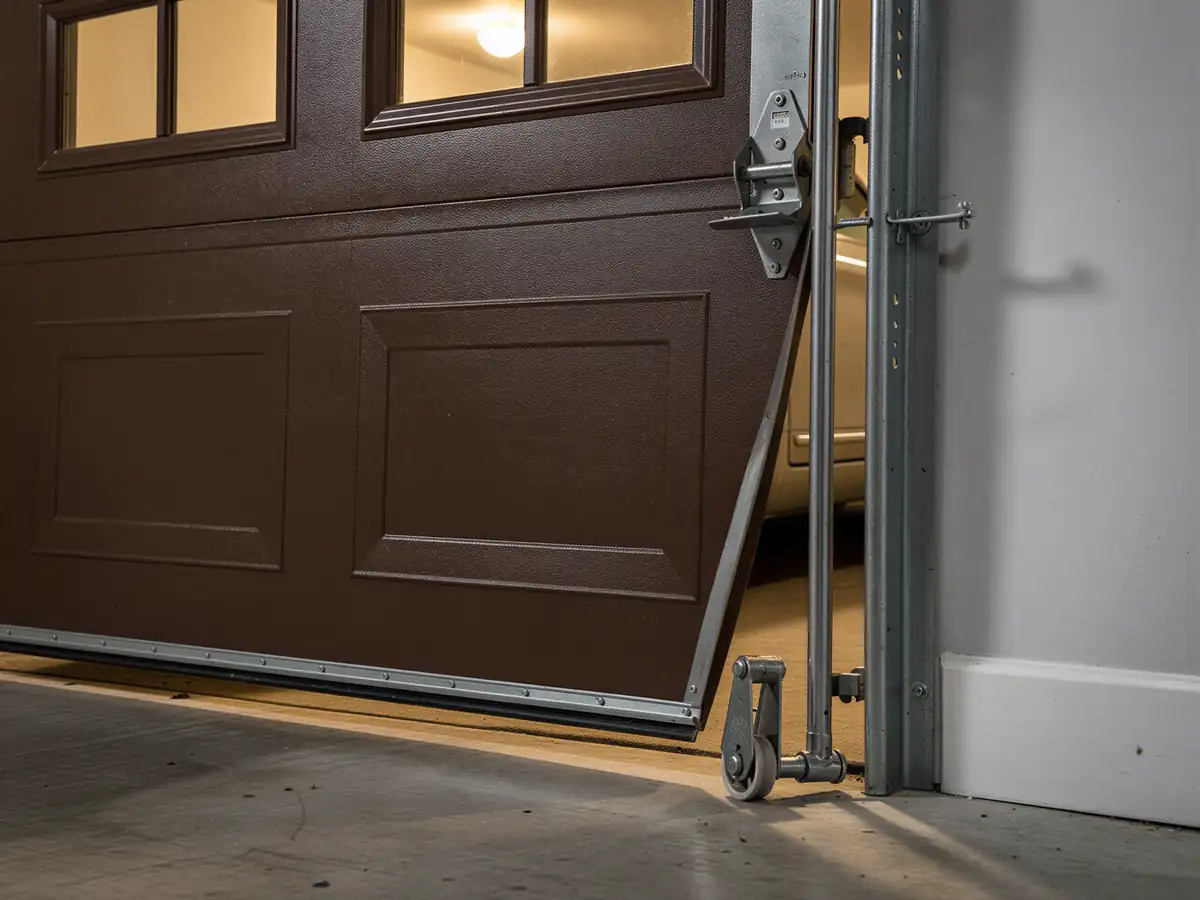
On the door itself, the usual suspects after three or four decades are galvanized rollers that have gone out of round, hinges with worn pivot holes that let the panel shift side to side, and cable that's starting to fray where it wraps the drum. Each one makes a distinct sound: rollers thump, hinges clack, frayed cable makes an intermittent tick as a strand catches. None of these are emergencies by themselves, but they compound. A door running on three bad rollers works its opener and spring harder than it should, which is how a simple roller problem turns into a bigger bill a year later if it's left alone.
What Changes With the Season
In a cold-moderate climate like this one, the door you have in July is not quite the door you have in January, even though nothing's been replaced. Cold tightens steel and stiffens old grease, so expect more noise on the first truly cold mornings of the year even from a door that's otherwise fine. That's normal and it usually quiets down once the door's run a few cycles and things loosen up.
What's not normal is noise that gets worse through a cold stretch instead of settling down, or a new noise that shows up the same week a hard freeze hits. That pattern usually means something was already marginal, a hinge pivot or a roller bearing, and the cold just pushed it past the point of staying quiet. Spring and fall, with milder swings, are when problems are easiest to catch early, because a door that's noisy in 65-degree weather has a real problem, not a temperature problem. If you're not sure which one you're hearing, that's worth a call rather than a guess.