Checking It Yourself
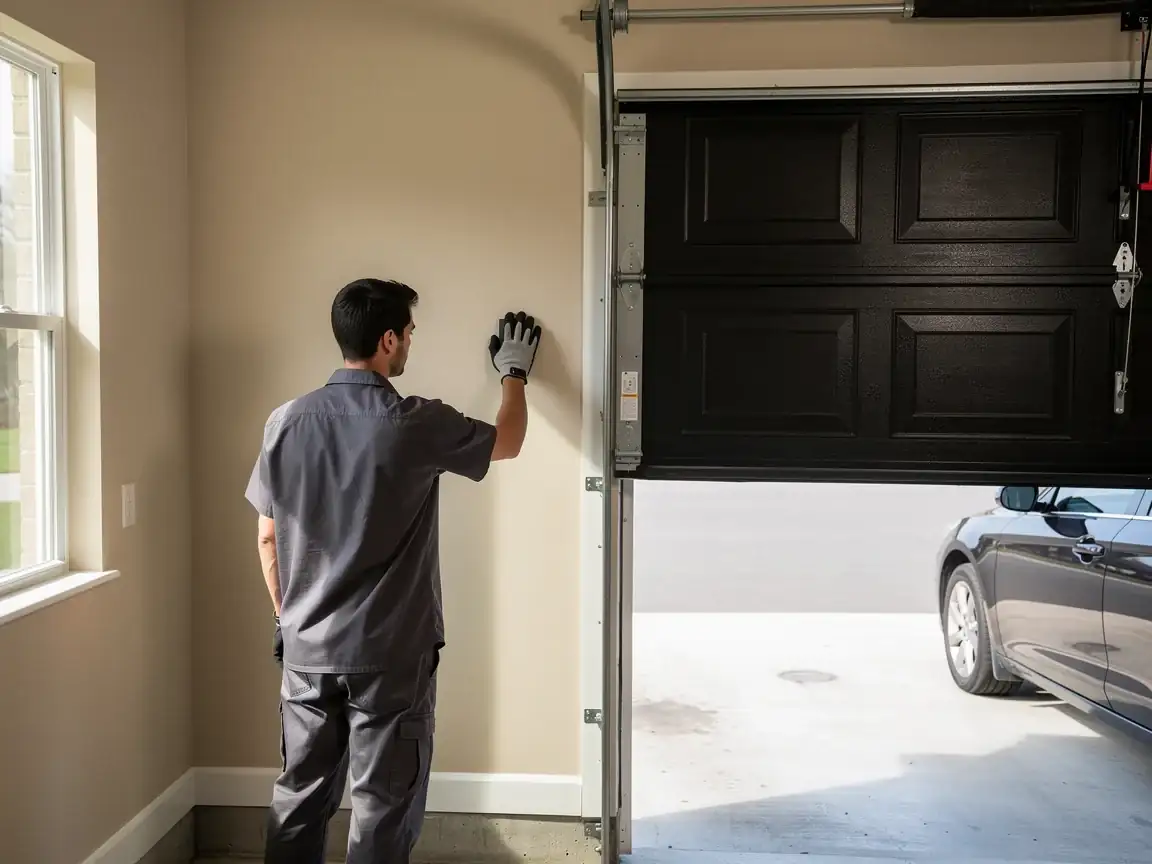
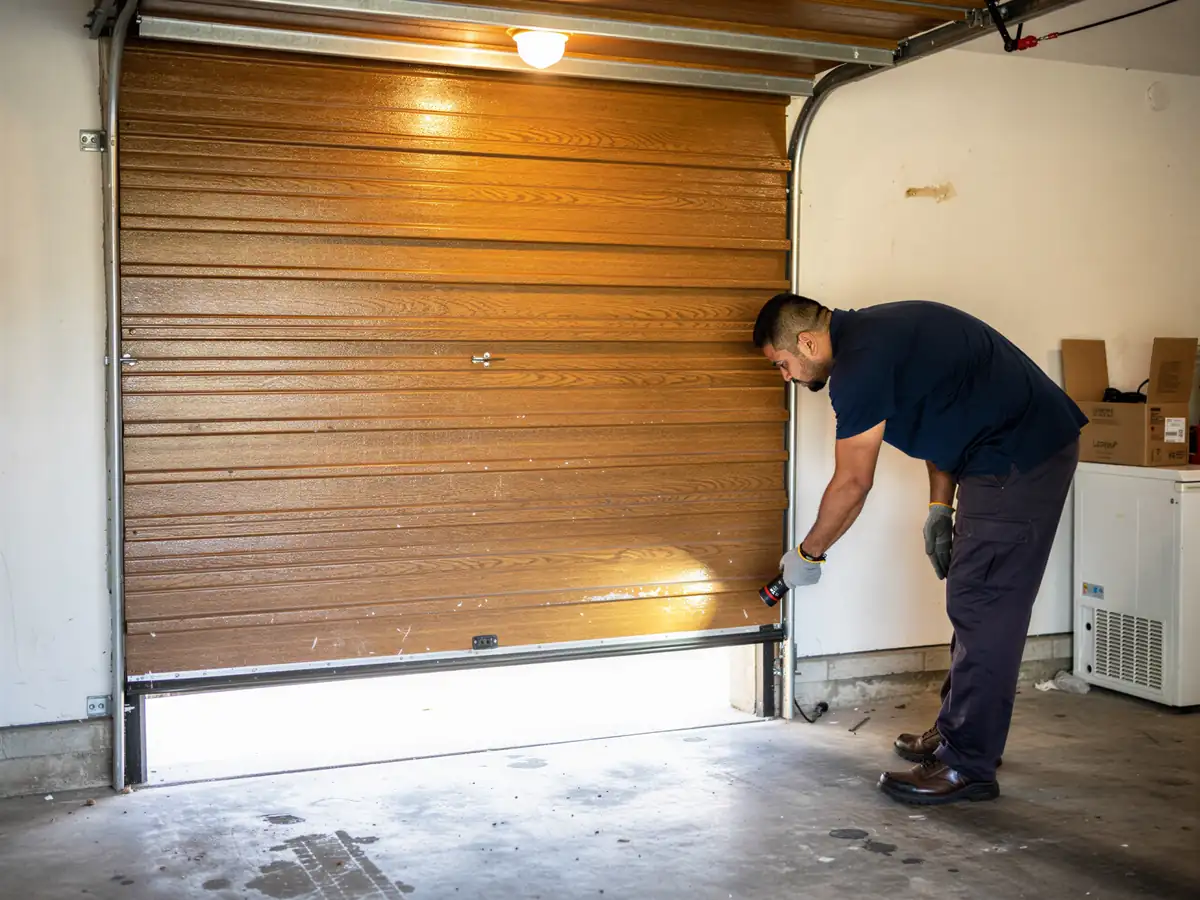
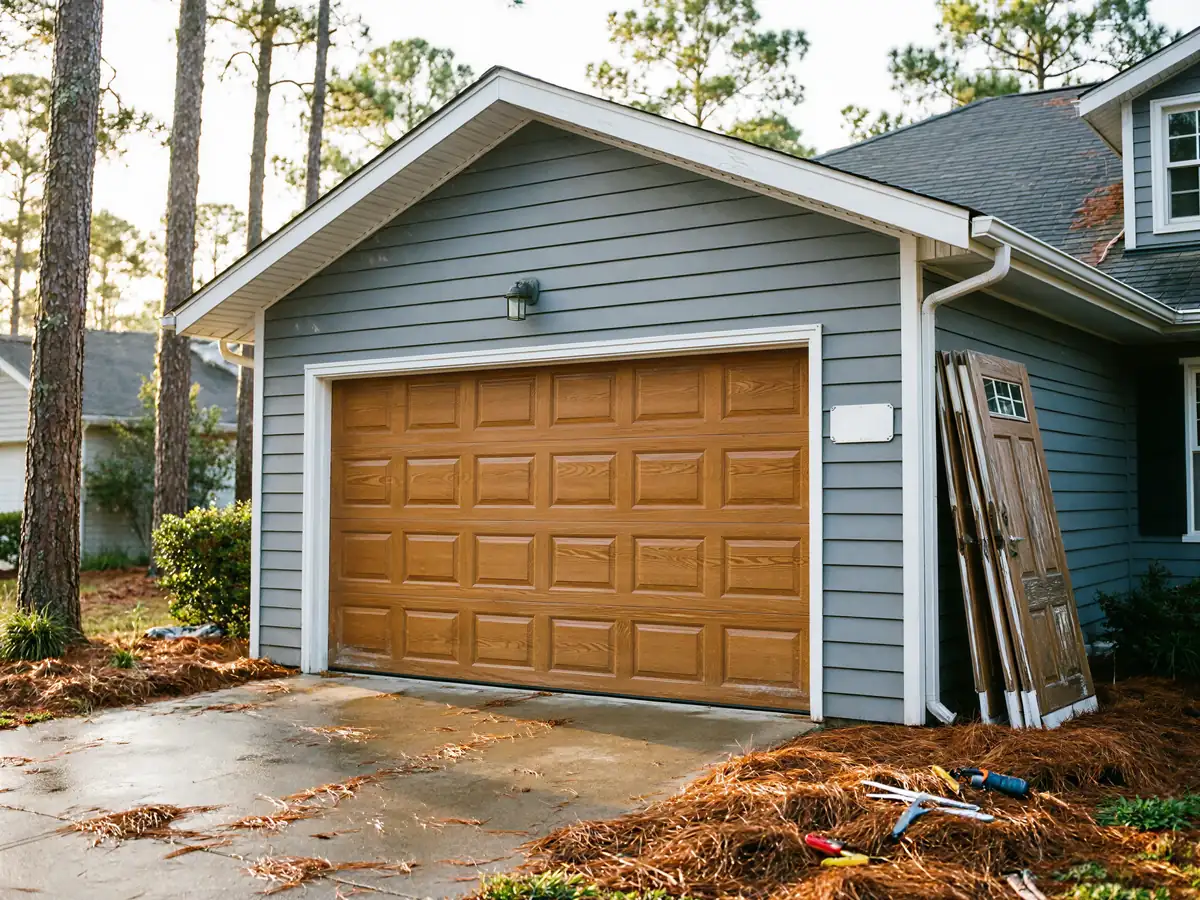
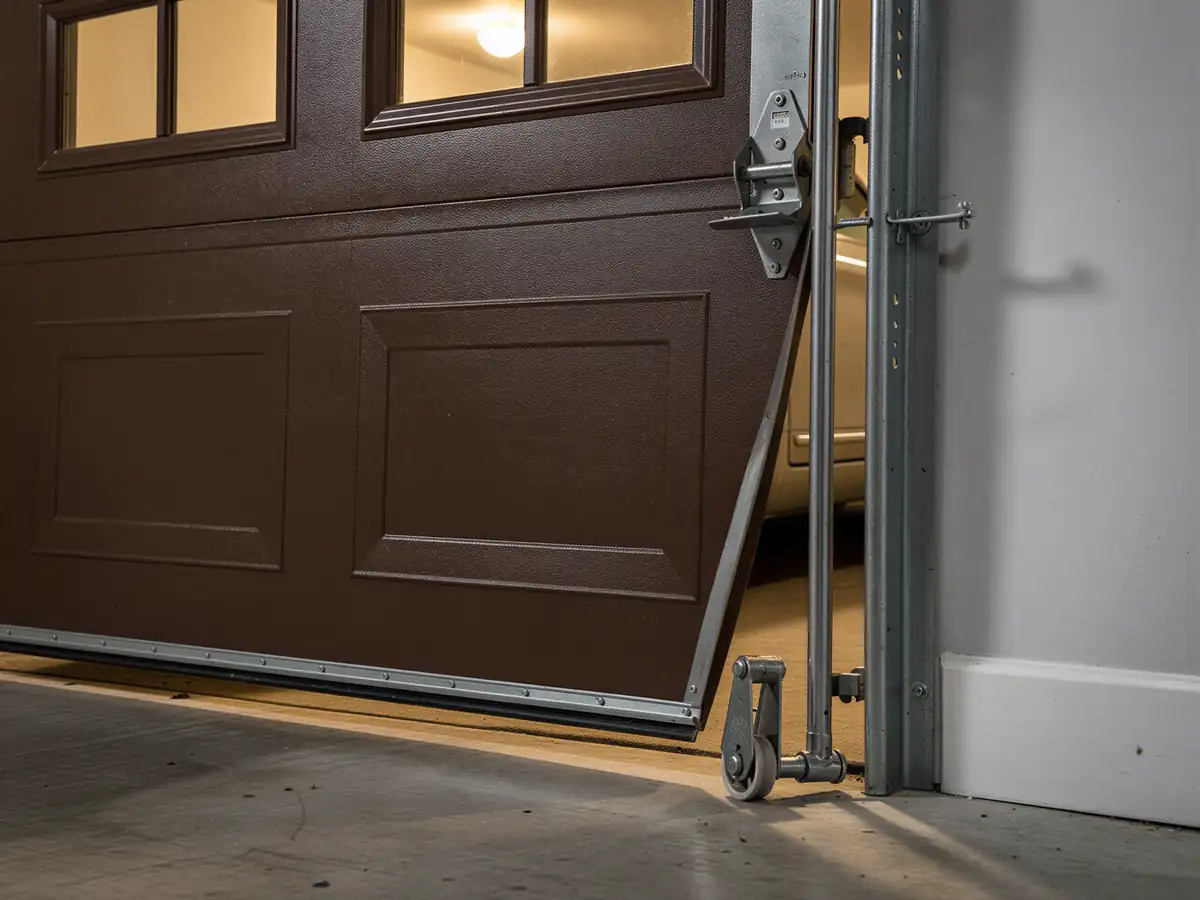
Walk out to the garage on a cold morning and put your hand flat against the inside of the door panel. If it feels close to the outside air temperature, you're likely looking at a door with no foam core at all - just a single layer of steel or wood. Housing stock in this service area runs from 1938 up through 2013, with the median build landing around 1983, which is right before insulated steel doors became common in residential construction. Check the panel edge where it meets the frame; older doors often show a thin, hollow cross-section instead of the thicker insulated sandwich you'd see on anything built in the 1990s or later. Also look at the weatherstripping along the bottom and sides. On a door this old, it's usually the original vinyl, cracked or compressed flat. Press a dollar bill into the gap at the bottom corner - if it slides through without resistance, air is moving through there every day. None of this means the door is broken. It means it was built to a standard from before anyone worried about garage heat loss, and that's a different problem than a door that needs repair.
What Is Going On
A door built in, say, 1985 - right around this area's median build year of 1983 - was made before insulated garage doors were standard residential fare. Builders in that era used single-layer steel or solid wood construction because garages weren't treated as conditioned space. That's not a defect; it's just the building norm of the time. With roughly 48,742 owner-occupied houses across this service area's 97,161 households, a large share of them fall into that pre-insulation window, especially in neighborhoods built out before the 1990s. The practical effect shows up in two ways: temperature swing inside the garage, and condensation. Uninsulated steel sweats when warm, humid air meets a cold panel, and that moisture finds its way to the bottom bracket and spring anchor points, where rust starts quietly. We see it most on doors that haven't been touched since they went in. It's not usually urgent, but it's worth knowing the door is in that category before a spring lets go in January.
What Changes With the Season
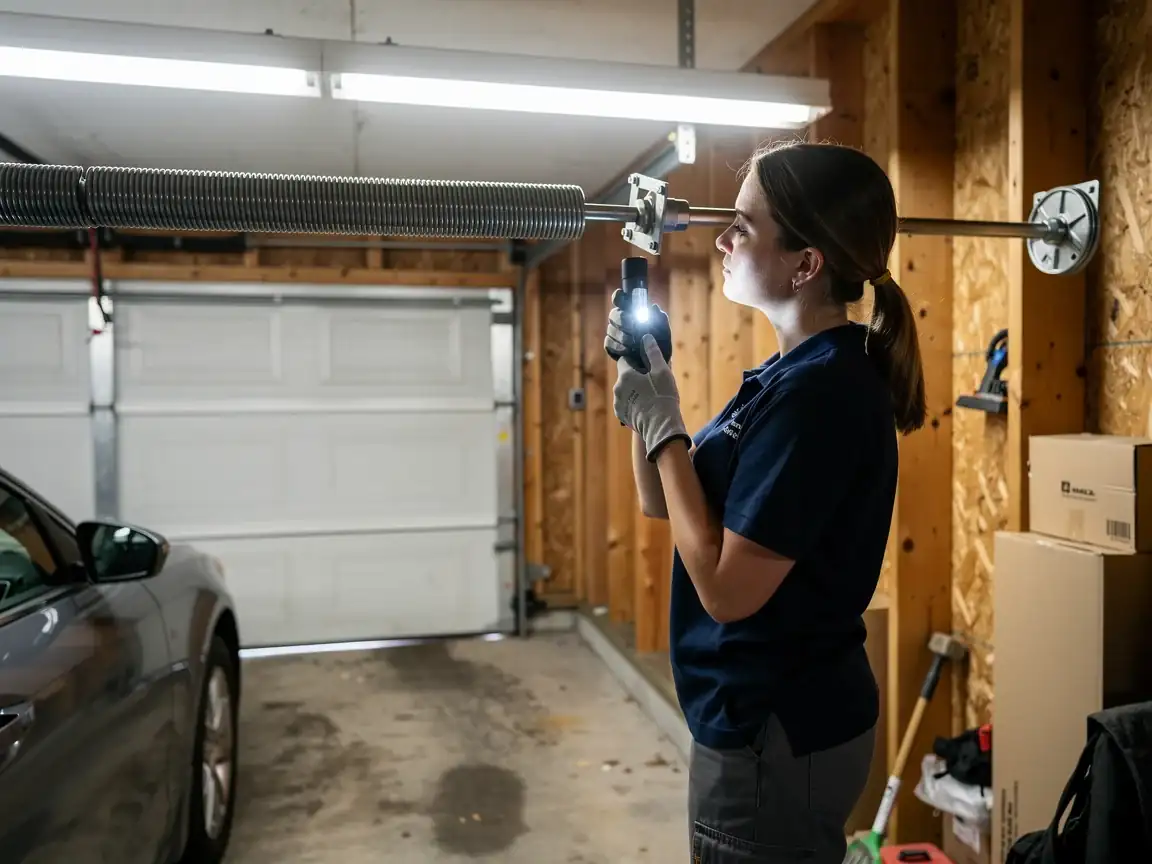
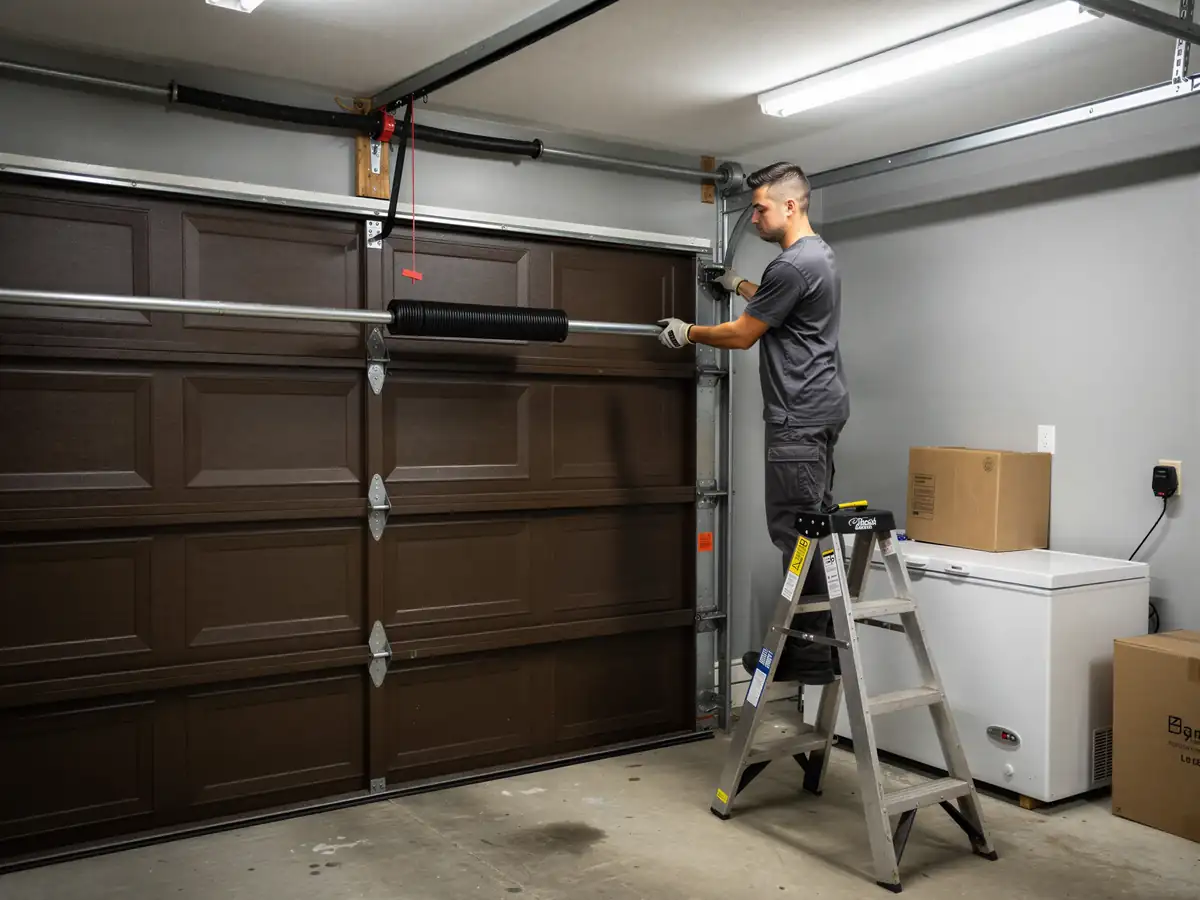
In a cold-moderate climate, the swing between a 70-degree fall afternoon and a hard overnight frost is where uninsulated doors show their age. Steel contracts in the cold, and on an older panel without a thermal break, that contraction is sharper and faster than it is on an insulated door. You'll notice it as a door that tracks fine in October and starts binding or rattling in its tracks by January. The hardware feels it too - torsion springs lose a bit of tension in cold air, which is already a known factor, but on a thinner, uninsulated panel the door itself is also lighter than its insulated counterpart, so the balance point shifts more. If you're in one of the older sections of town where houses still carry doors from the 1983 median build era, this is the time of year worn rollers and a tired spring get exposed. It's worth a five-minute look before the cold really sets in, not after something stops moving.