The Symptom
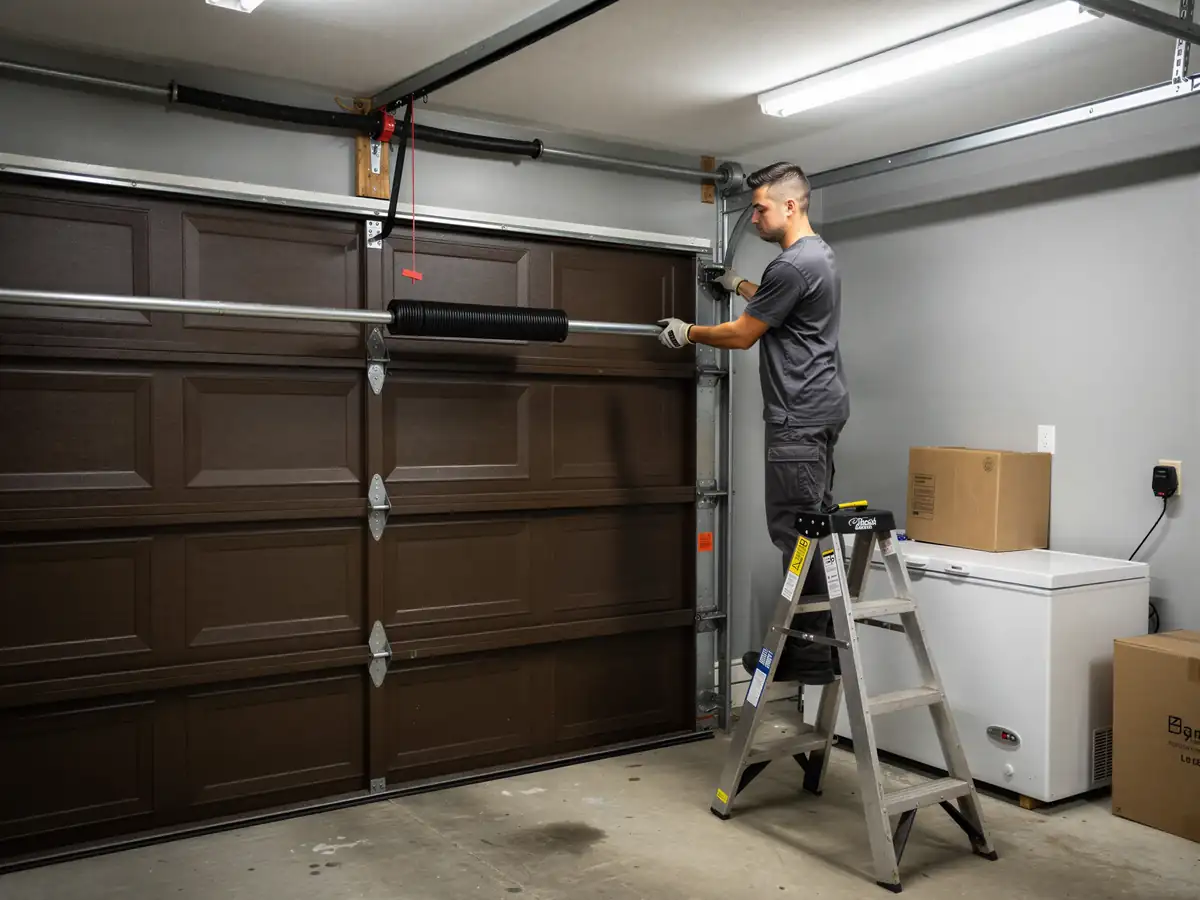
If your door won't budge, or it opens a few inches and stops, or you heard a bang from the garage before any of that started, you're probably looking at a broken torsion spring. The bang is the spring letting go under tension - it's loud, and it usually happens when nobody's standing there to see it. Some owners try the opener again a few times first, thinking it's electrical. It isn't. An opener has no business lifting a door against a broken spring; the motor isn't built for that load, and running it anyway is how you turn a spring job into a spring-and-opener job.
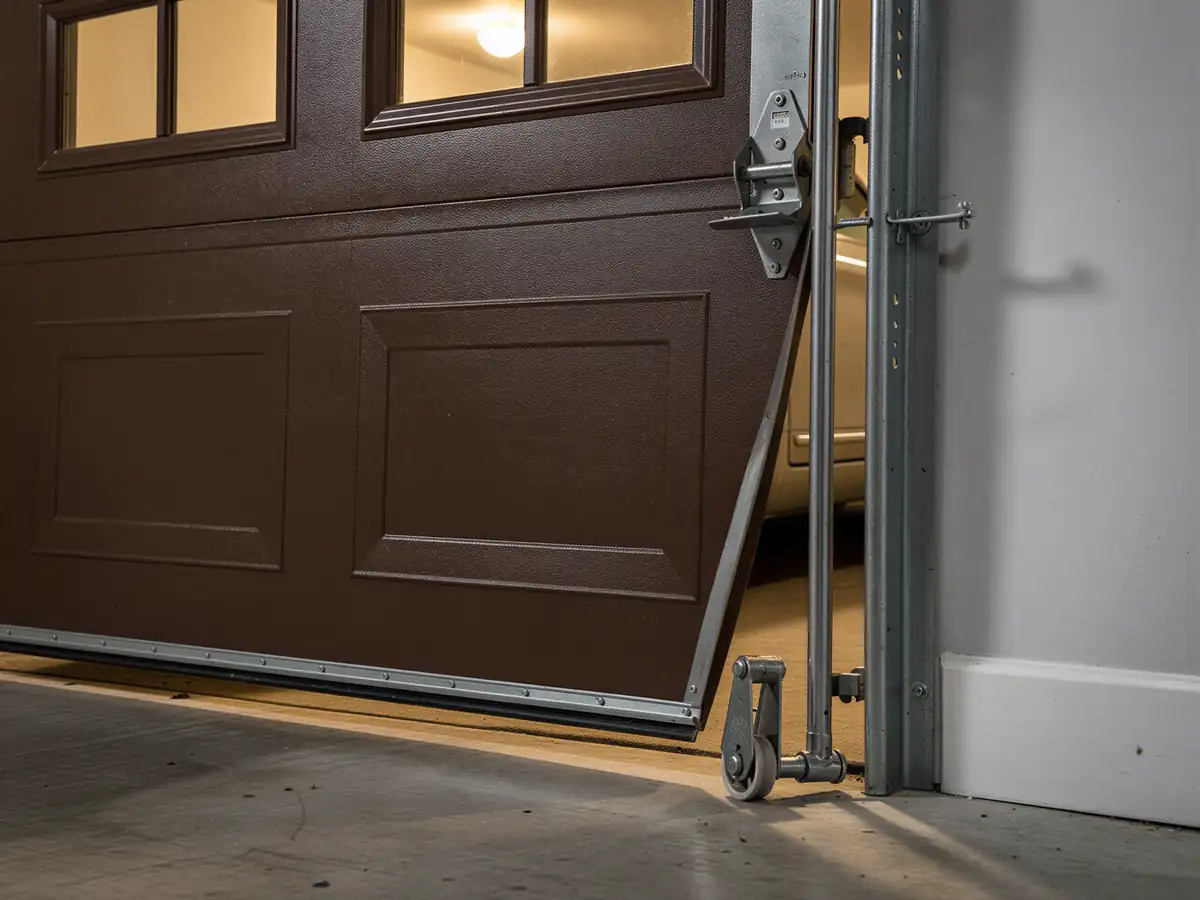
You might also notice the door looks uneven when it's halfway up, or one side sags lower than the other. That's usually a single spring failing on a two-spring system - the other side is holding for now, but it won't be long. On older setups you may have one long spring instead of two; when that one goes, the door is dead weight.
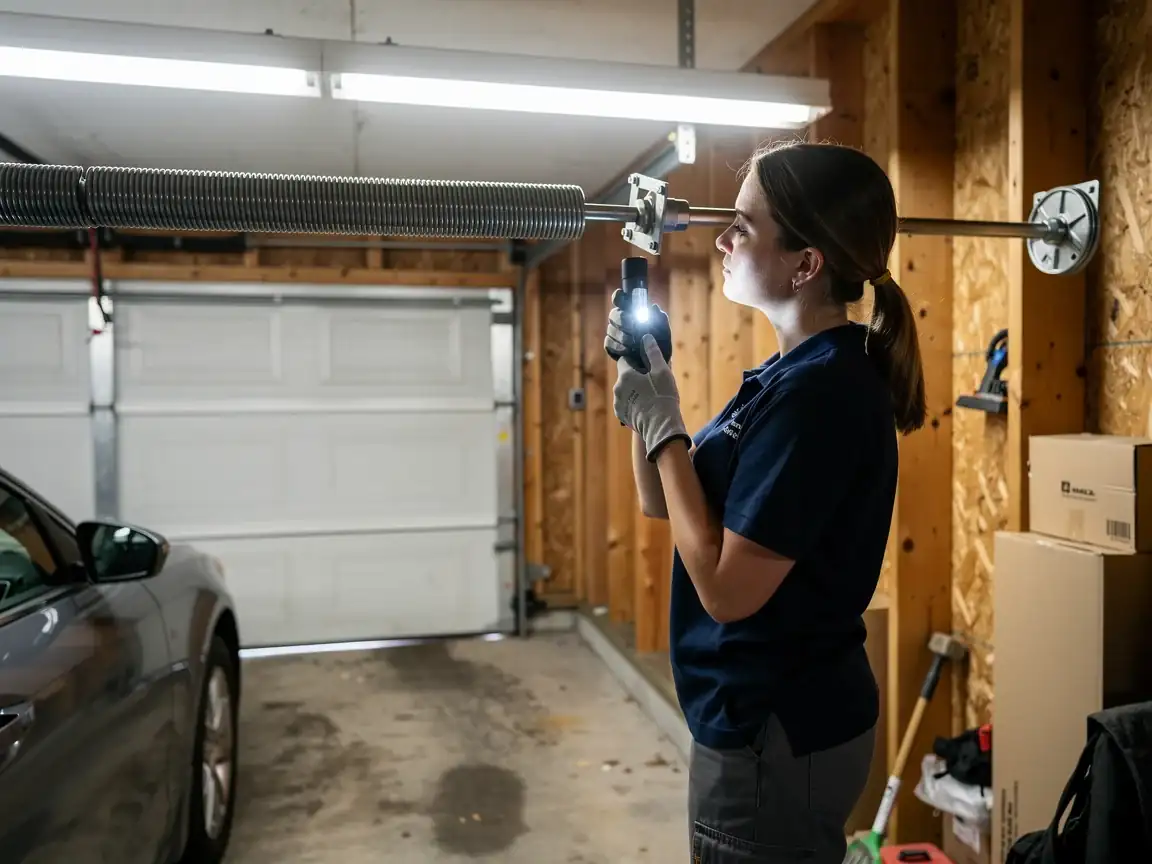
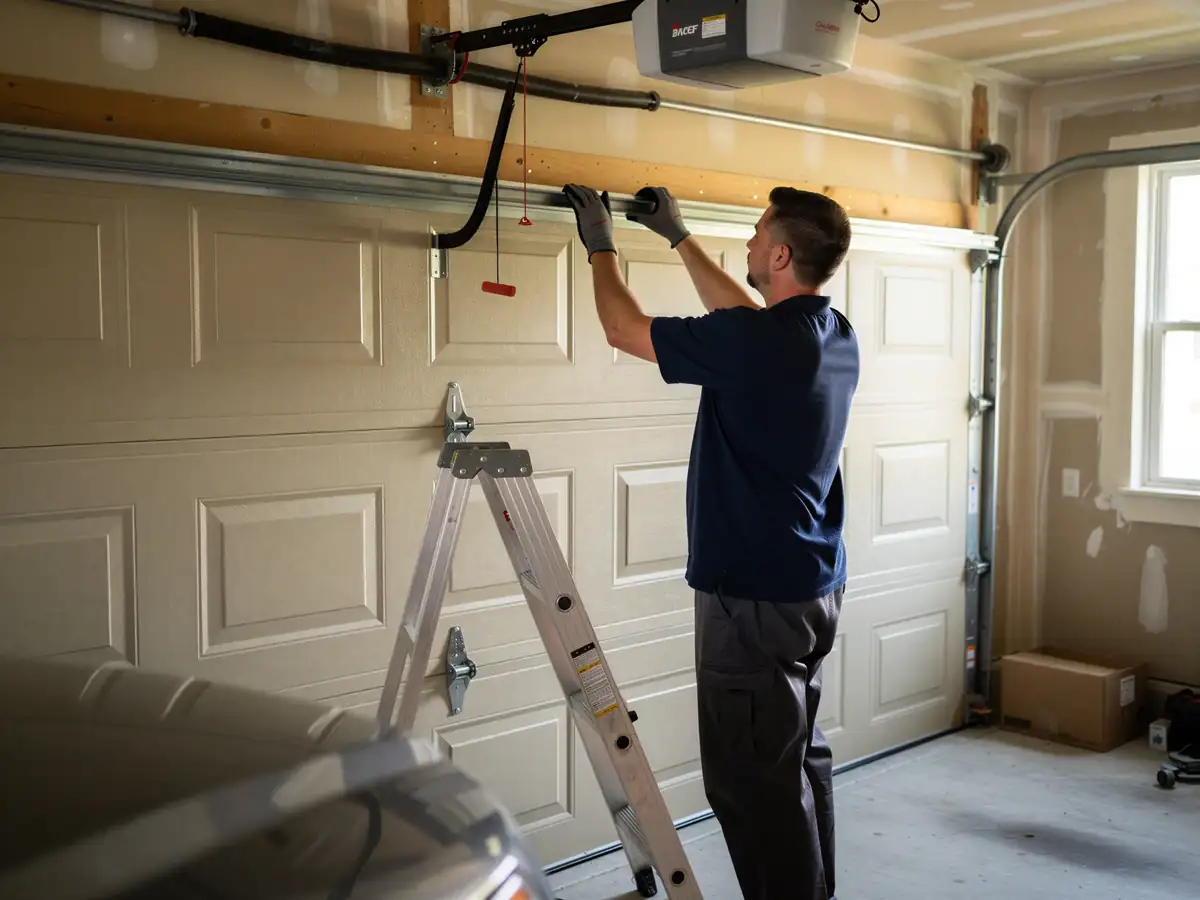
Don't try to lift the door by hand repeatedly to test it, and don't cut the cable if it's bound up. Torsion springs store real force, and the hardware around them - the winding cones, the center bearing, the shaft - is not something to improvise around.
The Cost of This Job
We don't post a flat number for spring repair because the right spring depends on the door's weight
The wind-load rating if it has one, and whether you've got one spring or two. What we can tell you is what drives the price up or down: the diameter and wind count of the spring itself, whether the drums or cables need replacing alongside it, and whether the opener's gears took damage from being run against a dead spring.
One honest note: if your door is original to a house built in the 1980s or earlier
The spring on it may be a size nobody stocks on the truck anymore, and the cable drums or end bearing plates might be worn enough that replacing just the spring doesn't actually fix the door for long. In that case we'll tell you straight that a spring-only fix is a short-term patch, not because we want to sell a bigger job, but because a mismatched or near-dead support part next to a brand-new spring just fails again in a year.
We price the job after we see the door and the hardware around it, not before
Booking a Visit
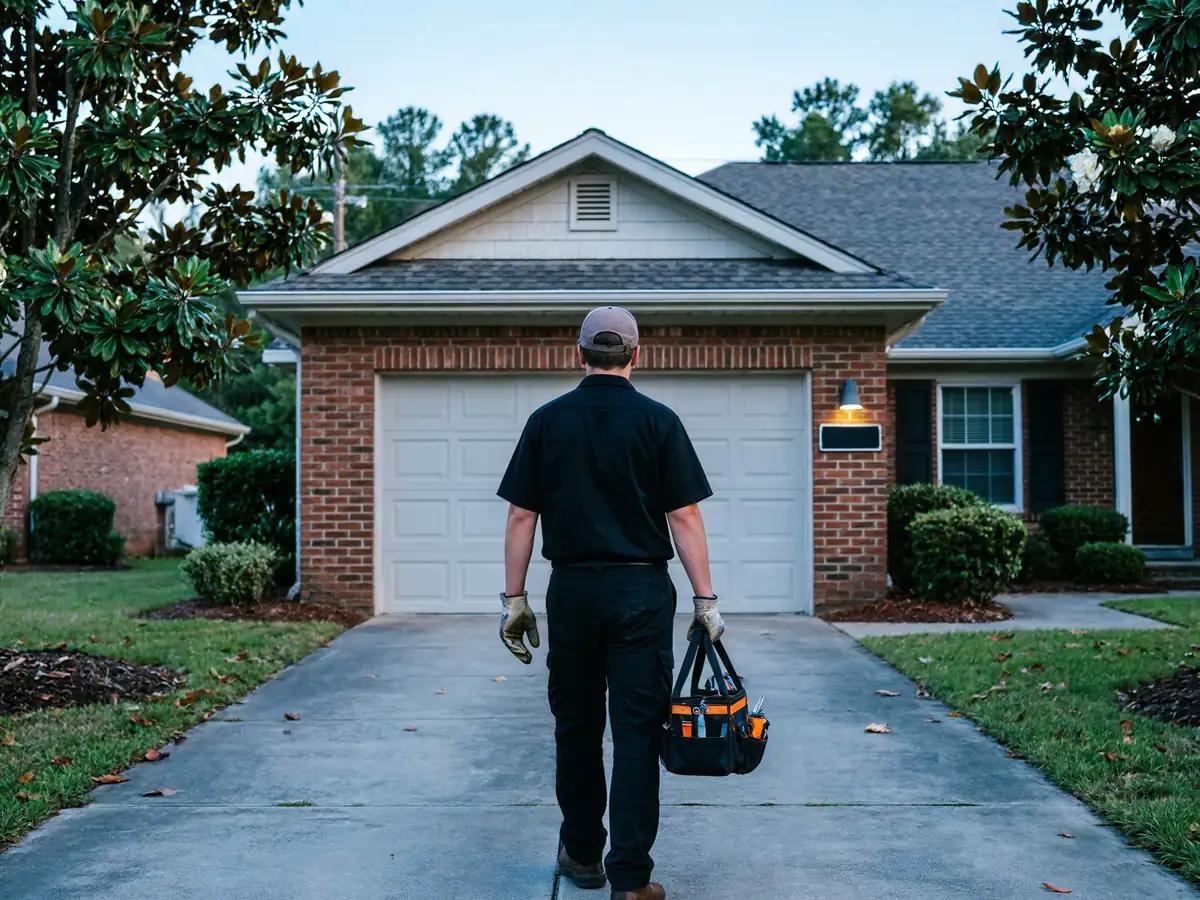
Call and describe what the door is doing - won't lift, sagging on one side, loud bang before it quit. That alone tells us a lot before a truck ever leaves. If you know the door's age or when the house was built, mention it; homes going up in this area anywhere from the late 1930s through the 2010s, with a lot of the stock from the 1980s and 90s, means spring sizing and mounting style vary more than people expect, and knowing roughly when the door went in saves a trip back to the truck for the right part.
We work across the Greer service area and the towns around it, so when you call, tell us where you are. If your garage faces an exterior wall that catches wind and weather straight on, mention that too - it affects how we think about spring life going forward, not just the repair in front of us.
We don't do emergency after-hours dispatch as a standard offering, so if your door failed overnight, it'll hold until morning as long as nobody forces the opener.
What Causes It Around Here
Torsion springs are rated for a number of open-close cycles, and two things shorten that number: age and temperature swings. A lot of the housing in this service area went up through the 1980s and 90s, with construction stretching back to the late 1930s on the older end, which means a meaningful share of doors out there are running original or first-replacement springs that have simply cycled past their rated life.
The climate here falls in the cold-moderate band, which matters more than people think. Steel springs contract in cold mornings and expand through warmer afternoons, and that daily flex adds fatigue on top of normal use. A spring already near the end of its cycle count is more likely to let go on a cold morning than a mild one - not because cold breaks springs outright, but because it's one more stress on metal that was already worn thin.
With 48,742 owner-occupied houses across a service area of 97,161 households, there's a lot of garage door hardware out there aging at roughly the same pace, since so much of it went in during the same building decades. That's really the pattern: it's less about any one house and more about a lot of doors hitting the same wear point around the same time.