The Symptom
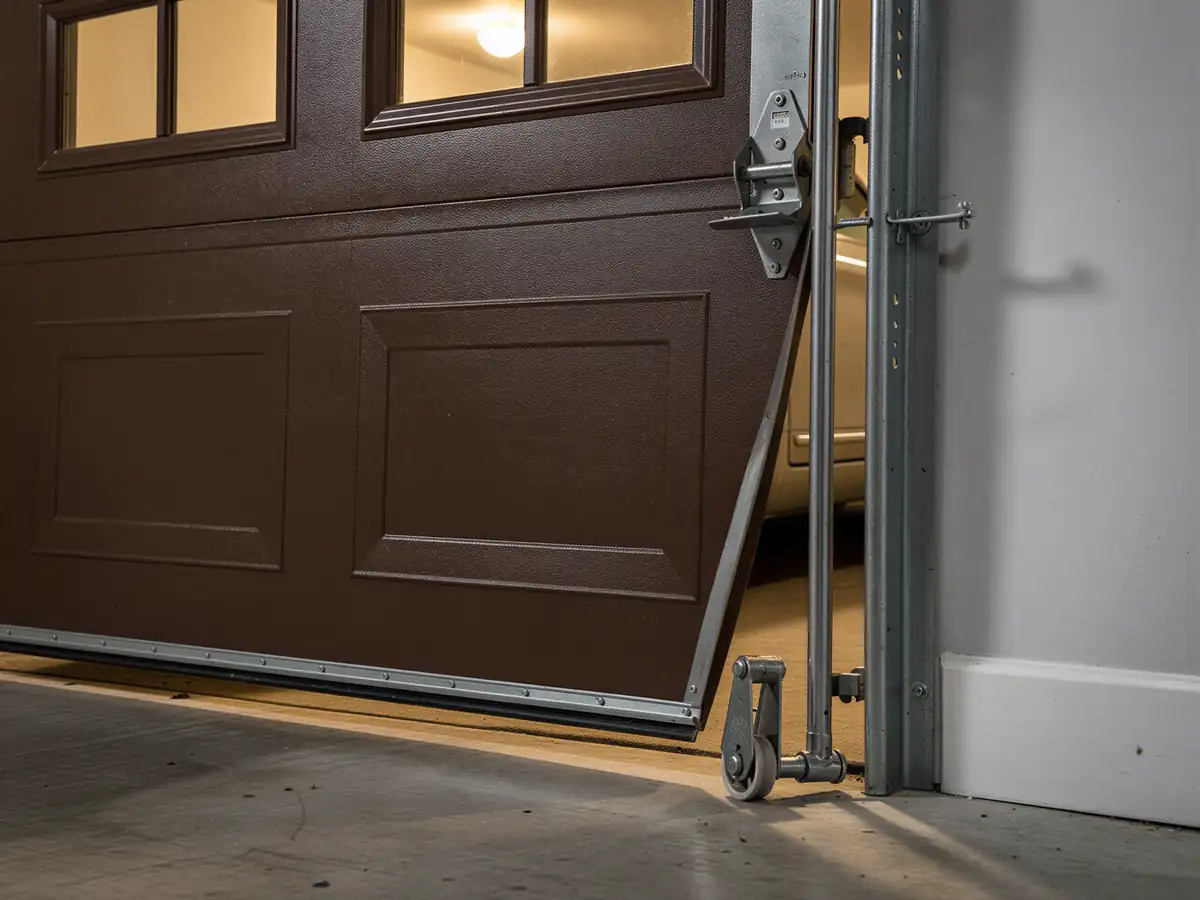
You notice it before anything actually breaks. The door hesitates for a half second before it rolls, the opener motor whines a little longer than it used to, or you hear a flat metallic click every time a roller passes the same spot on the track. None of that stops the door from working today. It's also exactly what shows up right before a torsion spring lets go or a cable starts to fray at the drum.
Across this service area, housing stock runs from 1938 up through 2013, with the thickest band of construction in the 1980s and 90s. A door installed with a house from that era is now thirty-plus years old even if it's never had a single problem. Steel fatigues on a schedule whether or not anyone's paying attention to it, and original hardware on a house that old is usually past the point where "it still opens" means much.
The tell is almost always noise or hesitation, not a dead stop. If your door still opens fine but sounds different than it did a year ago, that's the maintenance window. Once it won't open at all, you're not scheduling a tune-up anymore, you're scheduling a repair, and the bill moves accordingly.
The Cost of This Job
We're not going to put a number here that doesn't hold up once a truck is actually in your driveway
A maintenance visit on a ten-year-old door with a working opener is a different job than one on original 1980s hardware that's never been touched, and the honest answer is we price it after we look at the door, not before.
What we can tell you is what drives the cost up or down
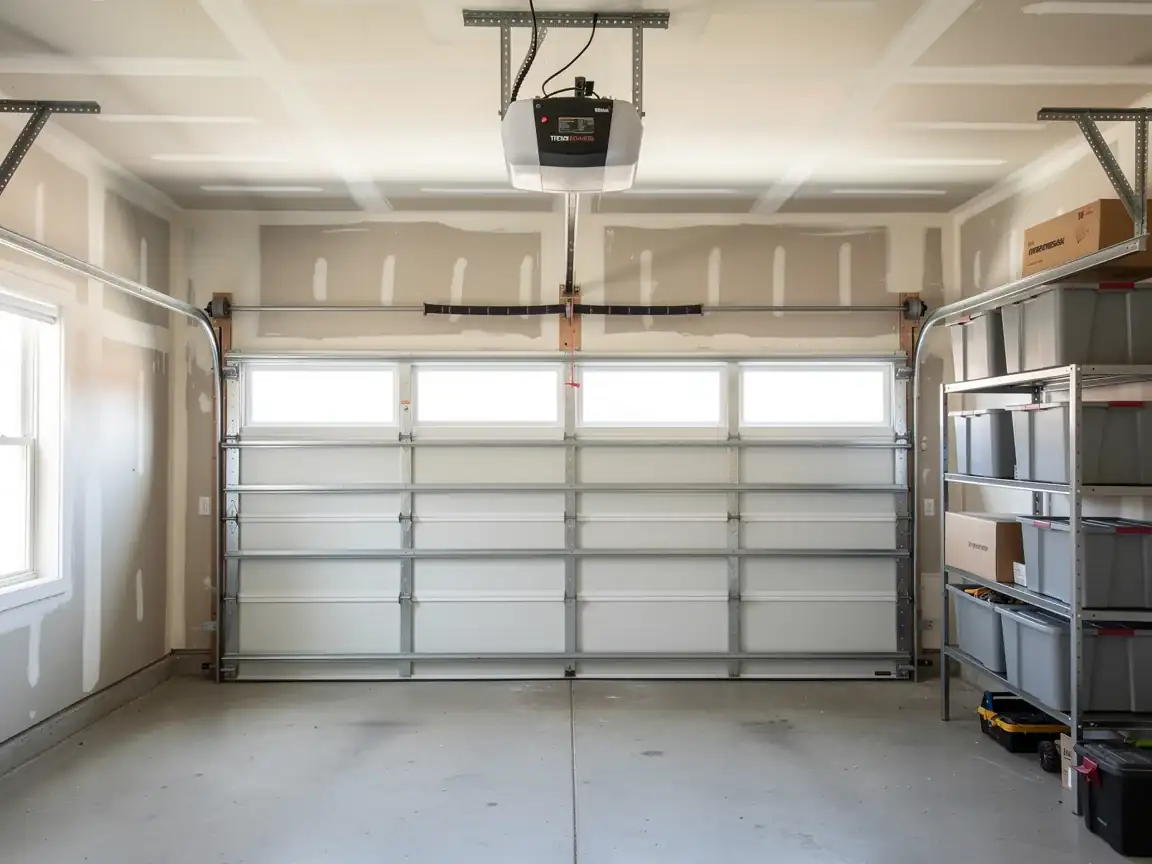
Spring size and door weight matter - a double door on torsion springs takes longer to service correctly than a single. Opener age matters, because older chain-drive units sometimes need parts that aren't sitting on the truck and have to be ordered, which adds a day. And how long it's been since the last tune-up matters more than almost anything else, because a door that's been ignored for a decade usually needs more than lubricant - rollers worn oval, hinges stretched, cable starting to rust.
Here's the limitation worth saying out loud
If a door is far enough gone, a tune-up isn't the right call and we'll tell you that instead of charging you for one. Sometimes the math favors replacing a worn-out opener rather than nursing it through one more winter. We'd rather say that upfront than bill you twice.
Booking a Visit
Maintenance visits don't need to happen on an emergency timeline, which is exactly why they get put off. The door still works, the week gets busy, and the visit slides another month. The better approach is to book it the same way you'd book an oil change - on a schedule, before the symptom turns into a Saturday morning with the car stuck inside.
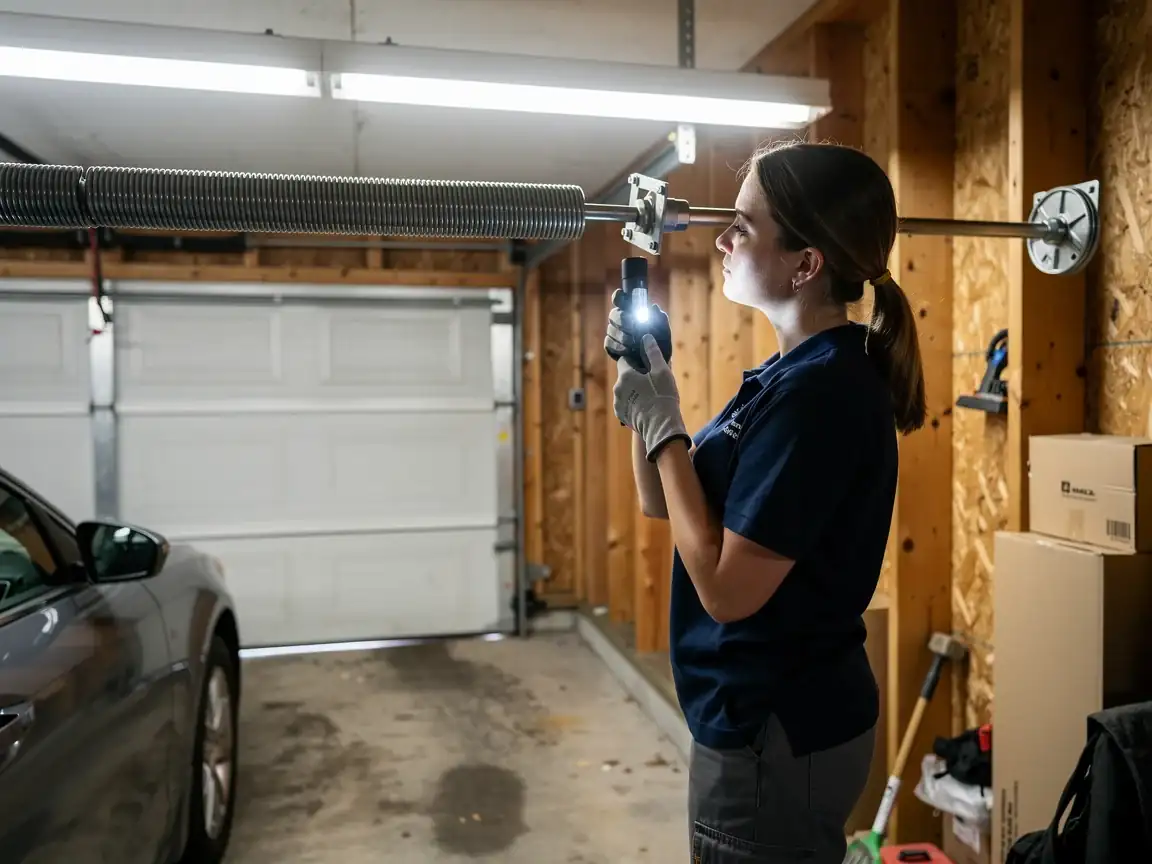
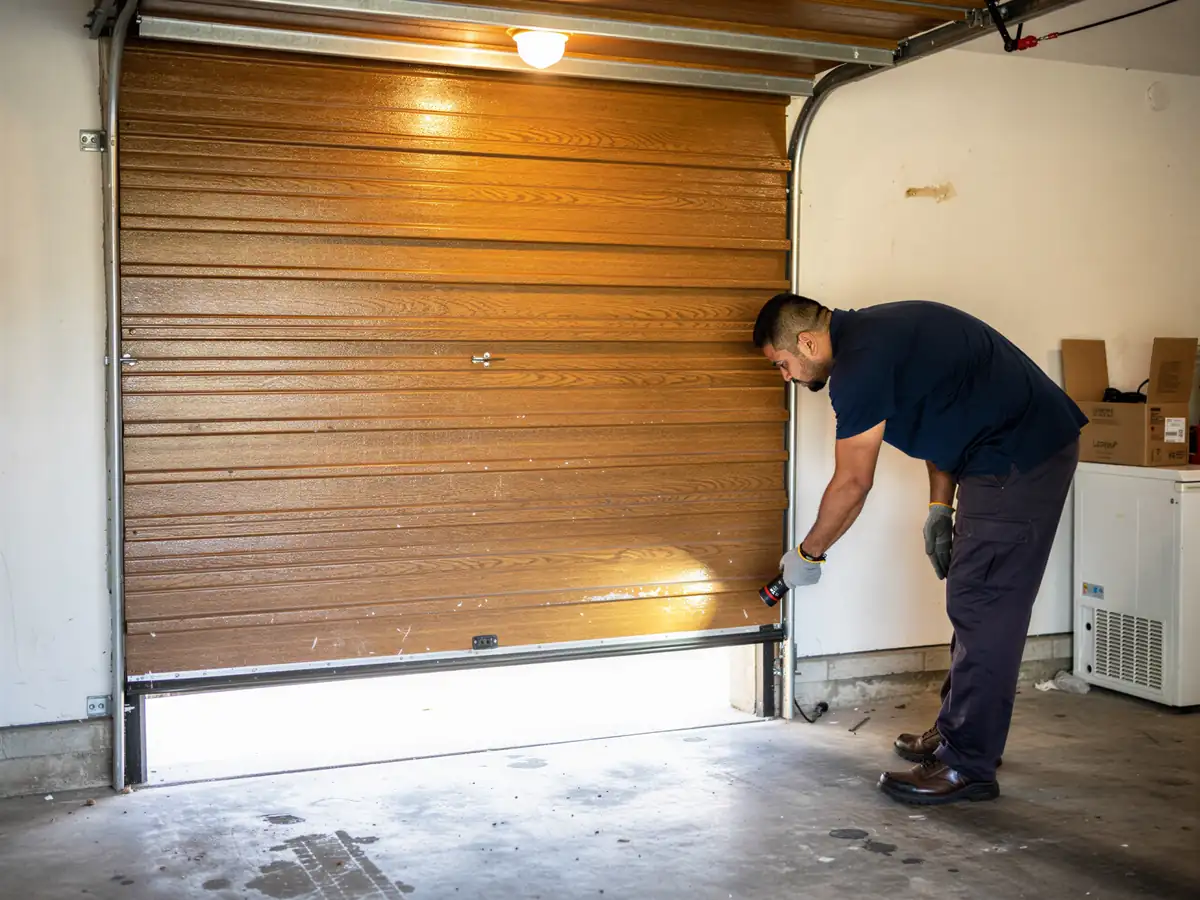
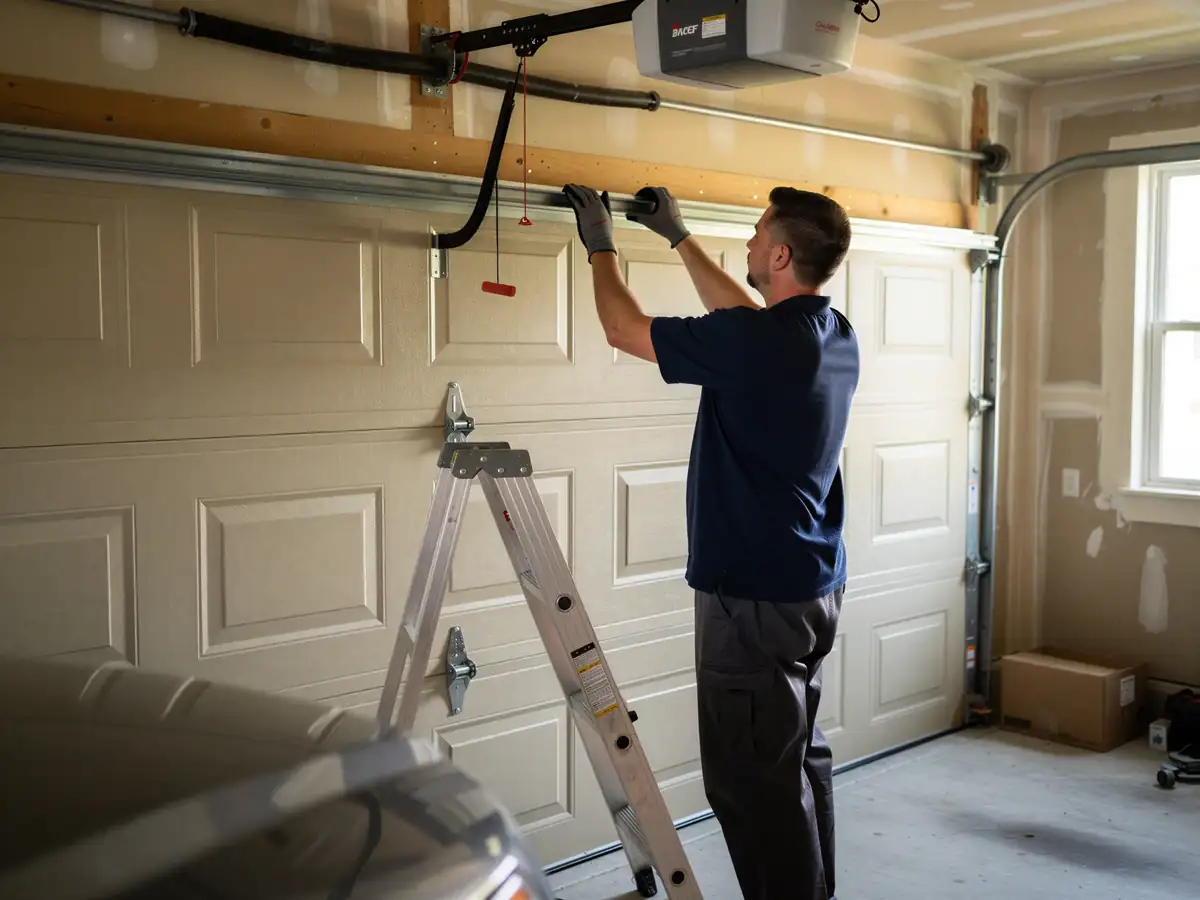
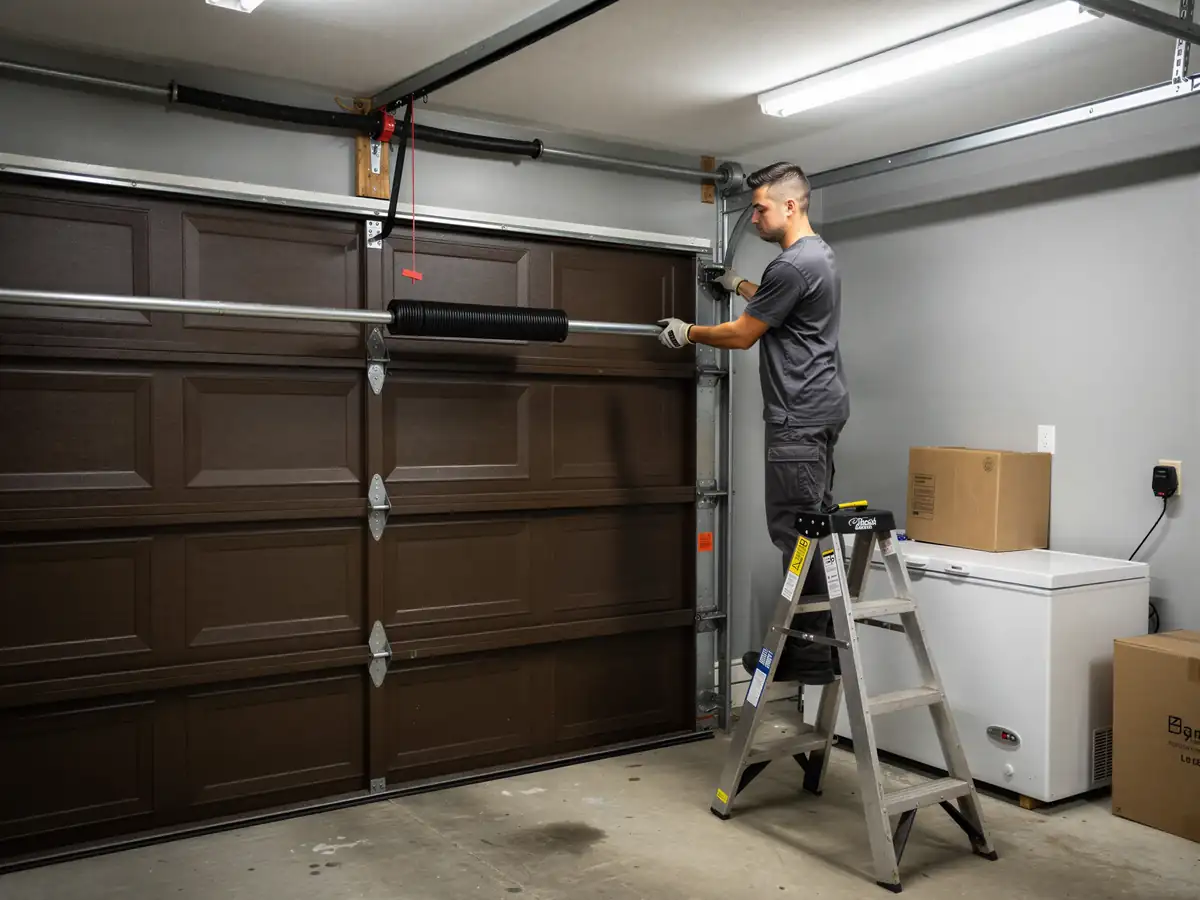
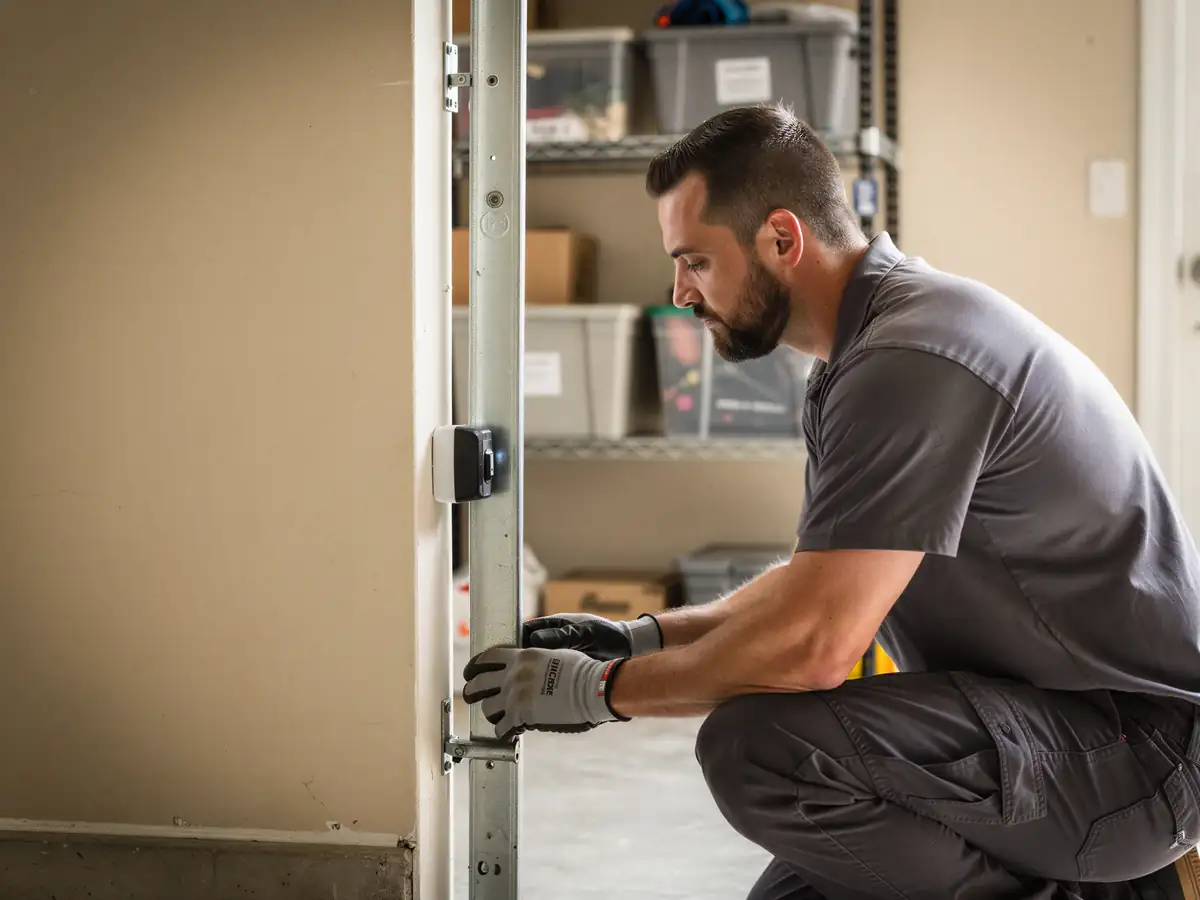
We run maintenance routes through the towns in this service area on a standing basis, which keeps the visit efficient instead of a special trip. That's part of why we can keep the job focused: lubricate hardware, check spring tension and balance, inspect cable and track alignment, tighten hinges and track bolts, and test the opener's force and travel settings. It's a checklist, not a guessing exercise.
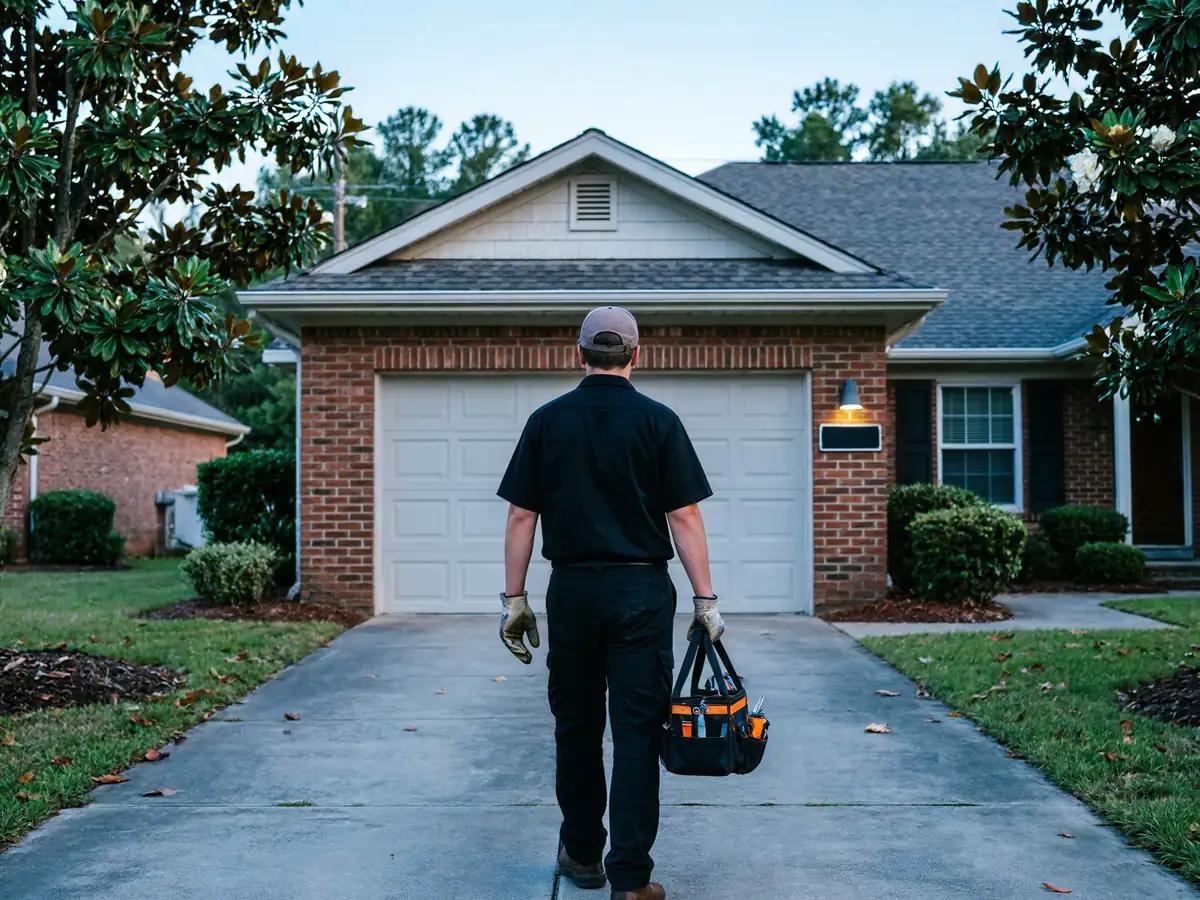
If you're not sure whether your door needs a tune-up or something more, that's a fair question to ask before you book rather than after. You can reach us through the site to set up a time, and if the door's symptom sounds more like a spring about to go than routine wear, say so when you call - that changes which truck gets sent and how soon.
What Causes It Around Here
The housing stock is the starting point. With construction spanning 1938 to 2013 and the heaviest concentration in the 1980s and 90s across the named communities in this area, a large share of doors are running on hardware that predates modern galvanized cable and sealed bearings. That's not a flaw in any one house - it's just the math of a neighborhood built before certain parts became standard.
Climate does the rest of the work. This area sits in a moderate cold band, which means the door hardware isn't frozen solid all winter the way it would be further north, but it does go through a real swing - humid summers that swell wood jambs and gum up grease, followed by winter cold that stiffens steel and makes a dry spring snap instead of stretch. That cycle, repeated every year for decades, is what turns "a little noisy" into "broken" faster than age alone would.
There's also a practical side tied to how this area is built out. With 48,742 owner-occupied houses among 97,161 households, and a median household income of $55,671, a lot of owners are weighing a maintenance visit against other repairs on the list. Deferred maintenance is common, which is exactly why the failures we see tend to be advanced rather than early.