Checking It Yourself
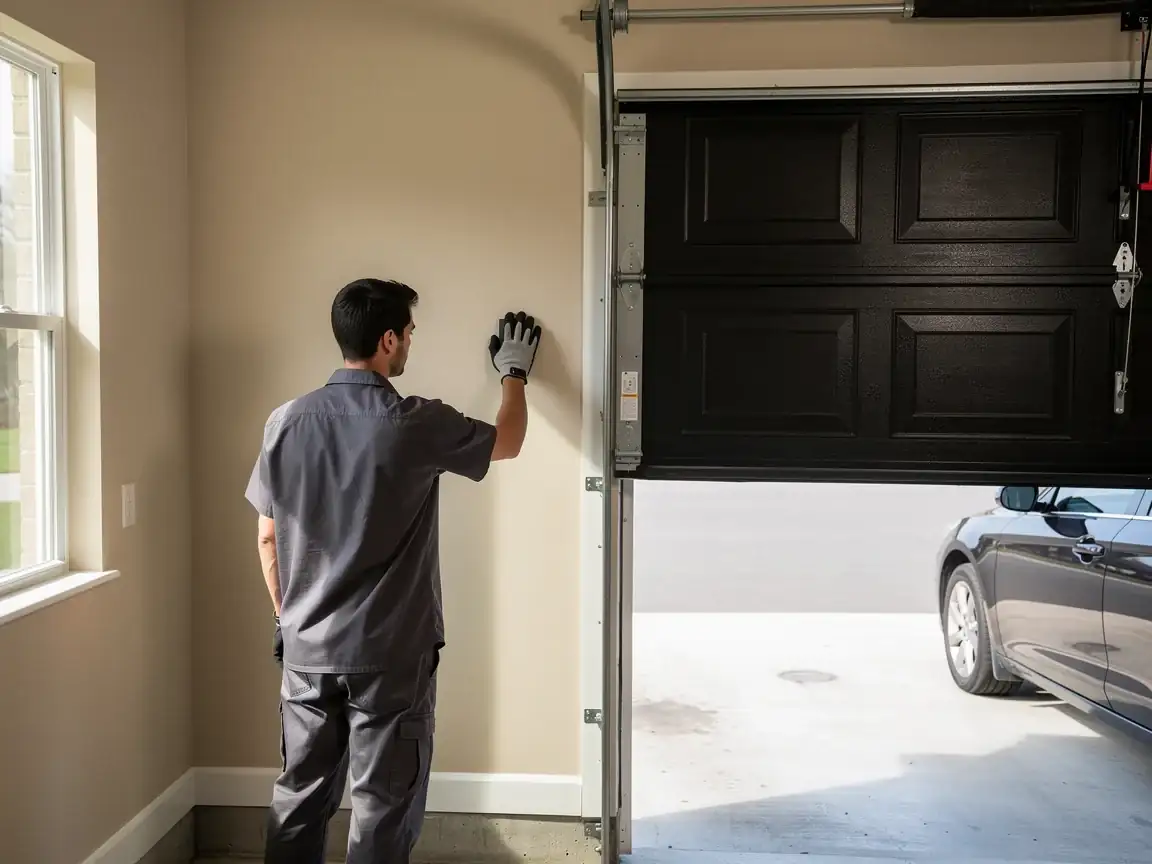
Before you call anyone, there's a short list you can run through on your own. Pull the release handle and lift the door by hand, slow, to the halfway point. Let go. If it stays put, the springs are carrying their share of the weight. If it drops or shoots up, the springs are off balance, and that's not a DIY fix on a torsion system.
Listen while the door runs. A clean cycle sounds like a low hum and a soft clunk at the top and bottom. Grinding, popping, or a bang partway through usually means a roller has worn through its bearing or a hinge has loosened at the panel seam.
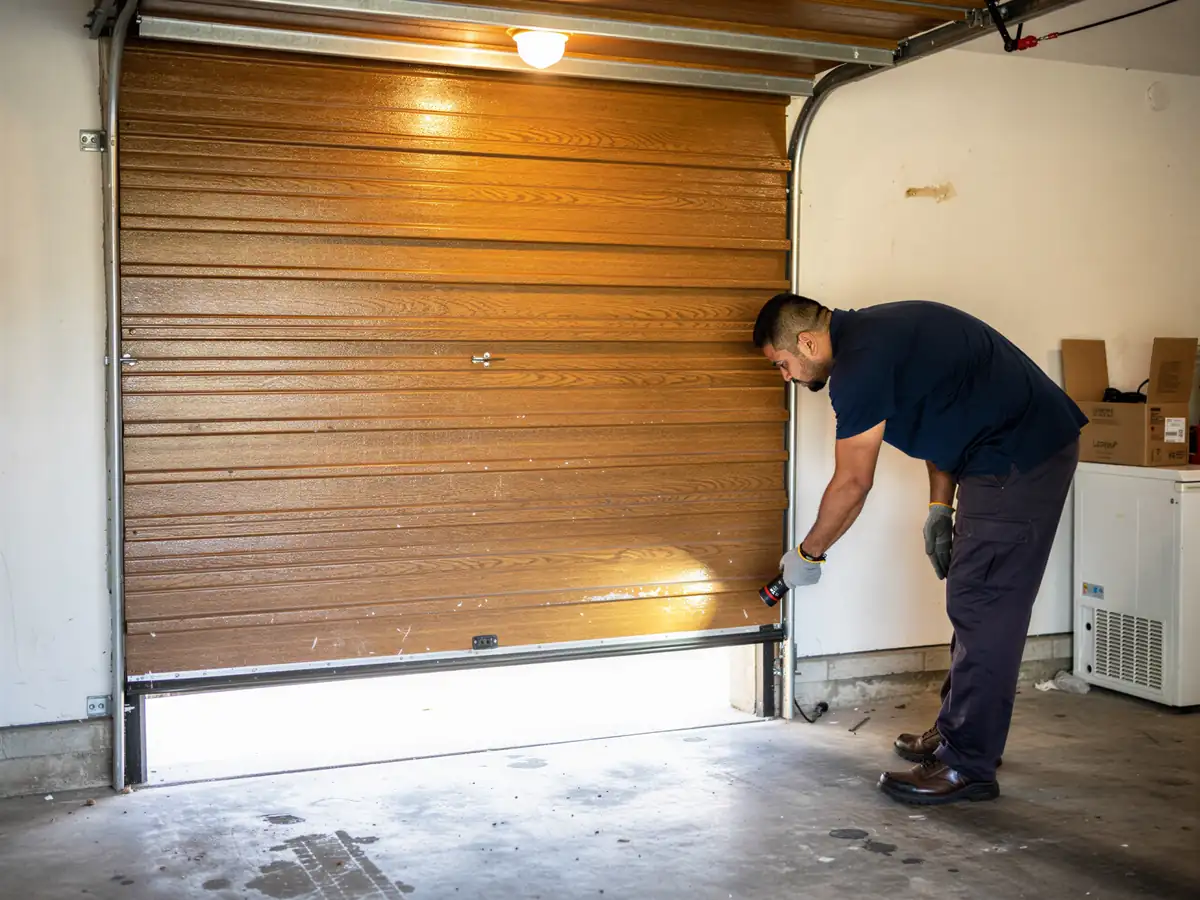
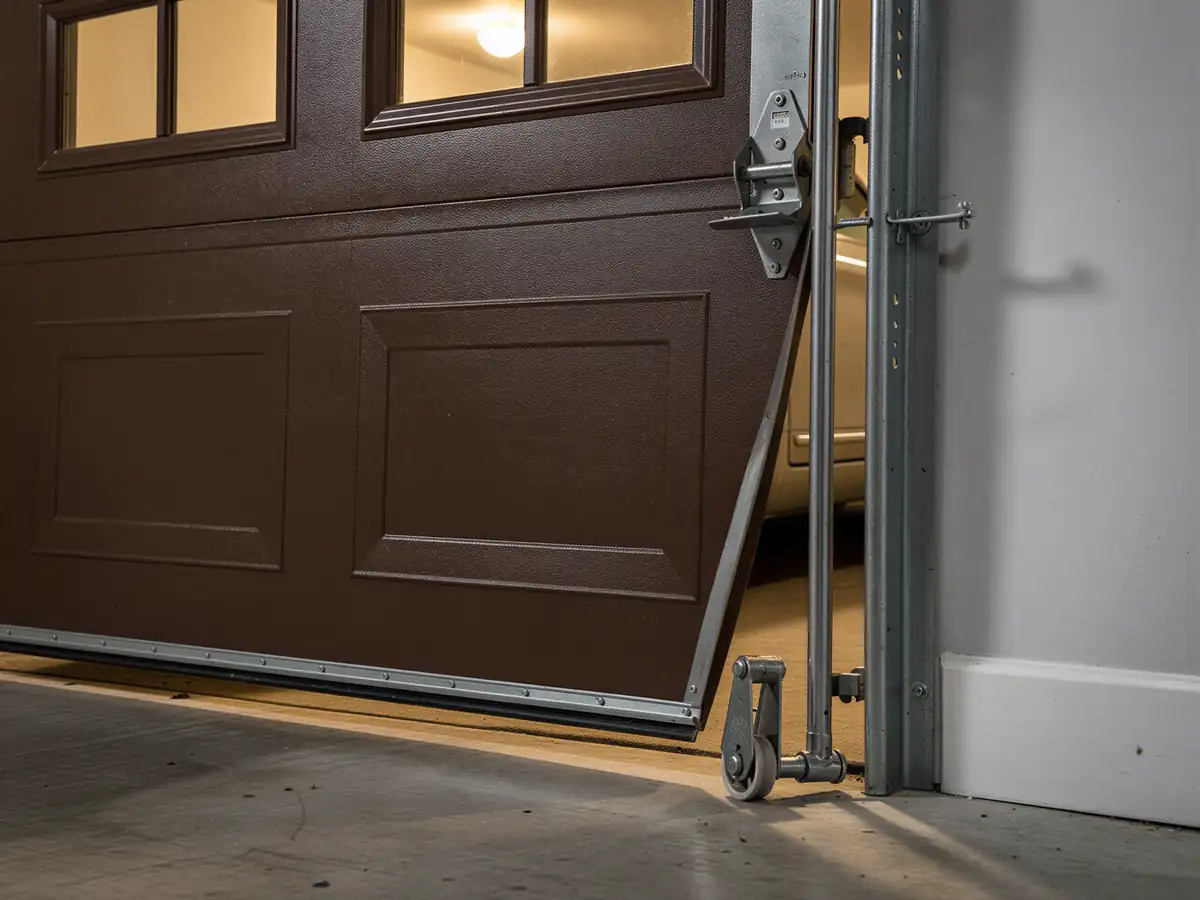
Look at the tracks for daylight gaps between the roller and the rail, and check that the bottom weatherstrip still sits flat against the slab rather than curling at the corners. On the older end of Greer's housing stock - homes that go back as far as 1938 - original wood jambs have sometimes shifted enough that the door no longer seats square, and that shows up as light leaking around the edges.
One honest limit here: a balance test tells you something is wrong, not what. Guessing at spring tension yourself is how fingers get hurt. That part is a call.
How Local Conditions Play In
Greer sits in a cold-moderate climate band
Not the deep-freeze end of the country but cold enough, often enough, that steel parts move. Torsion springs and tracks contract when temperatures drop, and that changes how much force the opener needs to lift the same door it handled in August without a strain.
Most of the service area's housing dates to the 1980s and 90s
Built before today's insulated steel and composite door standards were common. A lot of those original panels are single-layer steel or wood composite, both of which transmit cold straight through to the garage interior. That matters less for the door itself and more for anything stored near it - paint, batteries, water lines running along the garage wall.
We don't see hurricane-grade wind load requirements out here the way the coast does
So the hardware isn't over-built for storm pressure. It's built for a moderate climate with real seasonal swings, which is a different set of stresses: freeze-thaw on concrete slabs, moisture swelling wood jambs, and opener gears that get stiffer with cold grease rather than storm-rated springs that never get used.
What Is Going On
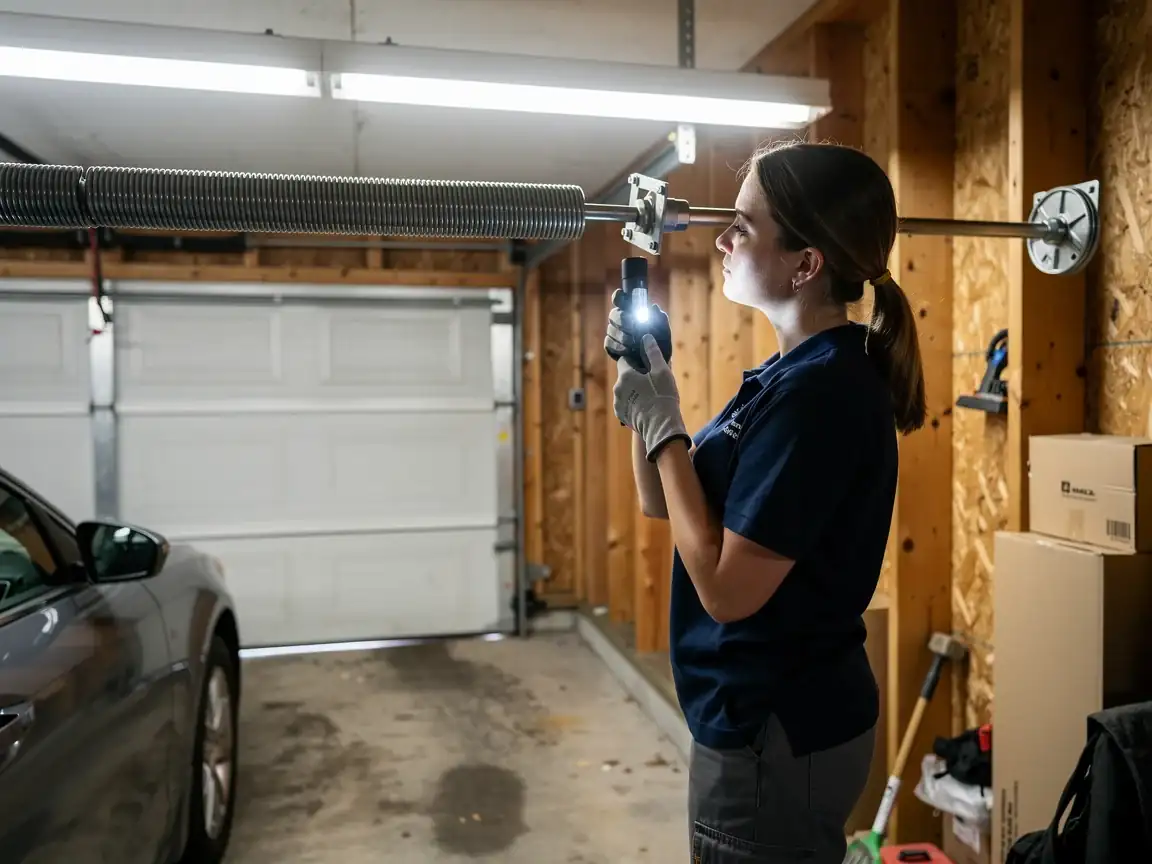
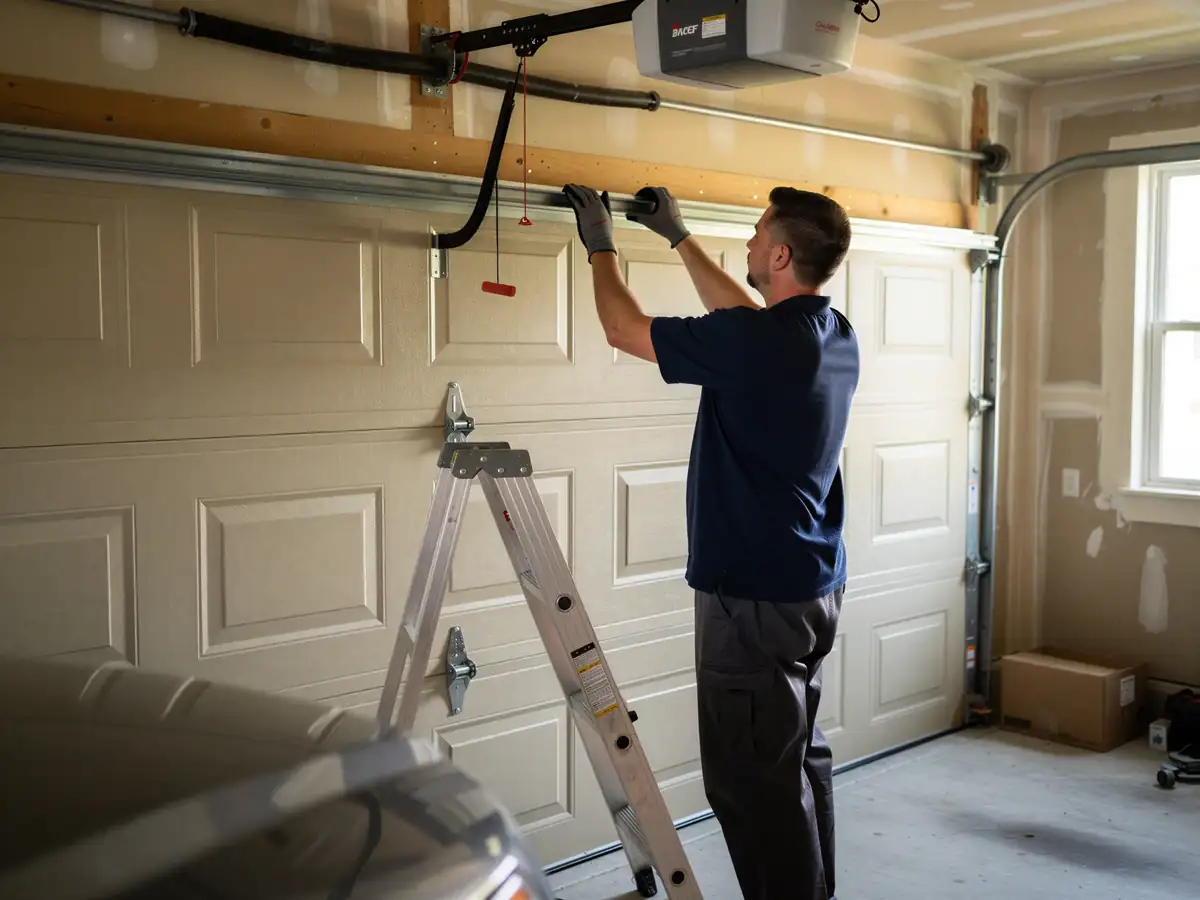
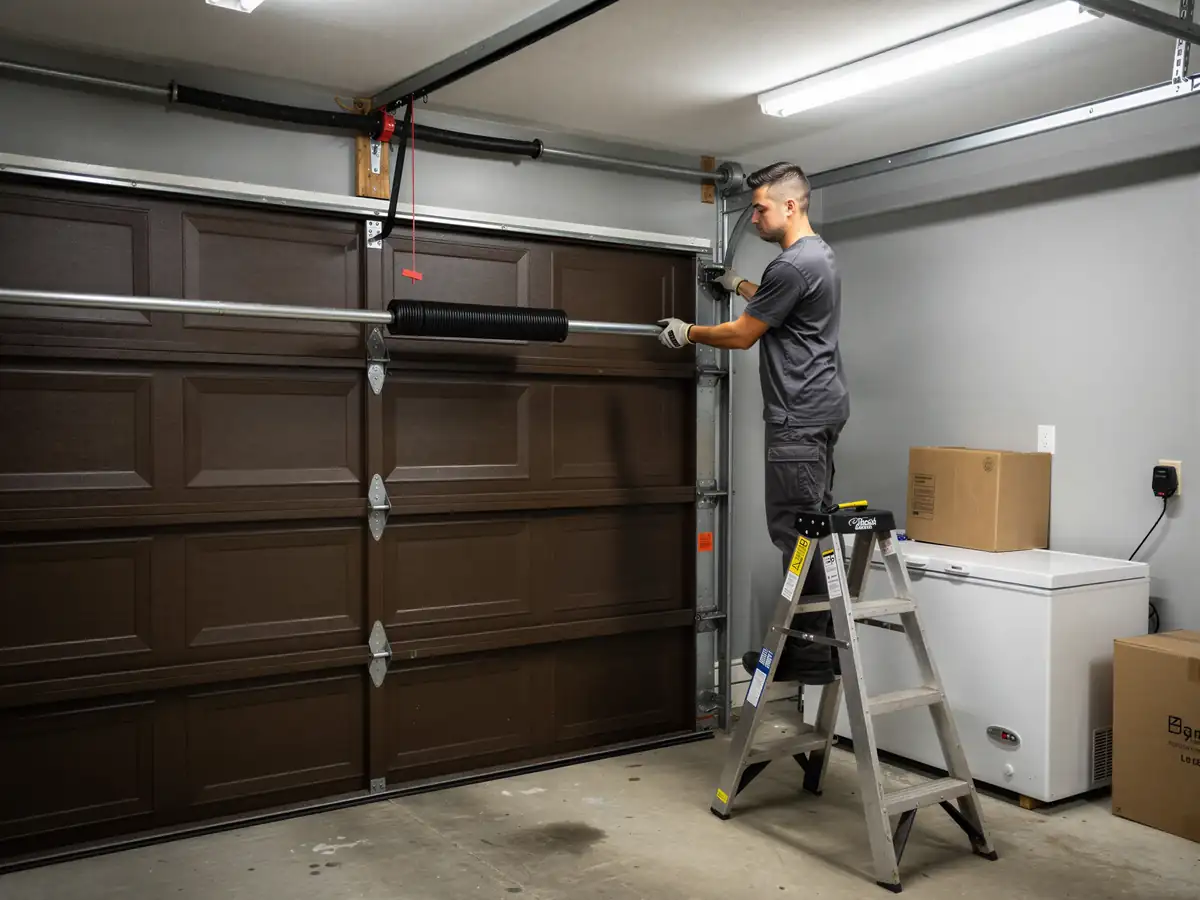
A service call starts with the spring system because that's what's doing the lifting, and it's also what fails hardest when it fails. On a lot of the 1980s and 90s builds that make up most of Greer's housing stock, that means a torsion spring mounted above the door rather than the older extension-spring setup along the tracks. We check wind count, cable condition, and the drum set screws, since loose set screws are a common cause of a door that runs crooked.
From there it's rollers, hinges, and the track alignment at the point where the vertical rail curves into the horizontal. A bent section there usually traces back to someone backing into the door at some point, not wear.
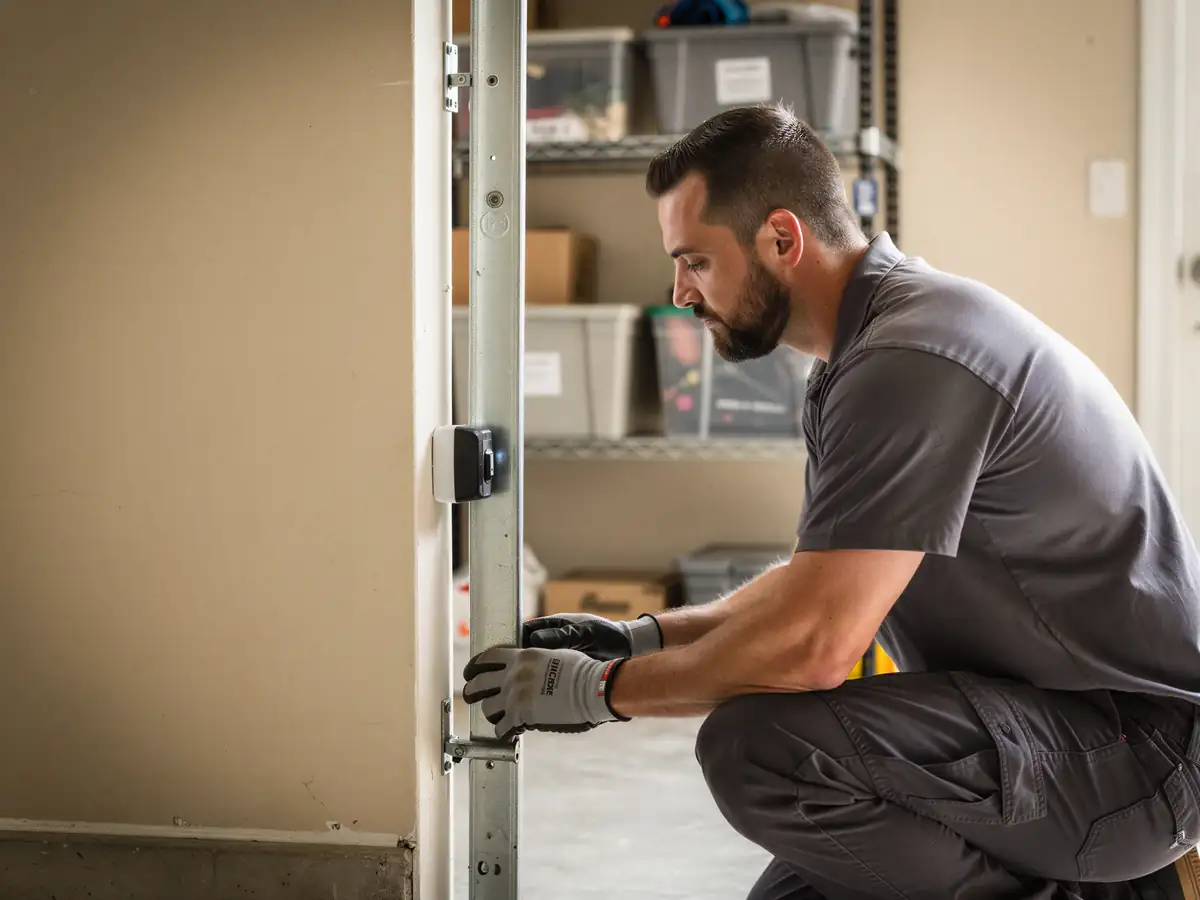
On the opener side, we check the force and limit settings, the sensor alignment at the bottom of the tracks, and the drive gear if it's a chain or belt unit. Gear wear is common enough on units that have been running fifteen-plus years, which lines up with a fair share of the area's older stock.
What we don't do on a standard service call is replace a full panel set on the spot - damaged sections usually need to be ordered to match the existing door, and that's a return trip, not a same-day fix.
What Changes With the Season
In the cold months, the two things we get called out for most are springs that have lost tension and openers that have started lagging on the open cycle. Cold steel is stiffer and slightly shorter, so a spring that was balanced in July can leave a door a few pounds heavy by January. The opener tries to compensate, and that's extra wear on the drive gear every single cycle.
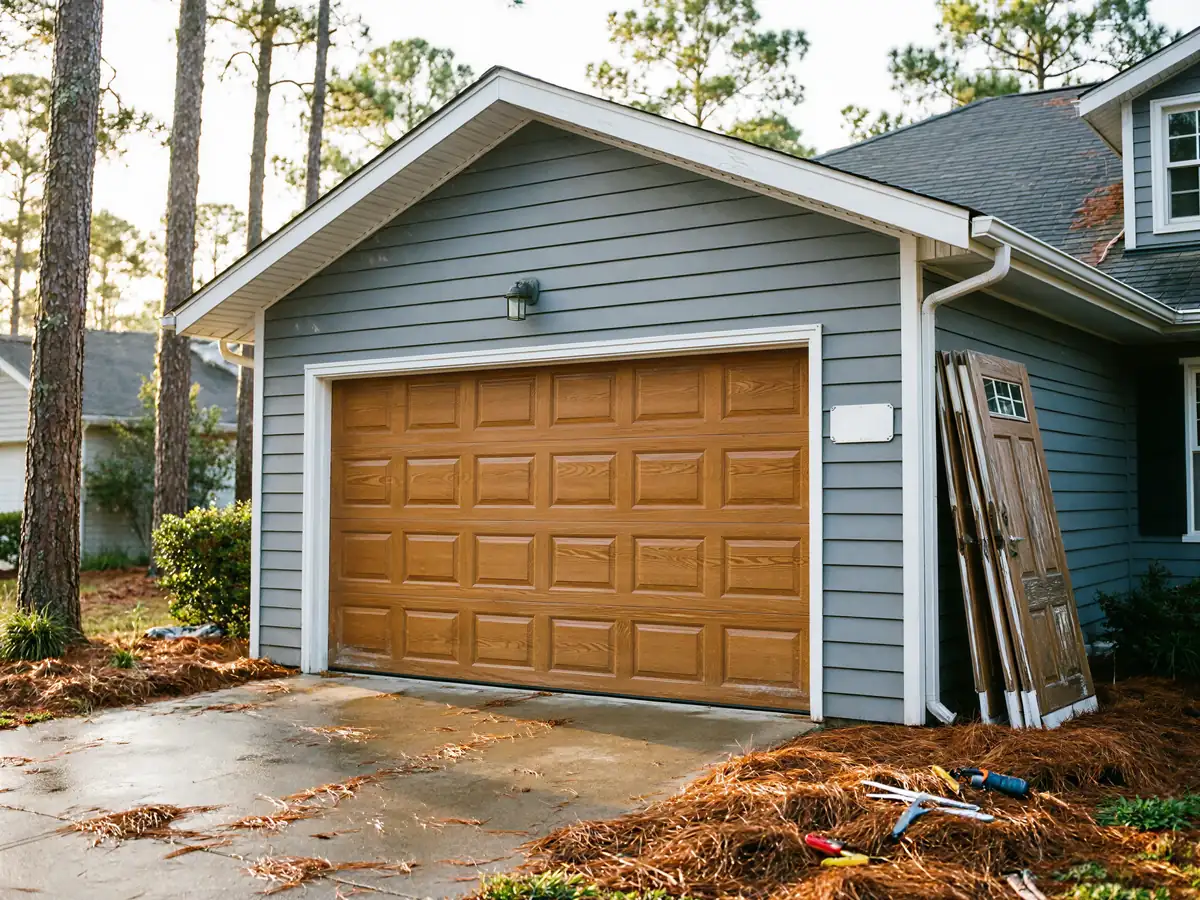
Moisture is the other half of it. Freeze-thaw cycles on driveways and slabs can shift a garage floor enough, over years, to throw off a door's seal at the bottom. On older homes - and a good share of the stock out here was built well before today's codes - wood jambs absorb that moisture and swell, which is why a door that closed flush in spring sometimes drags by winter.
We run calls out from Greer to Duncan, about five miles off, out past Taylors and Lyman, and as far as places like Woodruff and Landrum near the edge of the service area. Lead times on parts don't change with the season, but call volume does - cold snaps are when the phone rings most, so if a spring feels off now, it's worth getting ahead of the line rather than waiting for the first hard freeze.