Serving Greer, SC & nearby
(864) 393-3912
Greer, SC

Garage Door Springs and Cold Weather in Greer, SC

In Greer, SC, many garage doors date back to the 1980s median build year, and cold mornings are when a tired torsion spring is most likely to finally snap.

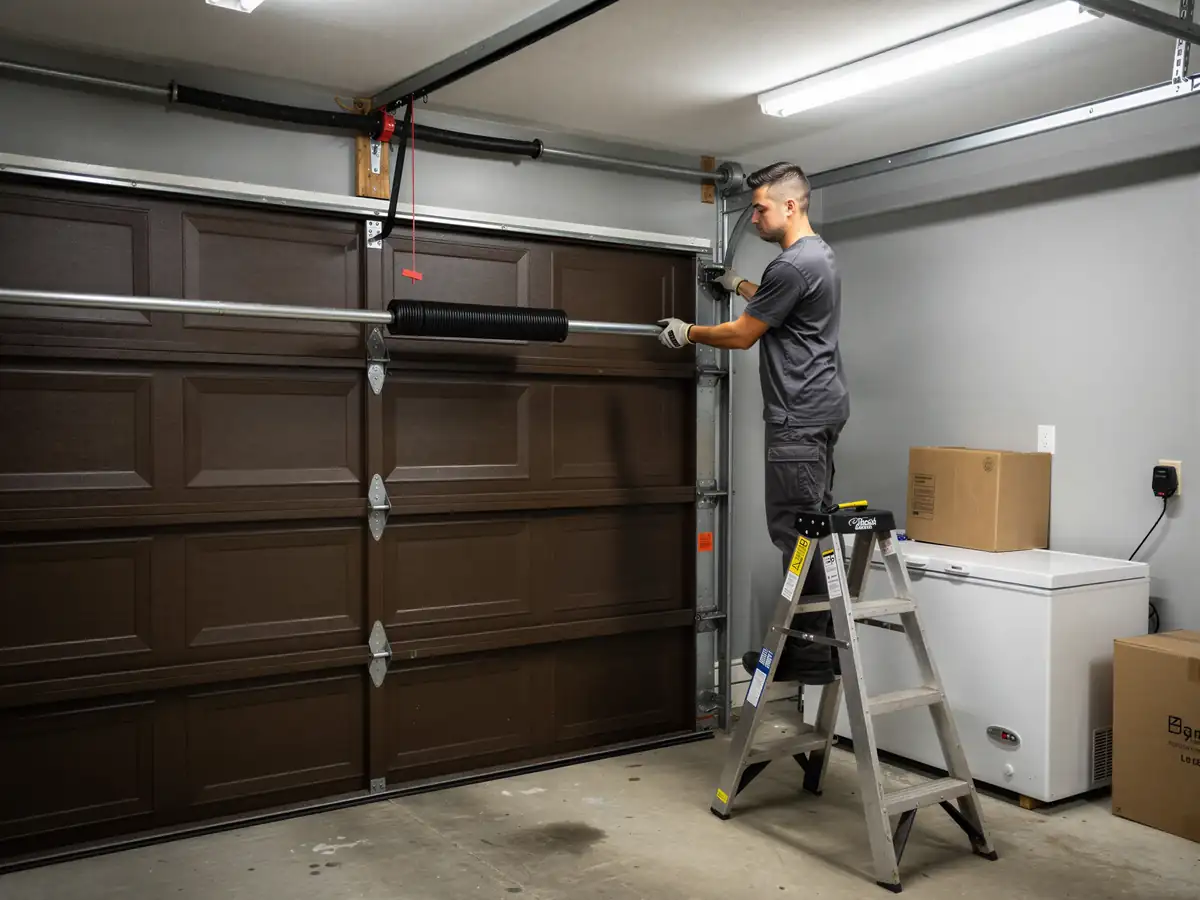
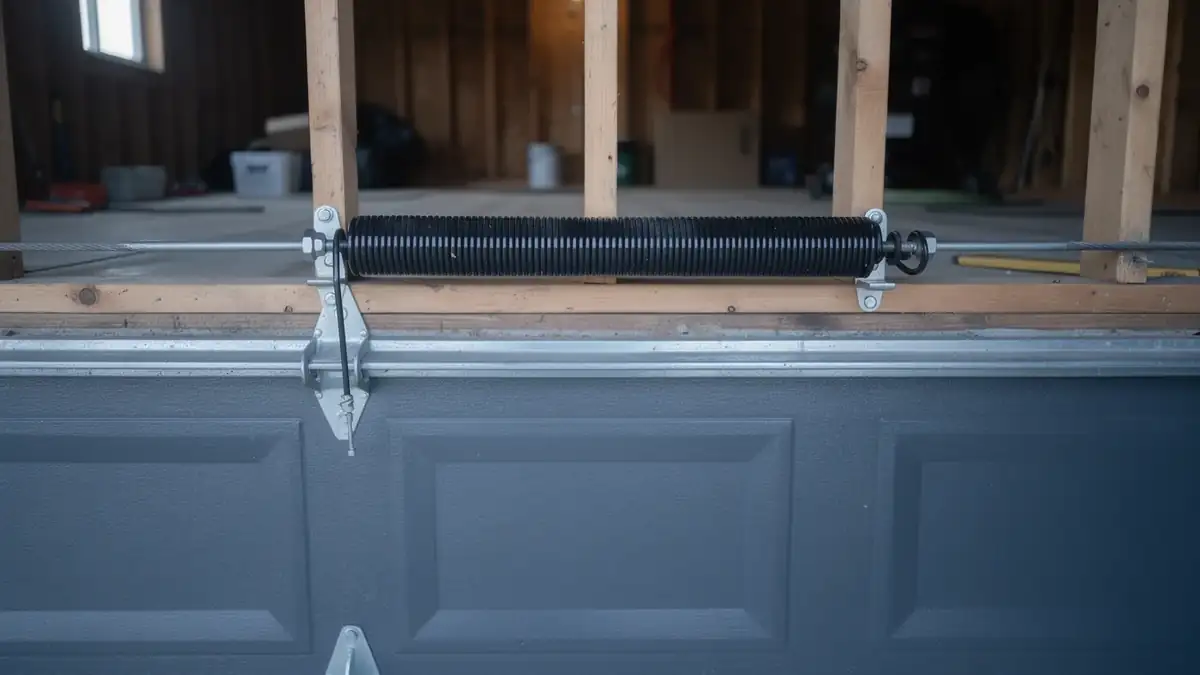
A black torsion spring is mounted above a gray garage door.

Checking It Yourself

You don't need a tech to tell you a spring's gone. If the door won't budge past a few inches, or it drops suddenly when you pull the release, that's a torsion spring that's lost its tension. Listen for a loud bang from the garage - that's often the sound of the spring letting go, not a break-in. Look up at the bar above the door: on most houses built here between the late 1970s and the 1990s, you'll find a single torsion spring mounted on a shaft over the opening, not the older side-mounted extension springs that showed up on homes from the 1938-era end of the local stock. If the spring is torsion and you see a visible gap in the coil, or one side sagging lower than the other, it's broken. Don't try to wind it back yourself - torsion springs hold enough stored force to break a finger or worse. We don't recommend DIY spring work on any door with heavier-wound coils; the winding bars and tension involved aren't something to guess at with a wrench off the garage shelf.

How Local Conditions Play In

Greer sits in what the climate data calls a cold-moderate band - not the deep freezes you'd get further inland, but enough hard overnight cold that steel contracts and gets brittle in a way it doesn't in July. A torsion spring that's been fine all summer, carrying a double door's weight forty times a day, is already fatigued by the time the first cold snap of the season hits. Cold doesn't create the weakness. It exposes it. The same spring that would have lasted another six months in a warmer climate band lets go on the one morning it's cold enough in the garage that the metal has no give left. That's why the calls we get for broken springs cluster hard in the coldest stretch of the year rather than spreading evenly across twelve months. If your door has felt heavier to lift by hand over the last few weeks, that's often the spring telling you it's close, well before it finally snaps on a cold morning.

What Is Going On

A torsion spring is just a tightly wound coil of steel wire holding stored energy that counterbalances the door's weight. Every cycle - open, close - puts a small amount of fatigue into that wire. Across the service area, a lot of the housing stock traces back to a median build year of 1983, which means plenty of doors out there are running on second or third springs already, installed at different times, by different people, with different wind counts. Cold makes brittle steel more likely to fracture rather than just stretch, so a spring near the end of its life is far more likely to actually break in winter than it would be to just go slack in warm months. With a median household income of $55,671 across the service area, many homeowners here choose to replace just the broken spring rather than swap both, when the second spring still has life left in it. One limitation worth being honest about: we can't tell you exactly how many cycles are left in a spring just by looking at it. Age, rust, and a visible gap in the coil tell us a lot, but cycle count isn't something you can read off the hardware.

What Changes With the Season

As the season turns, the garage itself gets colder faster than the rest of the house, since most garages here aren't insulated the way living space is. That temperature swing is bigger on an unheated slab garage than it is in a frame-built add-on, and it's the slab garages - common across the older end of the 1938-2013 build range - where we see the most sudden failures. Lubrication habits matter more in cold months too: grease that coats a roller fine in warm weather can stiffen up in a cold garage and add drag right at the moment the spring has the least reserve left to spare. If you're going to do one thing before the coldest stretch hits, it's checking that the door balances - lift it halfway by hand with the opener disconnected and see if it holds. A door that drifts down means the spring is already losing ground, and that's worth a call before, not after, it goes.
How it works

From “it’s stuck” to “it’s fixed”

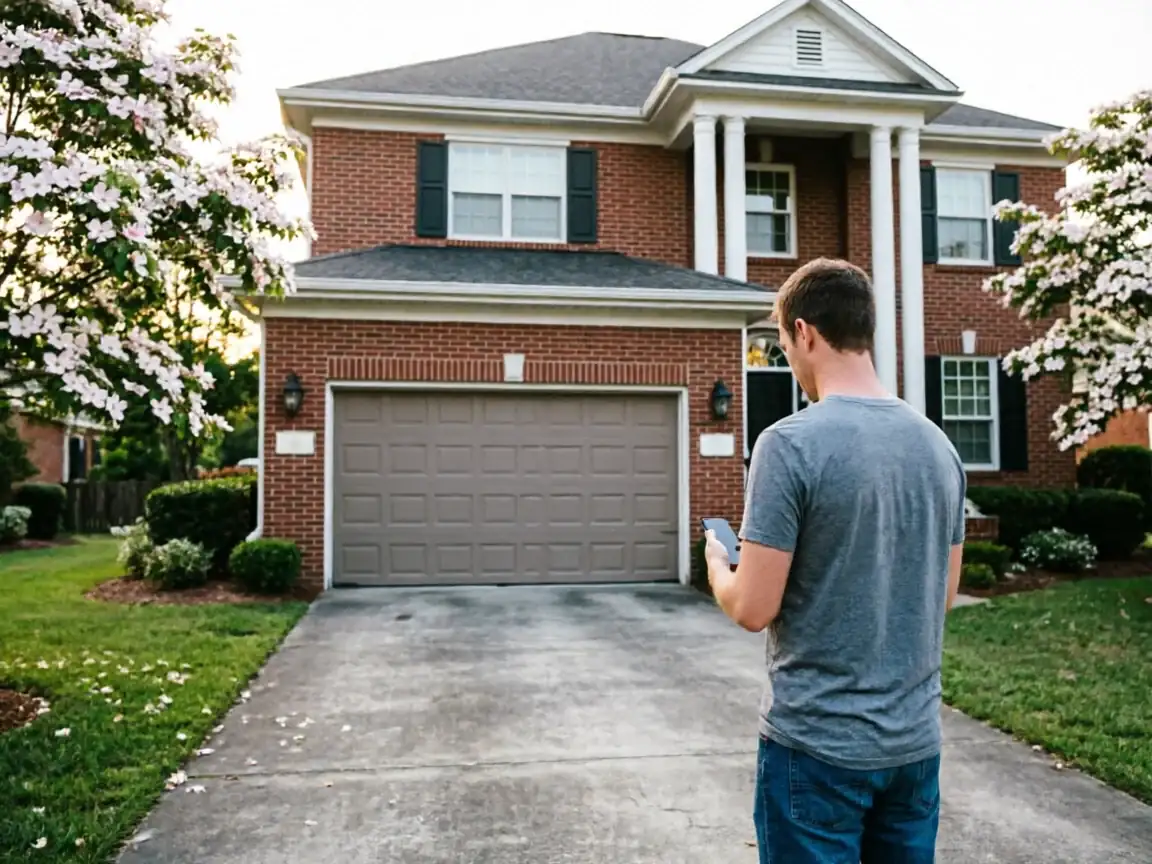
A man in a gray shirt stands in a driveway, looking at his phone.

Tell us what’s wrong

Describe the symptom - won’t open, loud bang, opener runs but the door won’t move.

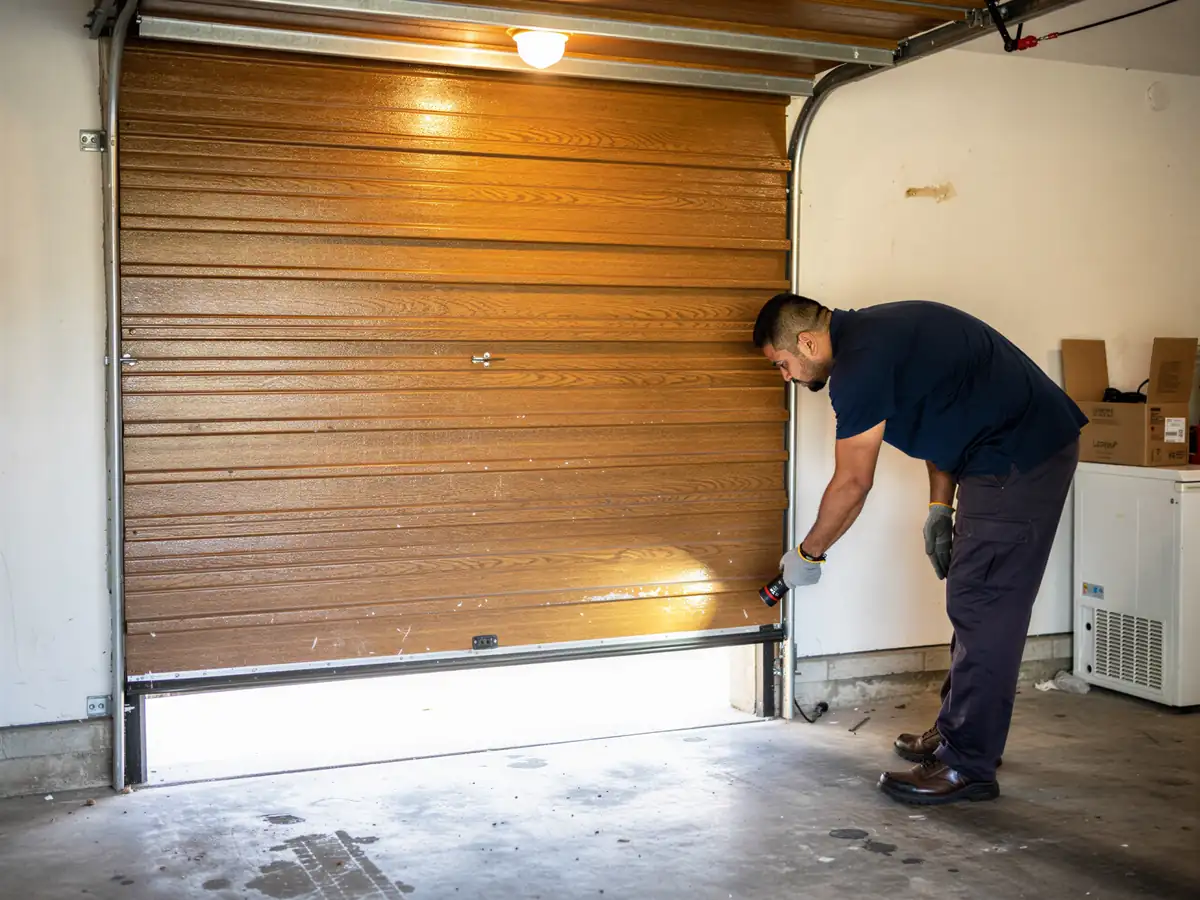
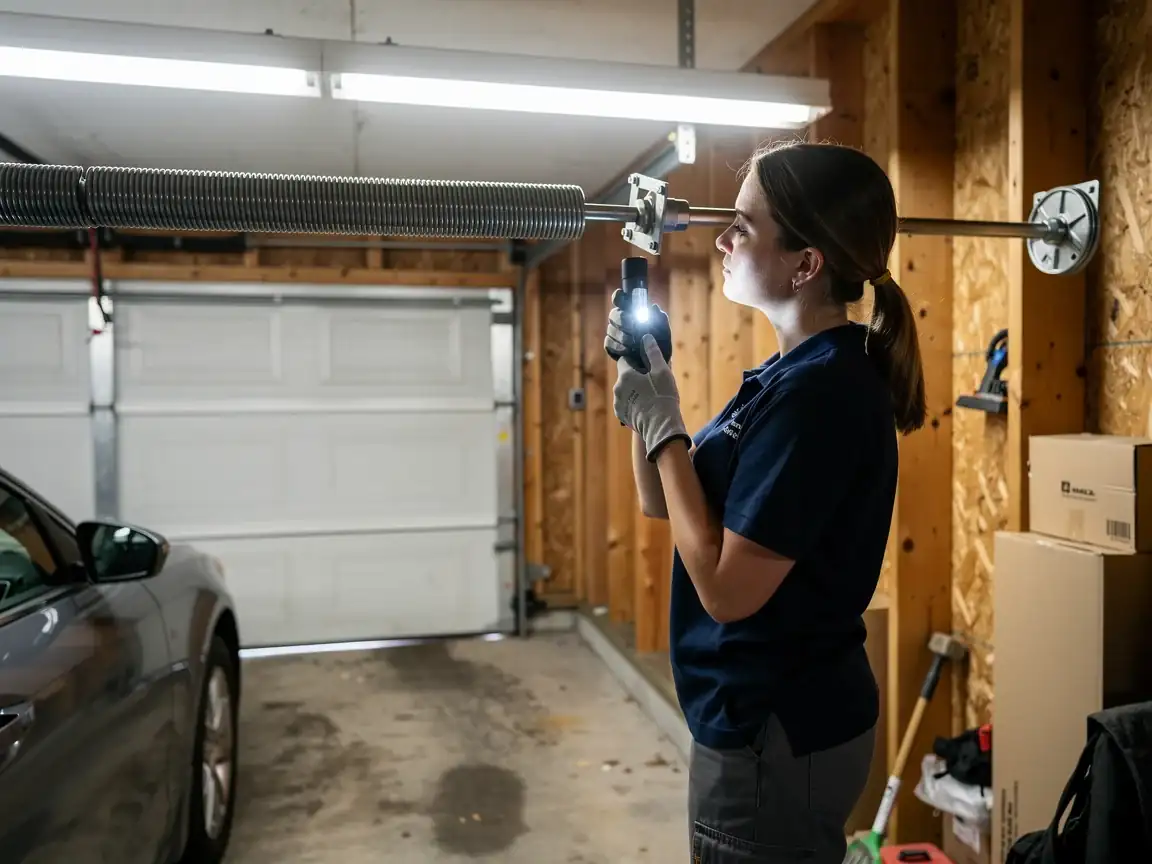
A technician shines a flashlight on a garage door torsion spring.

On-site diagnosis

A technician tests the door under power and by hand and finds what actually failed.

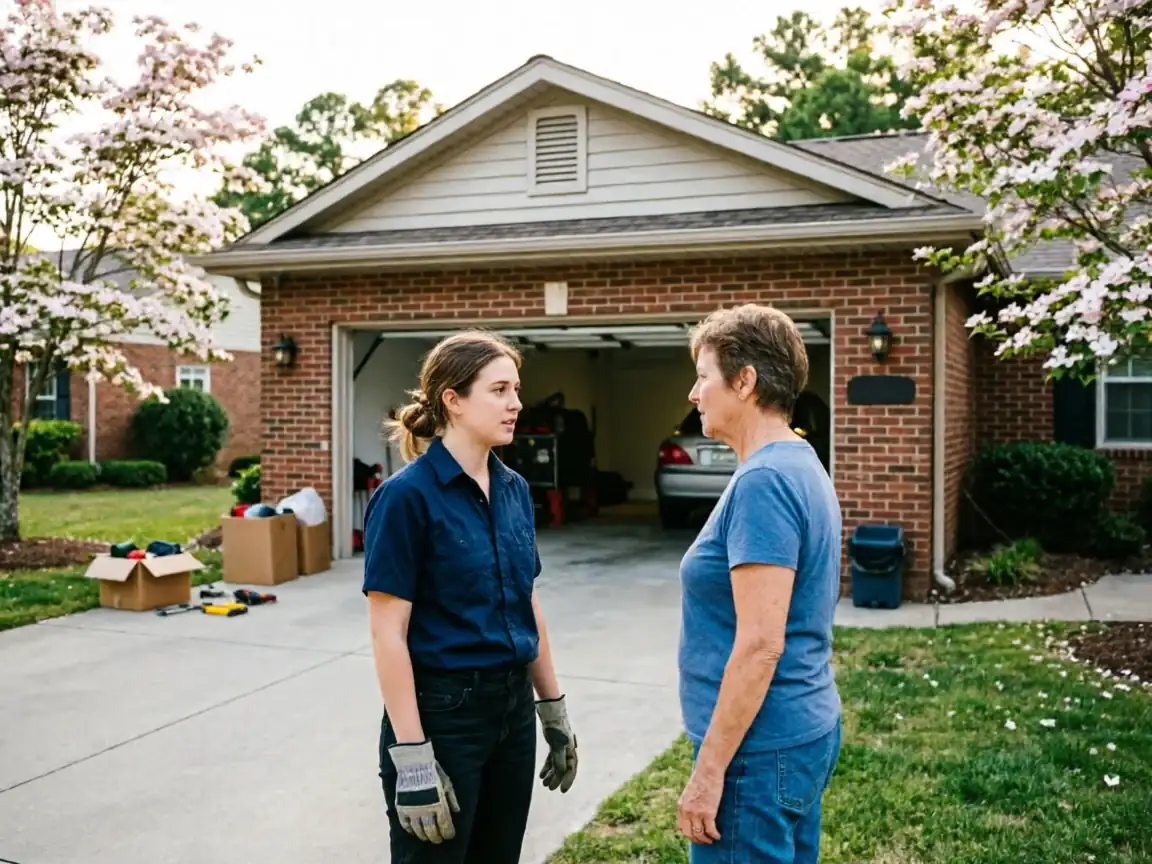
A technician in work gloves talks to a woman in front of a brick house.

Clear, up-front plan

You get the fix that’s needed and what drives the cost - before any work starts.

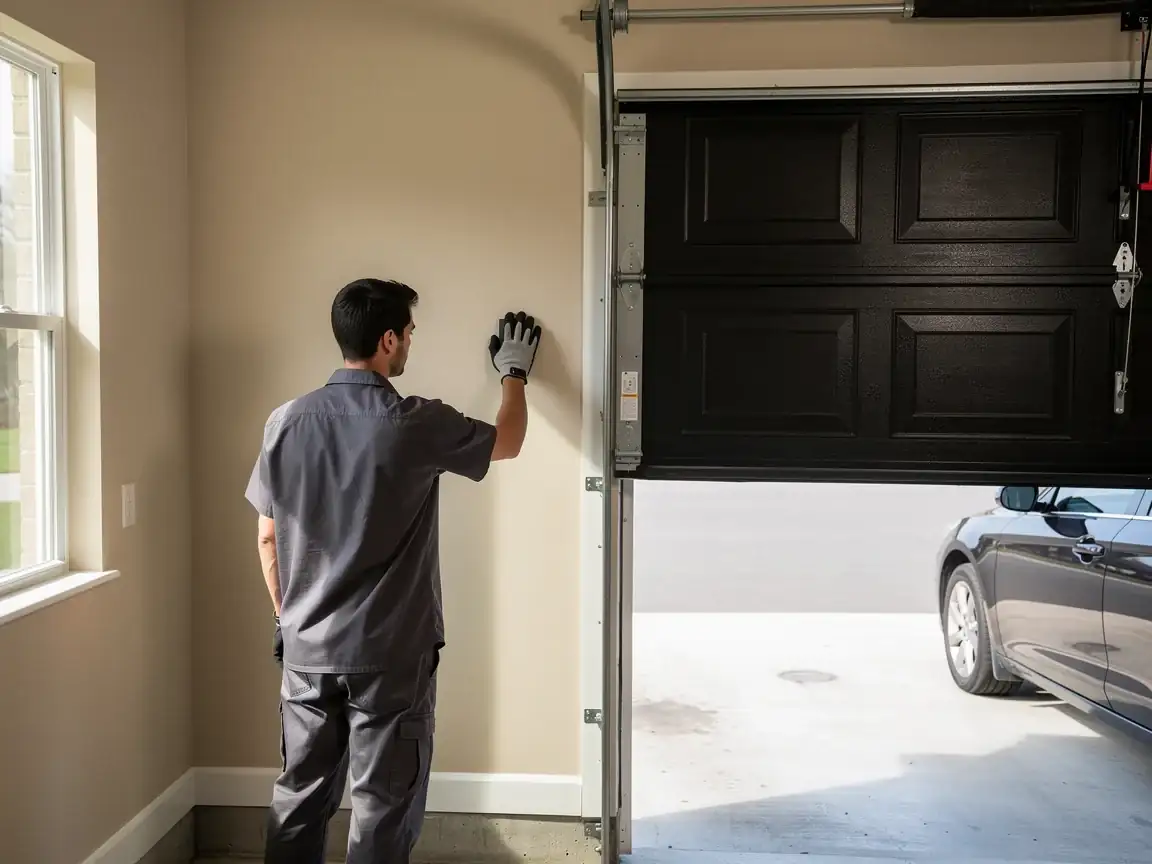
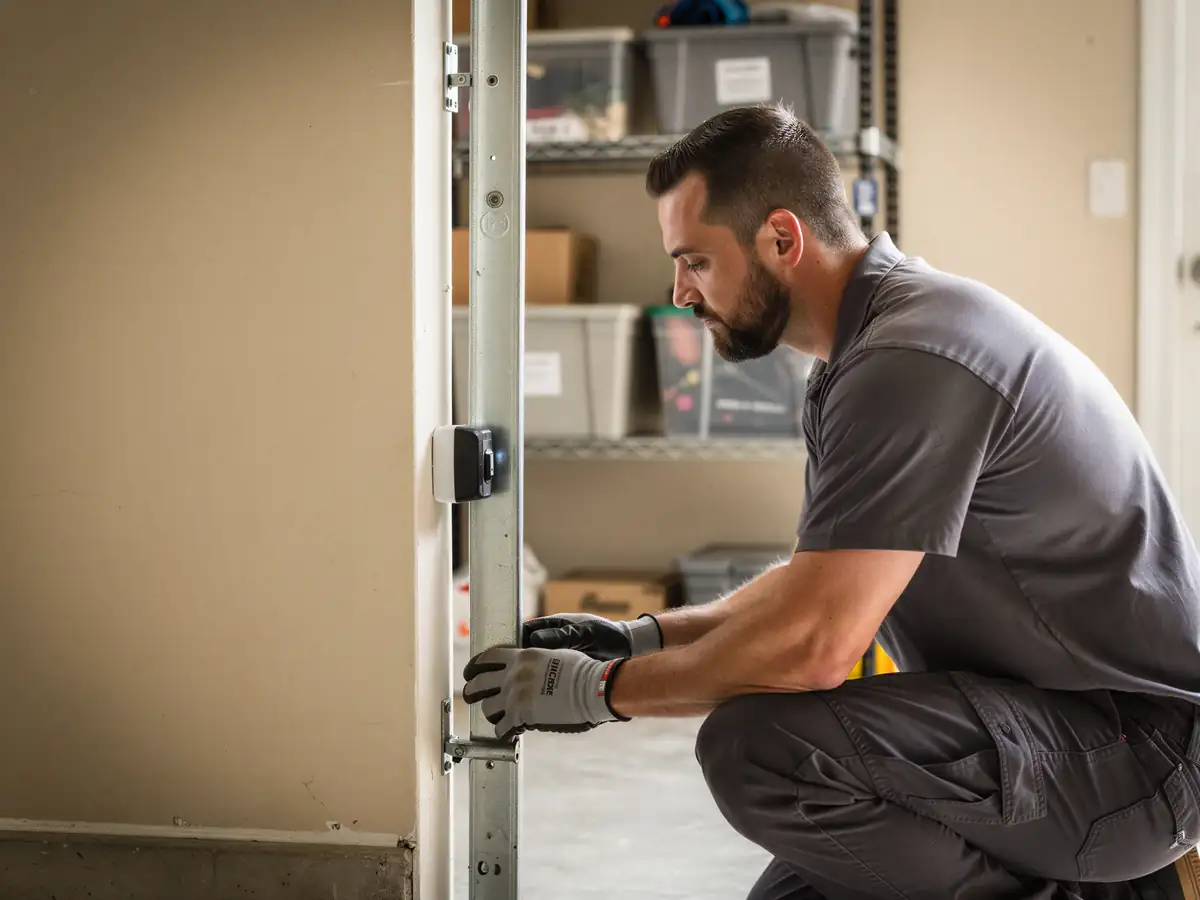
A technician in a gray uniform is touching a wall next to an open garage door.

Repaired & tested

The repair is done, the door is set true and tested, and the work area left clean.

Not sure which repair your door needs in Greer, SC? Describe what it’s doing - every job starts with a diagnosis.

How we work

What to expect

Diagnosis firstEvery visit starts by finding what actually failed - not a pre-written parts list.
The right part for the doorSprings and openers matched to the door’s weight and age, so the fix holds up.
Straight answersWhen a repair makes more sense than a replacement - or the reverse - you hear it plainly.
Clean, careful workTension released safely, hardware set true, the door tested under power before we leave.
What we do

Garage Door Services

Repair and installation work for Greer homes and businesses.

Questions

Frequently asked

Straight answers about garage door repair in Greer. Still unsure? Ask us directly.

01Why do garage door springs break more in winter around Greer?

Greer sits in a cold-moderate climate band, and the overnight cold makes steel that's already fatigued from months of use more likely to fracture rather than just stretch. The cold doesn't cause the weakness - it exposes a spring that was already near the end of its working life.

02How old does a spring need to be before it's a risk?

It depends more on cycle count than age in years, but with a lot of local houses dating to a median build year of 1983, many original or early-replacement springs are well past the point where a hard cold morning could finish them off. A visible gap in the coil or a door that's hard to lift are the clearest signs.

03Can I replace a torsion spring myself?

We don't recommend it. Torsion springs hold enough stored force to cause serious injury if the winding bars slip, and the tension setup on a mounted shaft isn't something to guess at. It's one job worth leaving to someone with the right bars and clamps.

04Do both springs need replacing if only one breaks?

Not always. If the second spring is newer or still has clear life left in it, replacing just the broken one can be the reasonable call, which is part of why plenty of homeowners here choose that route rather than swapping both at once.

Ready to get your garage door sorted?

Tell us what it’s doing and where you are in Greer - we’ll take it from there.

Request a QuoteCall