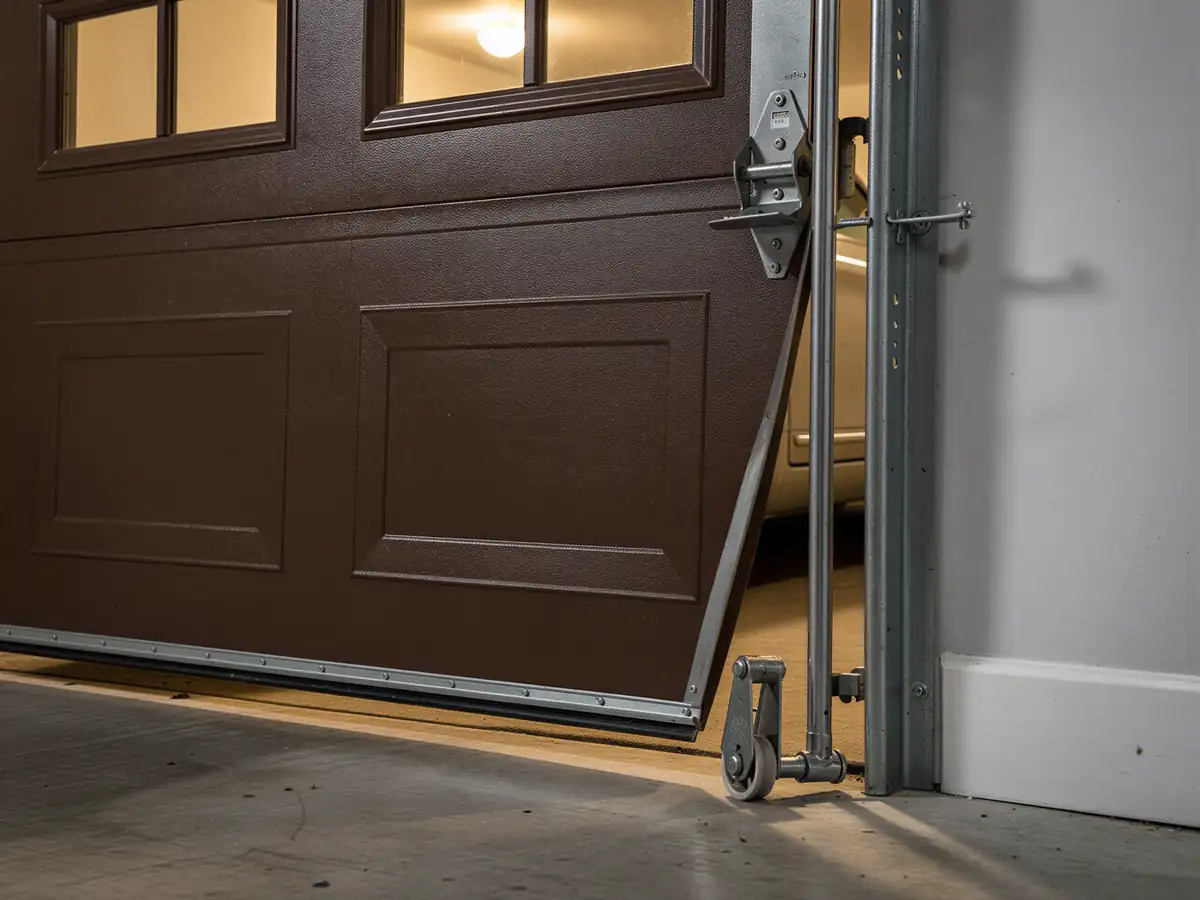
The Symptom
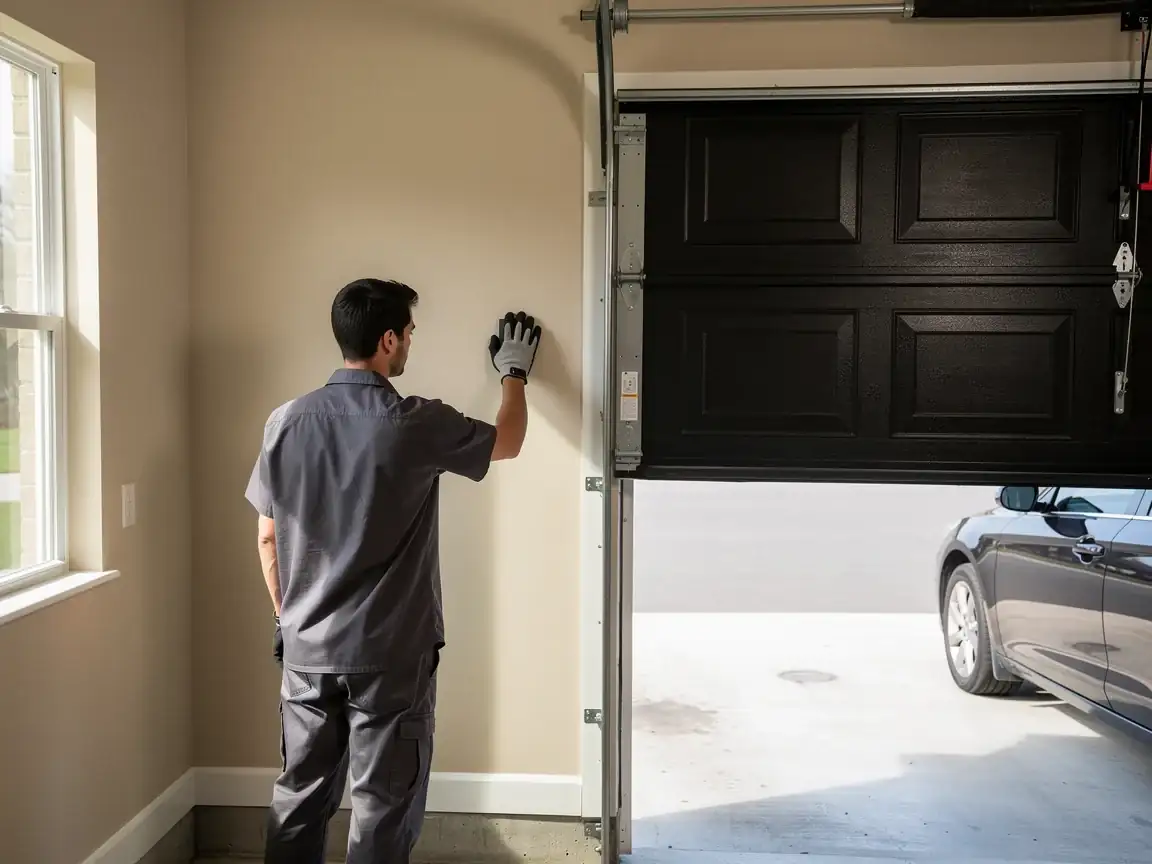
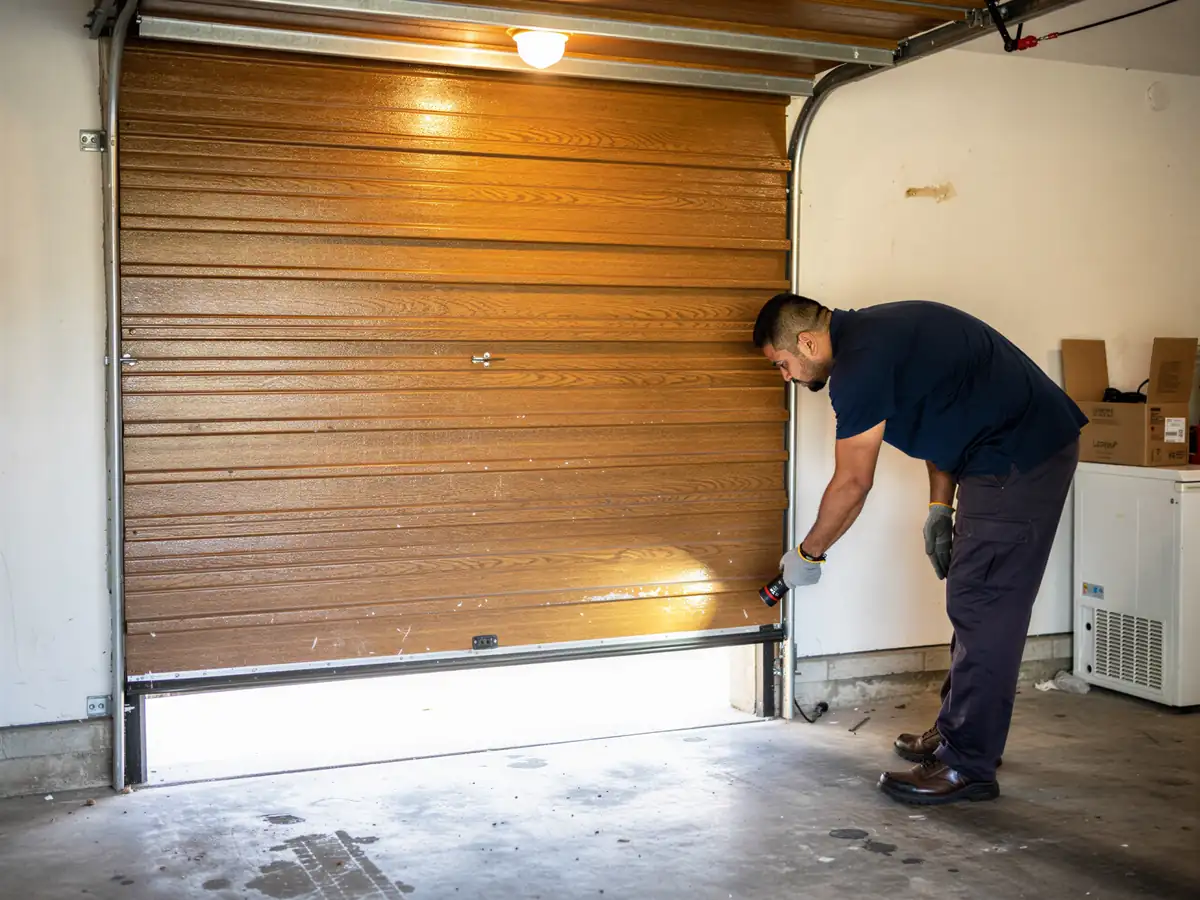
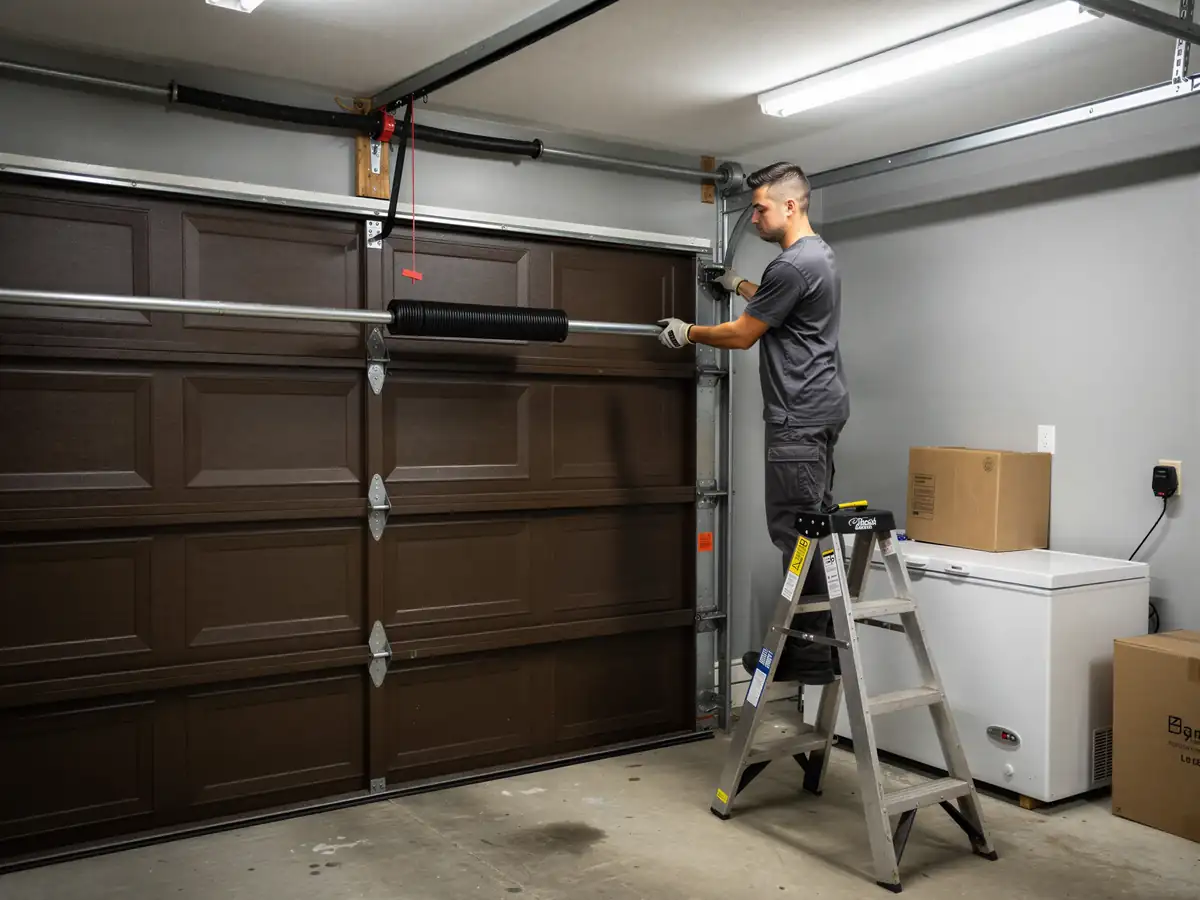
A door off track doesn't always look dramatic. Sometimes it's a panel that hangs crooked at the bottom, a cable that's gone slack on one side, or a rumble from the track that wasn't there last month. Other times the door stops halfway and won't go up or down at all, and the rollers have popped clean out of the track rail.
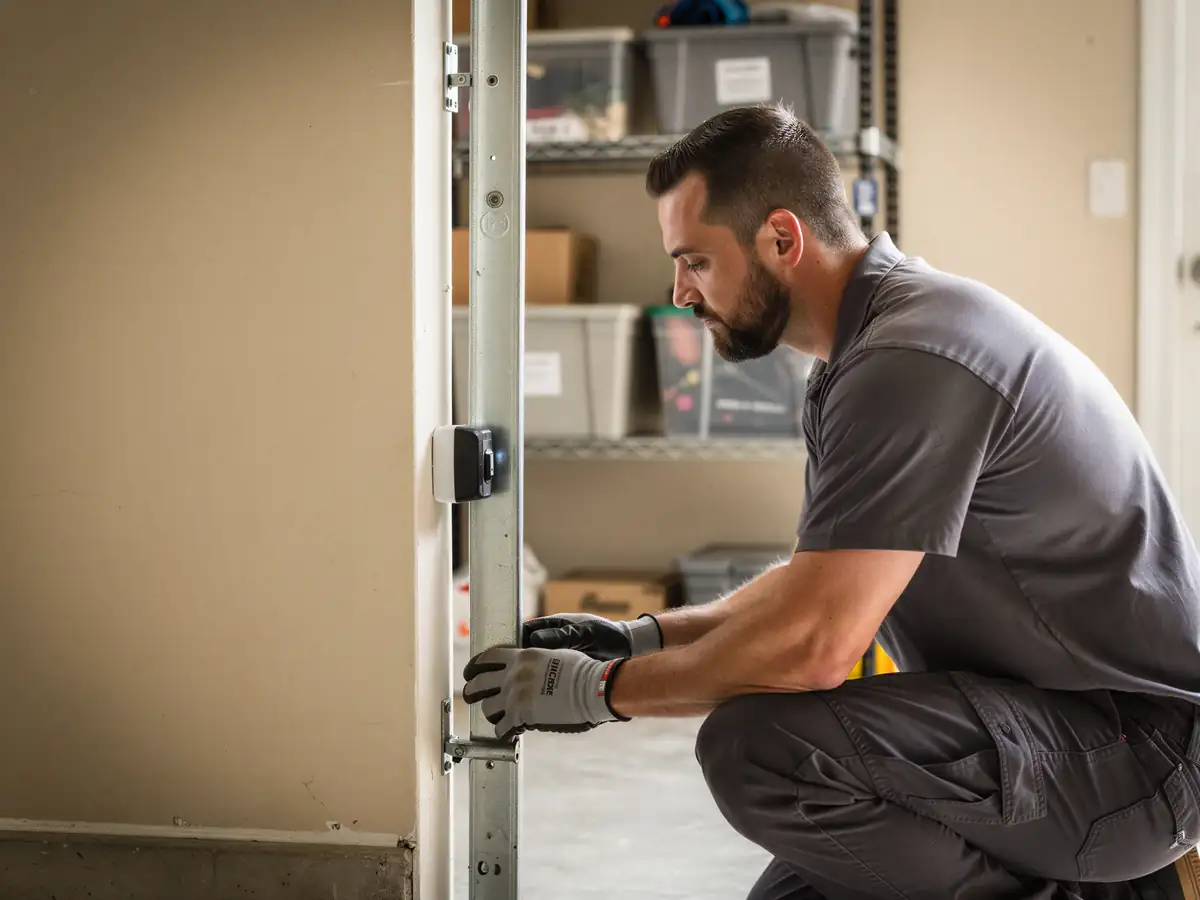
What you're usually looking at is a roller that's worn through its bearing, a track bracket that's pulled loose from the framing, or a cable that's frayed enough to let one side of the door drop lower than the other. Once a door is out of its track even a little, running the opener again can bend the track further or rack the door against the frame hard enough to crack a panel.
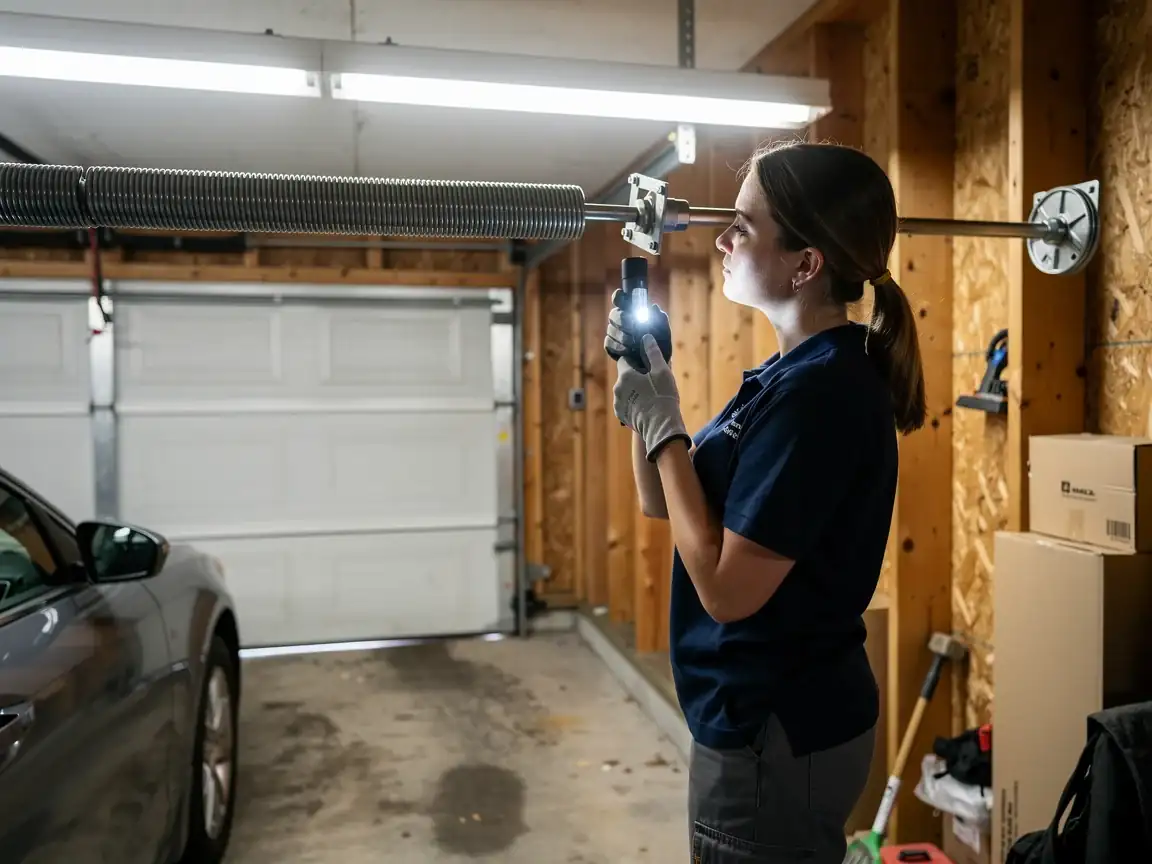
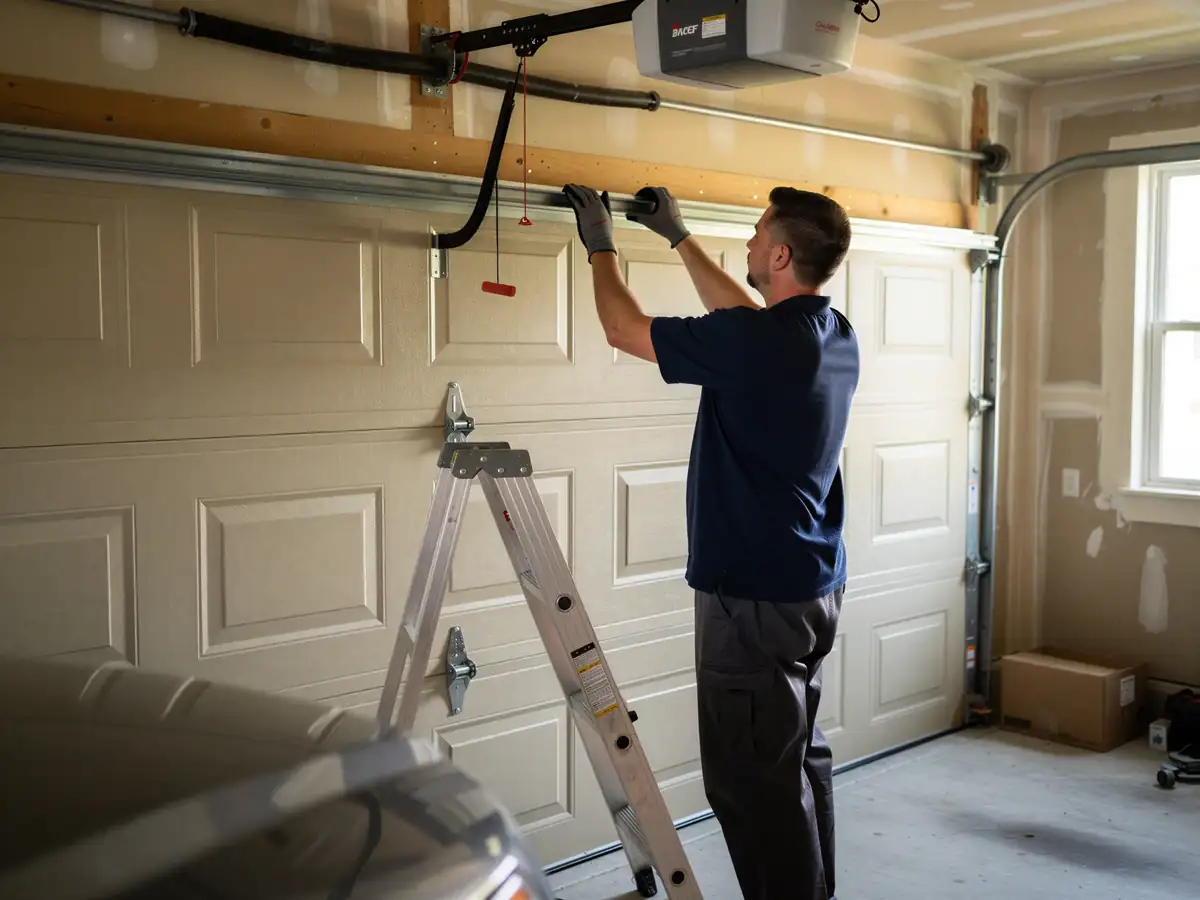
If the door is still partway open, leave it. Don't force the opener, don't yank on the door by hand, and don't try to push the roller back into the rail yourself - a door that's off track is under spring tension even when it looks still, and that tension is what hurts people. Call it in and we'll look at the track, the rollers, the hardware bolted to the framing, and the cables before we touch anything.
The Cost of This Job
We can't post a number here that would hold up across every job
Because what's wrong changes what we charge. A bent section of track and a couple of worn rollers is a different repair than a cable that's snapped and taken the door off both sides, and a door that's been run off-track repeatedly can crack a track bracket loose from framing that's forty years old and needs more than a lag screw to fix right.
What we can tell you is what drives the price up or down on this specific repair
How many rollers need replacing, whether the track itself is bent or just knocked loose, whether the cable drums and cables are still good, and whether the door panel itself took damage from being forced. A straightforward roller-and-track adjustment is a short visit. A door that's been fought with for a week before anyone calls is a longer one.
One honest limit: if the track is bent badly enough
Or the door is old enough that matching panels or hardware isn't realistic, replacing the door costs less over time than patching a track system that'll keep slipping. We'll tell you straight which side of that line your door is on before we start, not after.
Booking a Visit
If your door is stuck off track right now, say so when you call - that's a different priority than a squeak or a slow opener, and it changes what we bring on the truck. Tell us whether the door is open, closed, or stuck partway, whether you can see a roller out of the rail, and whether one side of the door is lower than the other. That's enough for us to load the right rollers, cable, and track hardware before we're on the road.
We work across the Greer service area, so if you're closer to Taylors, Lyman, or Wade Hampton than to downtown Greer, that doesn't change how we handle the call - it just changes drive time. Don't run the opener trying to test it once it's off track. A second attempt is usually what turns a roller job into a track-and-panel job.
What Causes It Around Here
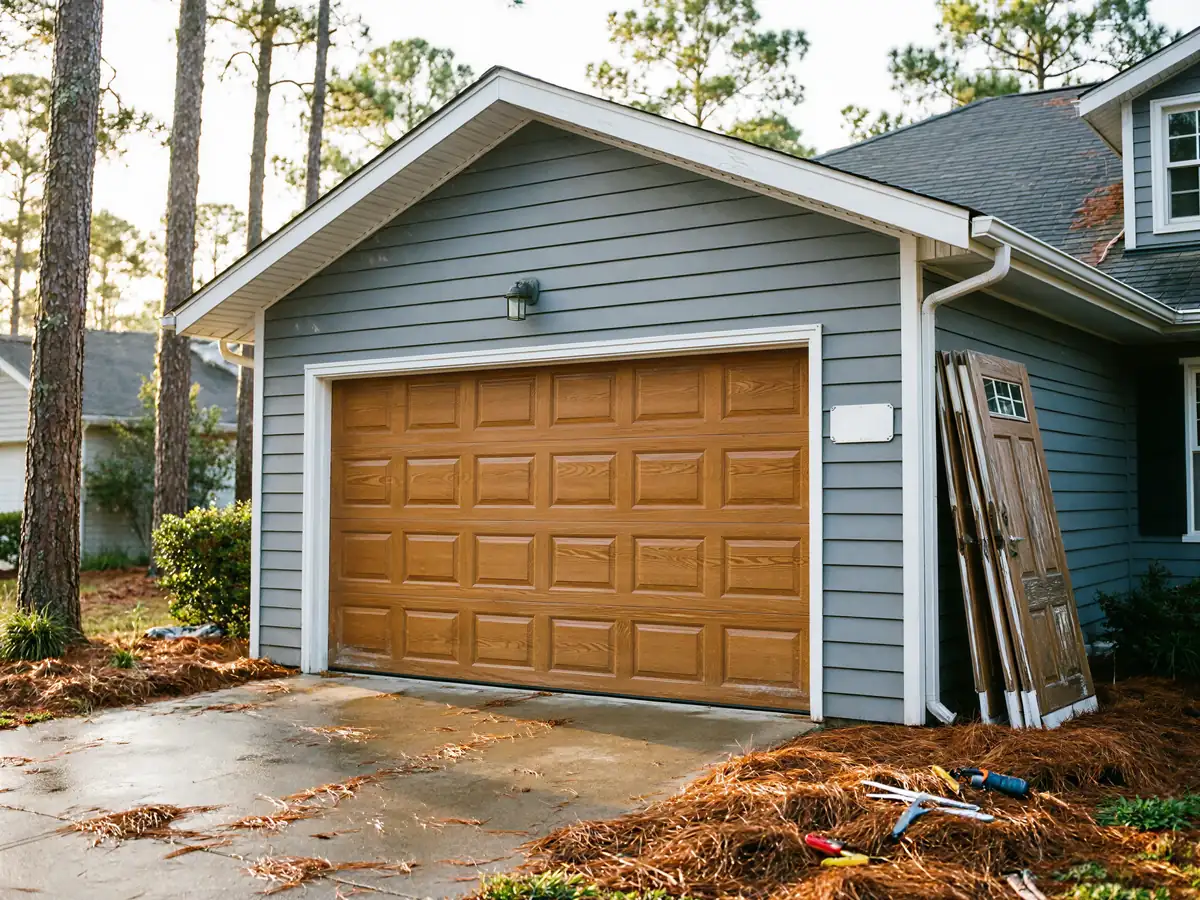
A lot of the housing in this area went up between 1938 and 2013, with most of it clustered in the 1980s and 90s build-outs across the dozens of subdivisions and named areas here. That generation of garage door hardware used lighter steel track and stamped rollers that were fine for twenty years of normal use, but thirty-plus years in, the bearings wear oval instead of round, and a door that's been riding slightly misaligned for a year finally jumps the rail.
The cold here isn't extreme, but it's enough to matter. Steel track contracts in a hard overnight freeze, and if a bracket was already a little loose from age, that contraction is sometimes the last push that lets a roller walk out of the rail. We see more off-track calls in the stretch of winter mornings after a cold snap than any other time of year, for that reason - not because the door failed overnight, but because it was already most of the way there.
Houses from the earlier end of that 1938-2013 range are also more likely to have original track hardware that was never upgraded when the opener was replaced, which is its own version of the same problem: new motor, old rail.