The Symptom
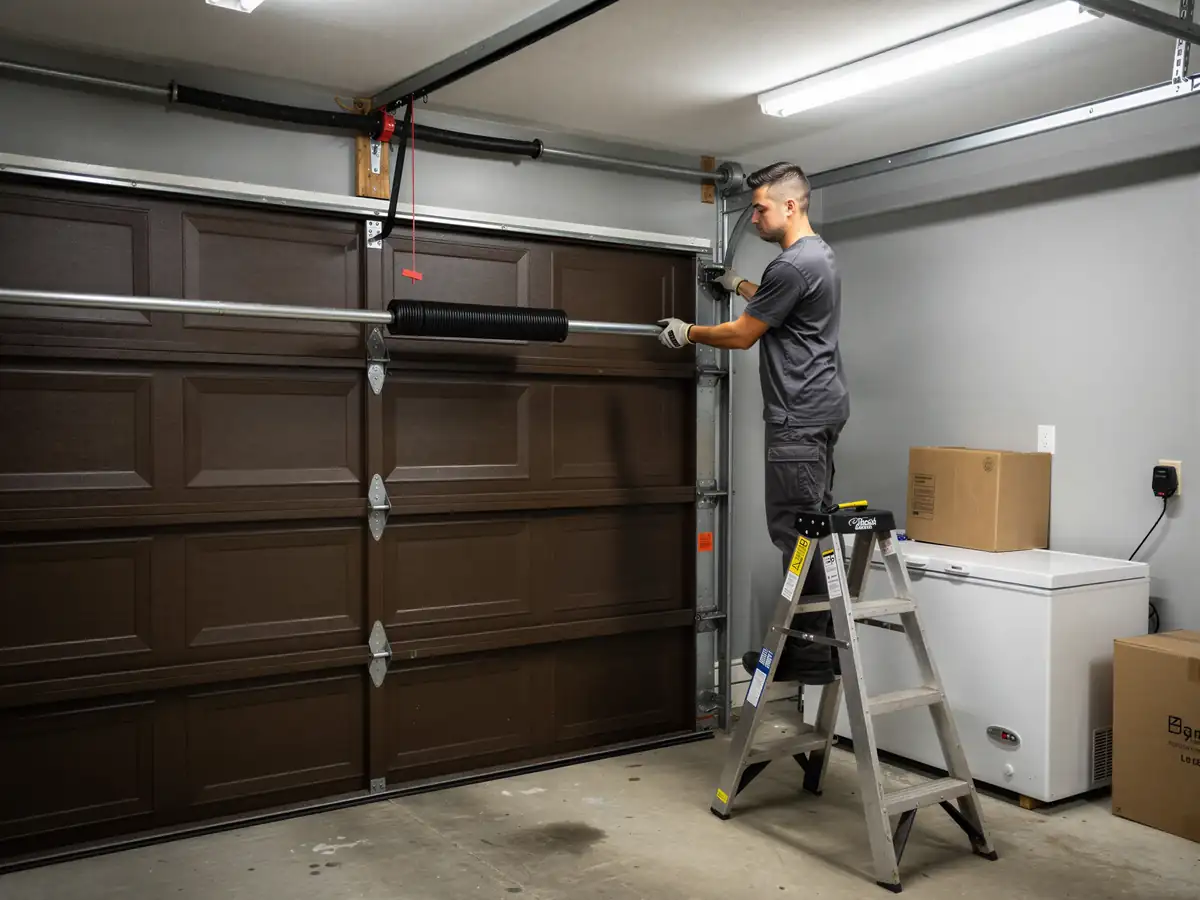
A door that won't budge, a spring that let go with a bang, a cable hanging loose off the drum, an opener motor humming with nothing happening - these are the calls that can't wait for a Tuesday appointment. Most of them show up the same way: the door was fine yesterday, and this morning it's either stuck shut with the car trapped inside, or it's stuck open and won't close, which is its own kind of emergency once the temperature drops.
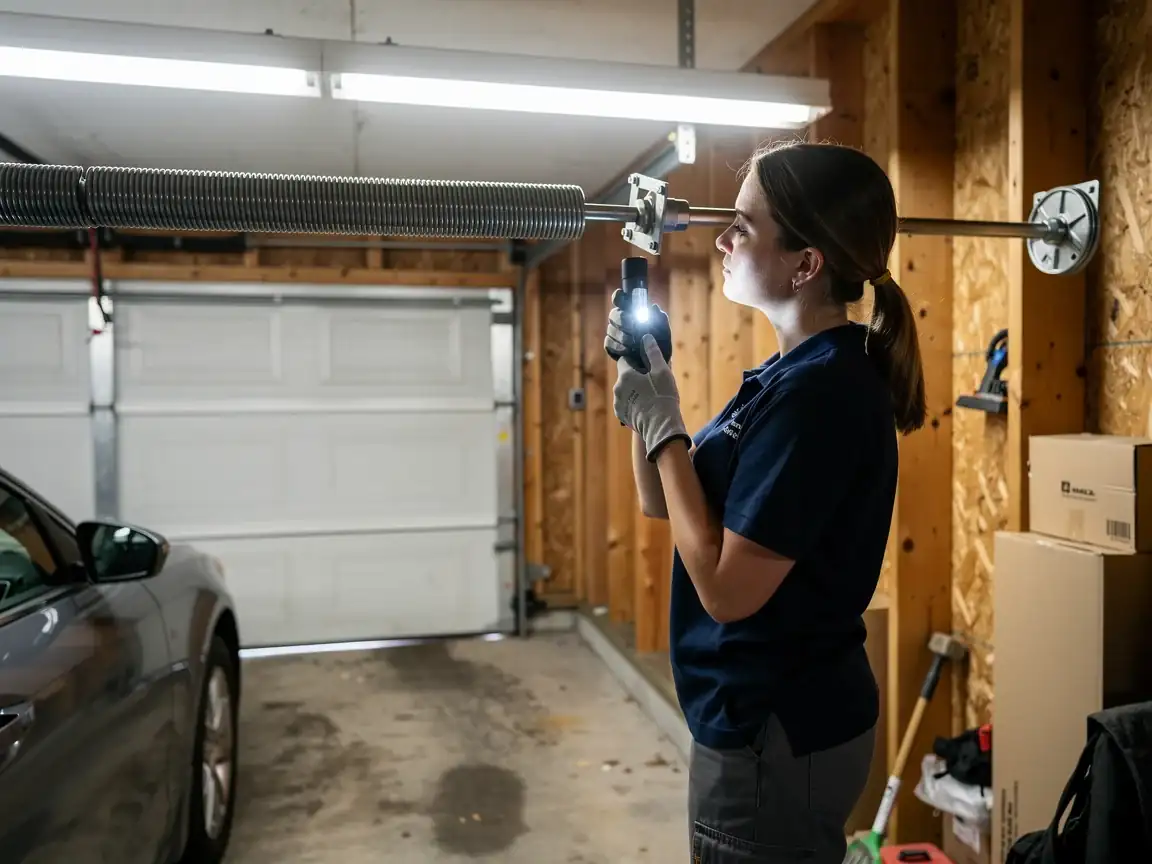
Torsion springs don't wear out gradually and give you warning. They hold years of tension and then one coil fatigues past its limit and the whole thing snaps, usually on a cold morning when the steel is stiffest and least forgiving. Cables fray the same way - slow, invisible, then gone. Openers are a little different: a dead capacitor or a stripped gear just stops mid-cycle, no drama, just a door that won't move either direction.
We treat all three as same-day problems because that's what they are for the household living with them - nobody parks on the street for a week waiting on a part.
The Cost of This Job
We're not going to put a number here we can't back up on the phone
And we don't have pricing data solid enough to quote in general terms on this page - what a torsion spring job runs versus an opener swap versus a bent track repair varies enough that a flat figure would be more guess than fact. What we can tell you is how the decision usually gets made once we're looking at the door.
A single broken spring on an otherwise sound door is almost always a repair, not a replacement
The springs, cables, and rollers wear out long before the frame and panels do. A door that's been patched three times already, or has a bent track from being forced open, starts tipping toward replacement math. Across this service area, where the median household income runs around $55,671, most owners we talk to want the cheaper fix made right rather than a full new door sold to them on a bad day - and that's the call we make with them, not for them.
- $55,671 median household income
The one honest limit here: we can't give a firm number sight unseen
Spring size, drum type, and whether the opener took damage too all change the job. What we can promise is that the quote happens before any work starts, not after.
Booking a Visit
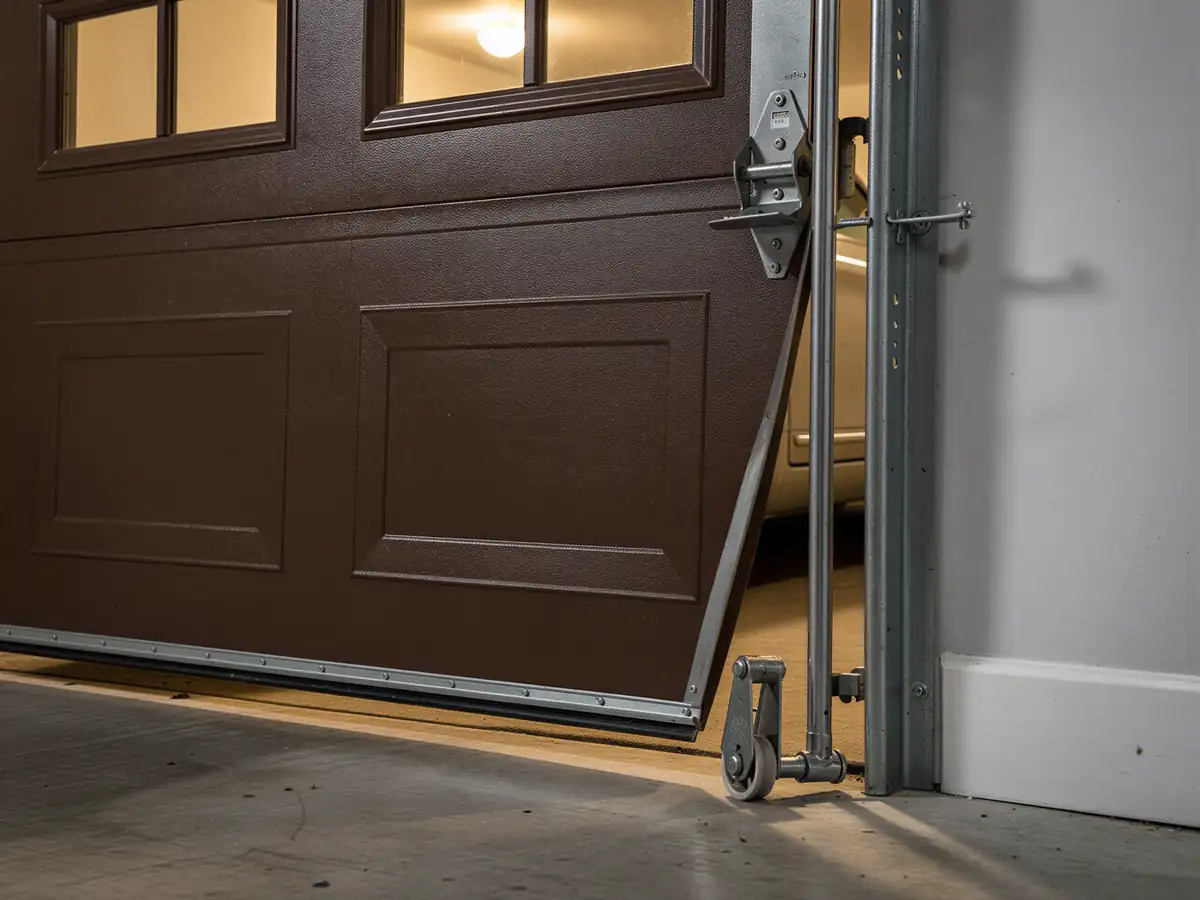
Call when it happens - a door stuck half-open overnight or a cable off the drum isn't something to leave till morning, especially once it's cold enough that the steel gets brittle and a loose cable can whip. Tell us what you're seeing: did it make a loud bang, does the opener run but the door not move, is the door off its tracks. That one detail usually tells us what's riding on the truck before we're even on the road.
We book emergency calls separately from routine maintenance so a spring failure doesn't sit behind a scheduled tune-up. If you're not sure whether what you've got qualifies as an emergency - door open and exposed, car trapped, a spring that's already let go - call anyway and we'll tell you straight whether it can wait or not.
For anything that isn't urgent, or if you want to see the rest of what we do beyond repair work, the main page has that: /. This page is just about the break that can't wait.
What Causes It Around Here
This area runs on a cold-moderate climate, which doesn't mean brutal winters but does mean real freeze-thaw cycles every year - enough to stiffen torsion springs, shrink wood jambs away from weatherstripping, and make steel panels more brittle right when a door gets forced against a frozen track. That combination is behind most of the emergency calls we take: not exotic failures, just ordinary hardware pushed past its limit on a cold morning.
Housing stock plays its part too. Across the territory we run out of Greer, homes were built anywhere from 1938 to 2013, with the median landing in 1983, and the heaviest concentration sitting in the 1980s and 90s across the 32 named areas we cover. A lot of doors out there are original equipment from that build era - springs sized for hardware nobody stocks new anymore, openers with capacitors well past their rated life. With 97,161 households and 48,742 owner-occupied houses spread across this ground, the same failure mode repeats itself constantly: it's not bad luck, it's just what thirty- and forty-year-old torsion hardware does when the weather turns.