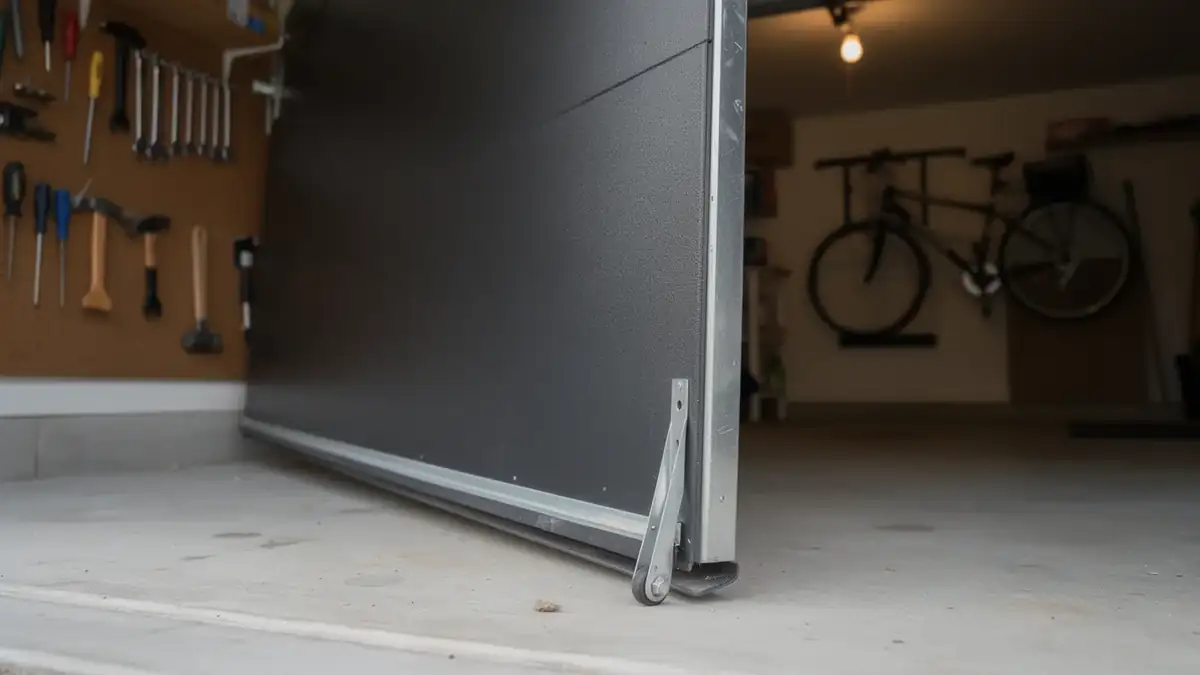
Checking It Yourself
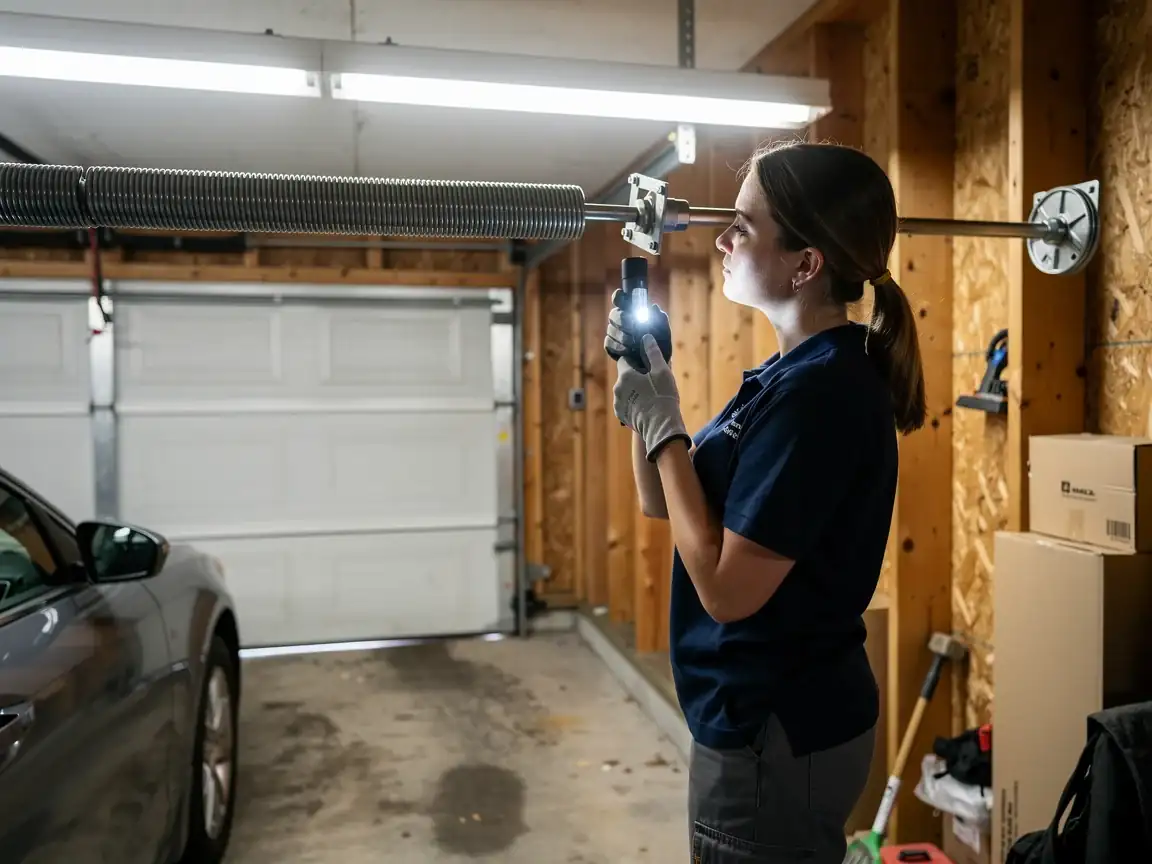
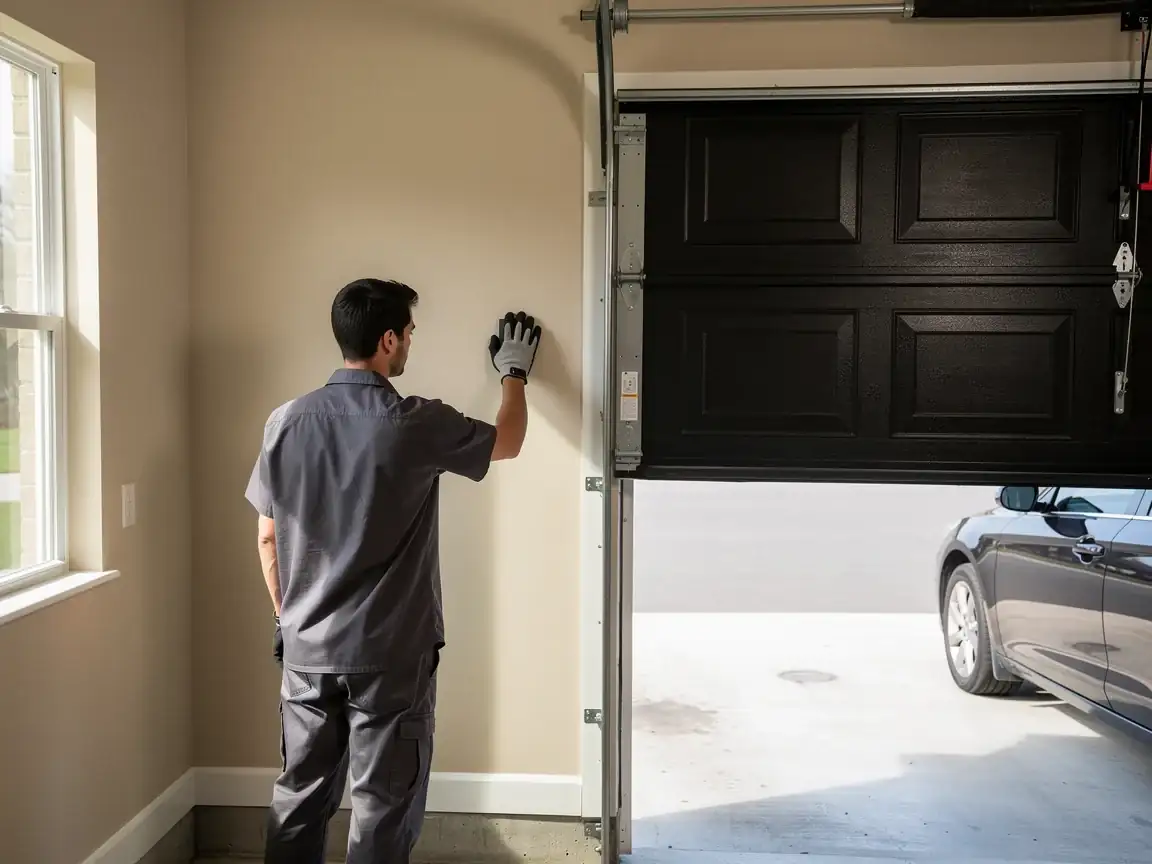
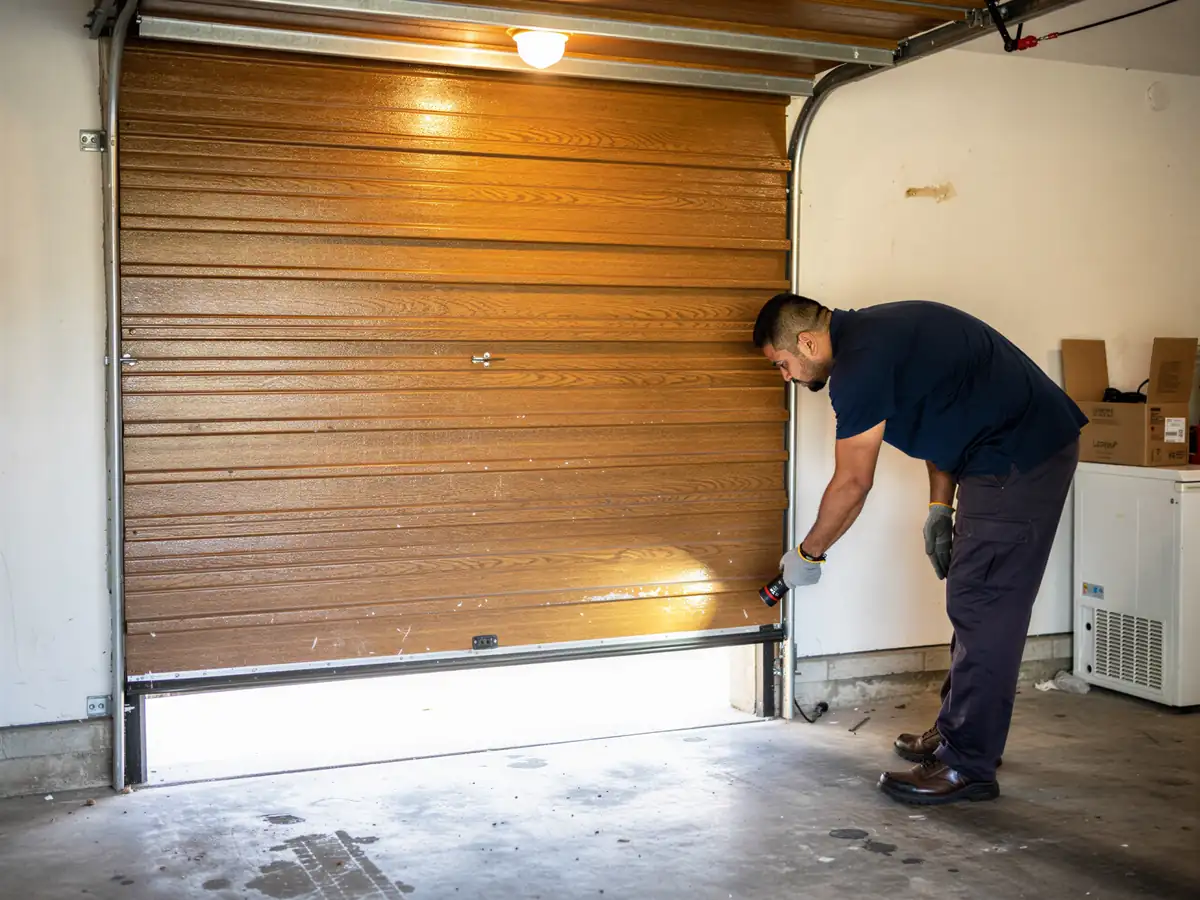
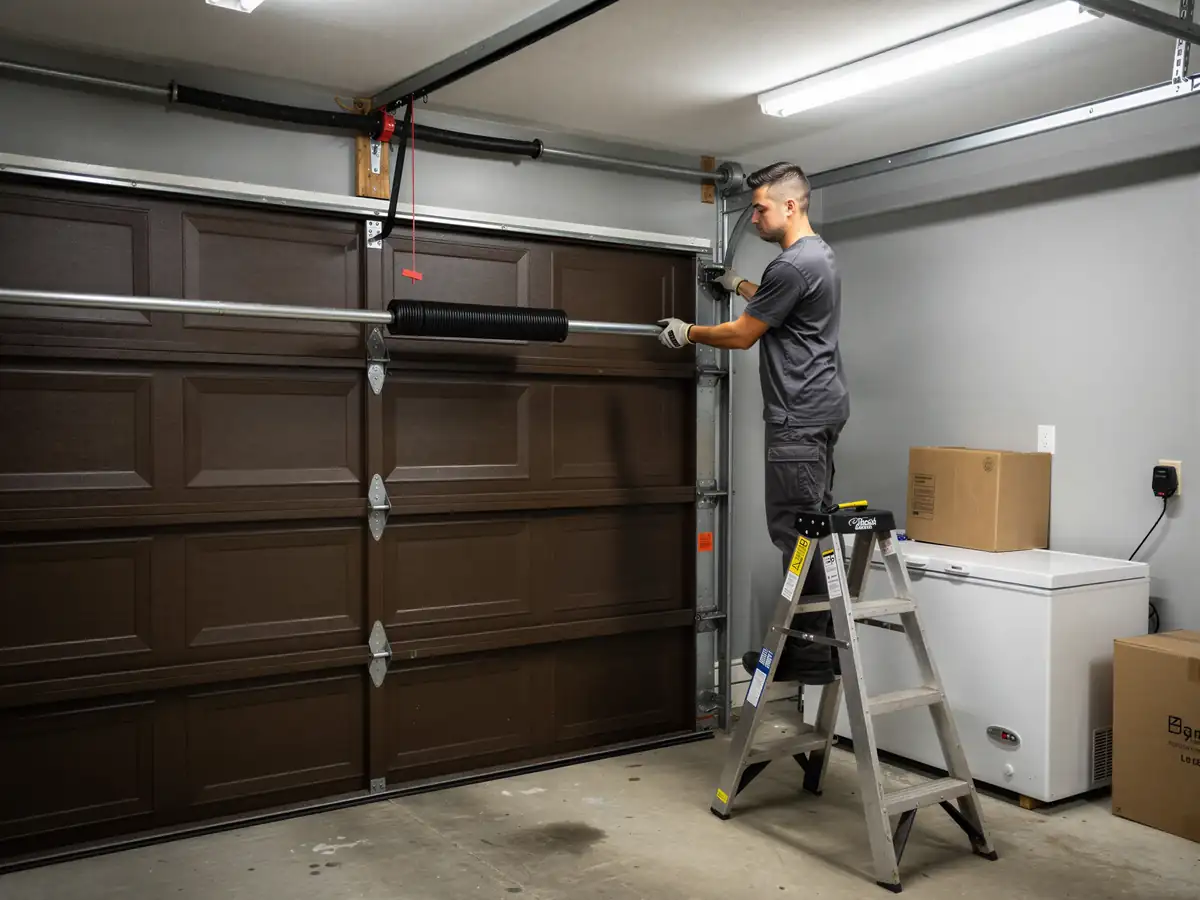
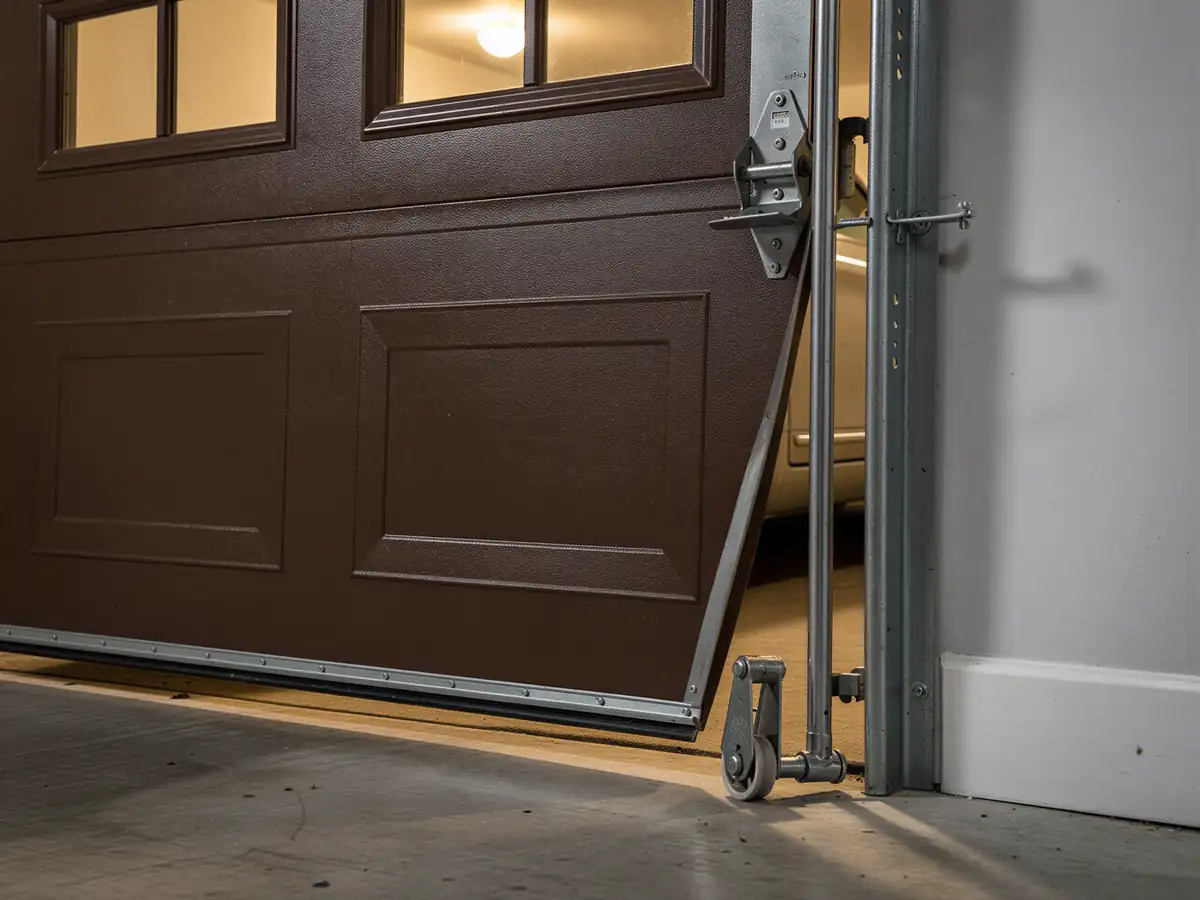
Before you call anyone, look at the track itself with the door down. Run your eyes along both vertical rails from the floor up to where they curve into the horizontal section near the ceiling. You're looking for a gap between the roller and the rail, a rail that's pulled away from its mounting bracket, or a bend right at a bracket bolt. Open the door halfway and stop it - if it sags to one side or the rollers bind instead of rolling smooth, something downstream of the track is working against it, usually a cable or a spring.
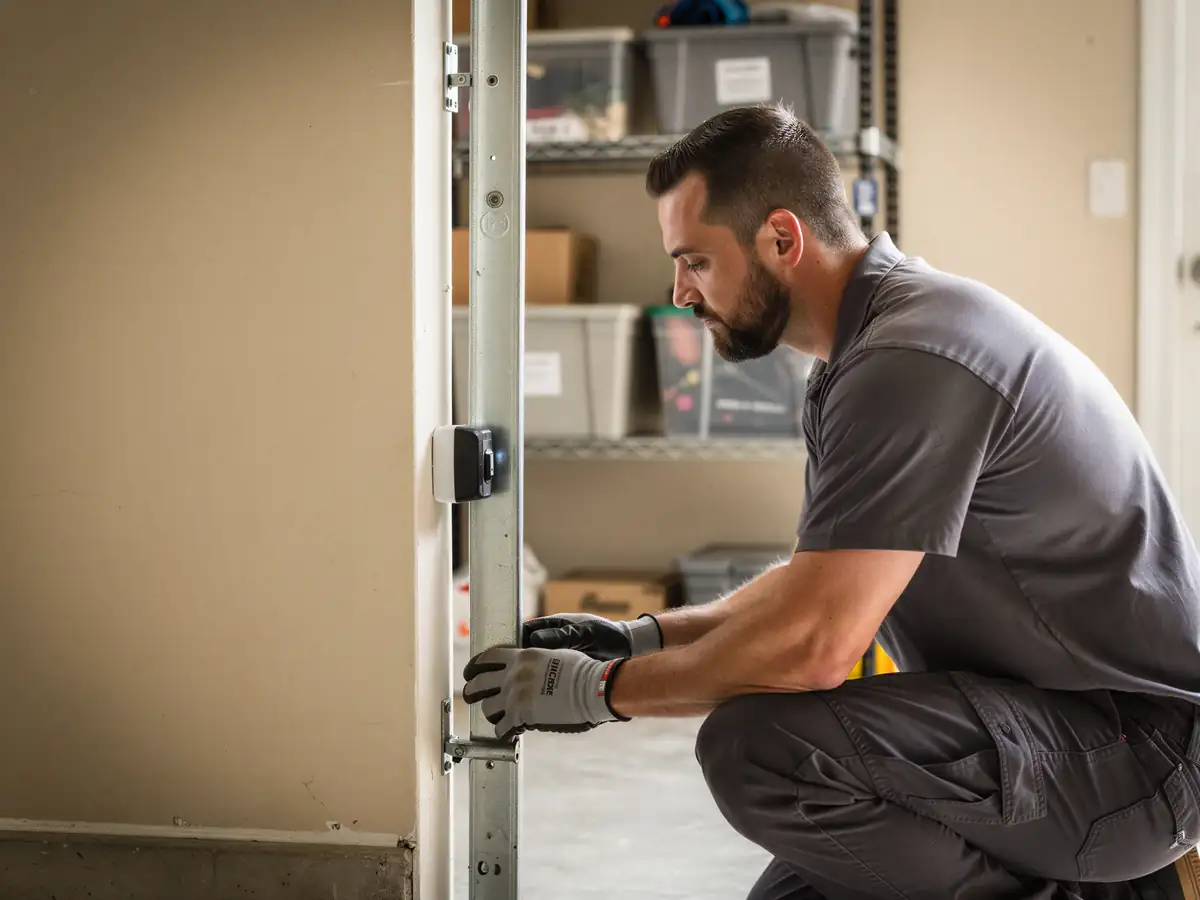
Check the brackets where the track bolts to the frame. On a lot of Greer houses built back in the 1938-2013 range, especially the older end of that, those brackets were set once and never re-torqued. A loose lag bolt lets the whole rail walk a quarter inch at a time until a roller finally pops free on a cold morning.
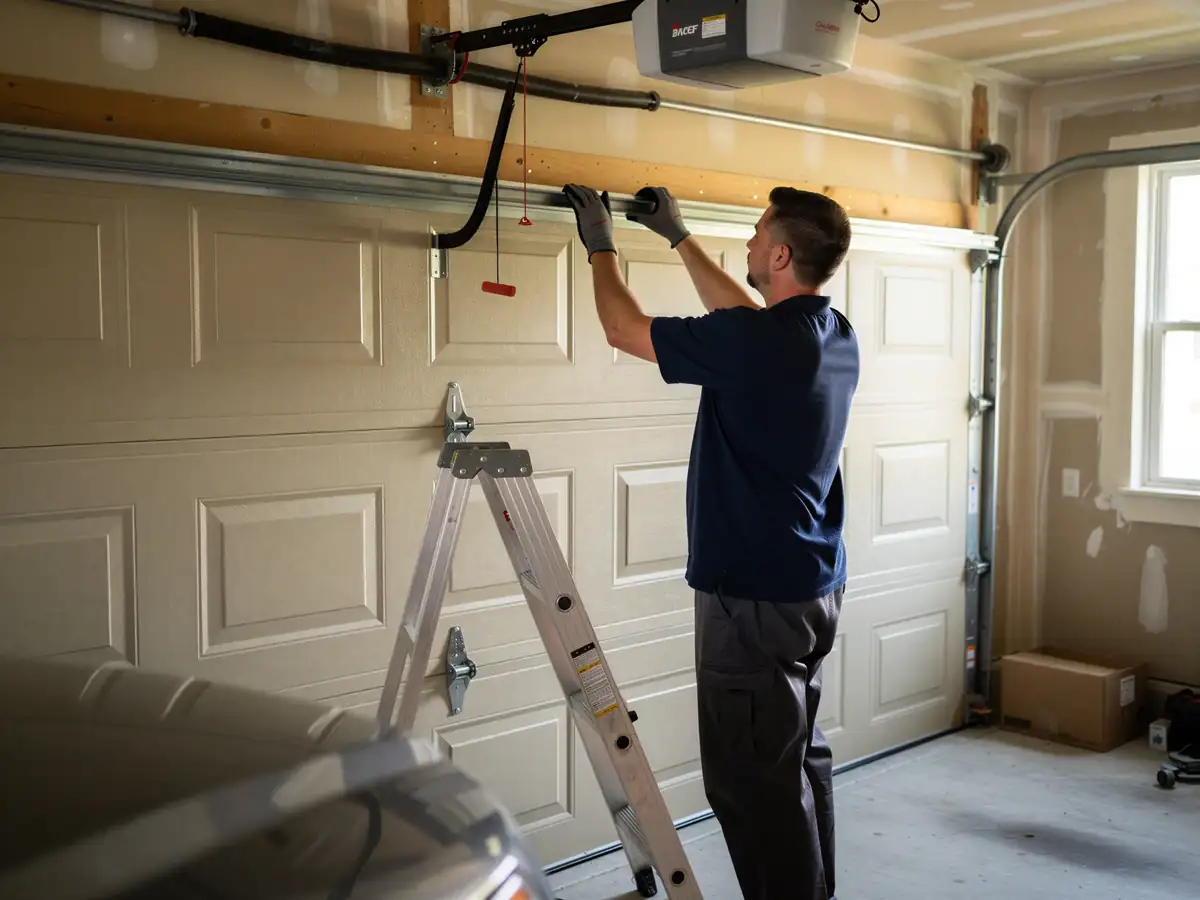
Don't try to force a door back onto a track by hand if a cable looks slack or a spring looks stretched unevenly on one side. That's not a track problem anymore, that's a tension problem, and a torsion spring under load can take a finger off. If the rail is bent more than an inch out of true, it needs replacing, not bending back.
How Local Conditions Play In
Greer sits in a cold moderate climate band
Which doesn't sound dramatic next to a hard winter state, but it's exactly the range that does the most damage to a garage door track over time. You don't get deep permafrost, you get repeated freeze and thaw - the ground under a slab contracts on a cold night and expands again by afternoon. Do that for twenty winters and the slab the track is bolted to has shifted enough that the track is no longer square to the door.
A track that's out of square doesn't fail all at once
It puts uneven load on the rollers on one side, those rollers wear faster, and eventually a worn roller skips the rail under the stress of the door reversing or a spring pulling unevenly. That's the slow version. The fast version is a track bracket that's already loose from age snapping clean when a cold snap stiffens the grease in the rollers and the opener has to pull harder to get the door moving.
Humidity plays a smaller part here too
Garages aren't usually heated or sealed well, so metal track hardware goes through more condensation cycles than the rest of the house frame. Surface rust on an old bracket bolt is common and it's usually the first thing to let go.
What Is Going On
Most of the time a door off its track is one of three things: a bent rail, a loose bracket, or a broken roller. Track age matters more than people think. Housing in Greer mostly dates to the 1980s and 90s build-out, spread across the surrounding named areas - Taylors, Duncan, Lyman and the rest - and that means a lot of track hardware out there is pushing thirty-five to forty years old. Steel track doesn't wear out the way a spring does, but the brackets holding it do, and galvanized coating thins with decades of condensation.
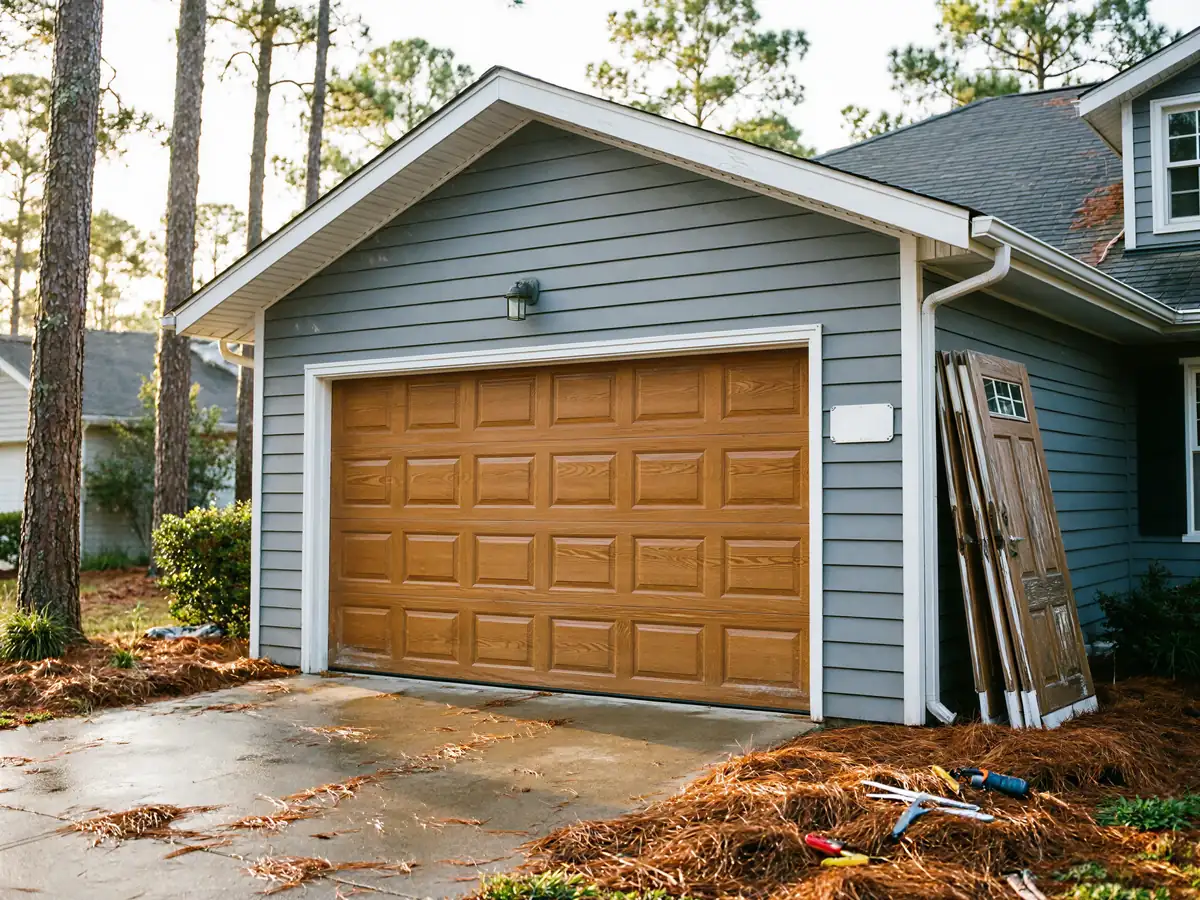
Some houses go back further. Greer's housing stock runs as far back as 1938, and a door on one of those older structures may still have a riveted track assembly rather than the bolted type that became standard later. Riveted rail doesn't flex the same way, and when it finally gives, it tends to crack rather than bend, which is a different repair.
The honest limitation here: if a track is cracked rather than just bent or loose, we don't straighten it back into service. A cracked rail gets replaced. Bending a cracked rail back to true is a short-term fix that fails again, usually worse, usually at a worse time.
What Changes With the Season
Winter in Greer's cold moderate band is when most off-track calls come in. Cold grease in the rollers makes the opener work harder on the first pull of the morning, and that extra strain finds every loose bracket and worn roller in the system. If your door has been fine all year and suddenly jumps track on a 28-degree morning, that's the freeze finding a weakness that was already there.
Spring and early summer bring the opposite problem - humidity swells wood door frames slightly, which can pinch a track that was already running a little tight, especially on older houses built before slabs and framing were as standardized as they are now.
If your house falls into the 1983 median build-out that covers a lot of the area, this is roughly the point in a track's life where bracket bolts need checking regardless of season. Nobody schedules that kind of thing, so it tends to get found the hard way - a roller off the rail on a morning when you're already running late.