The DIY Question
Taylors is a town of about 9,346 households, which is small enough that most of the garage doors we see here fall into a handful of predictable patterns rather than a wide mix of ages and styles. That matters for the DIY question. If your door is one of the many built around 1983 in this area, you're dealing with hardware that's been through three or four decades of South Carolina winters and summers, and some of what looks like a simple fix isn't.
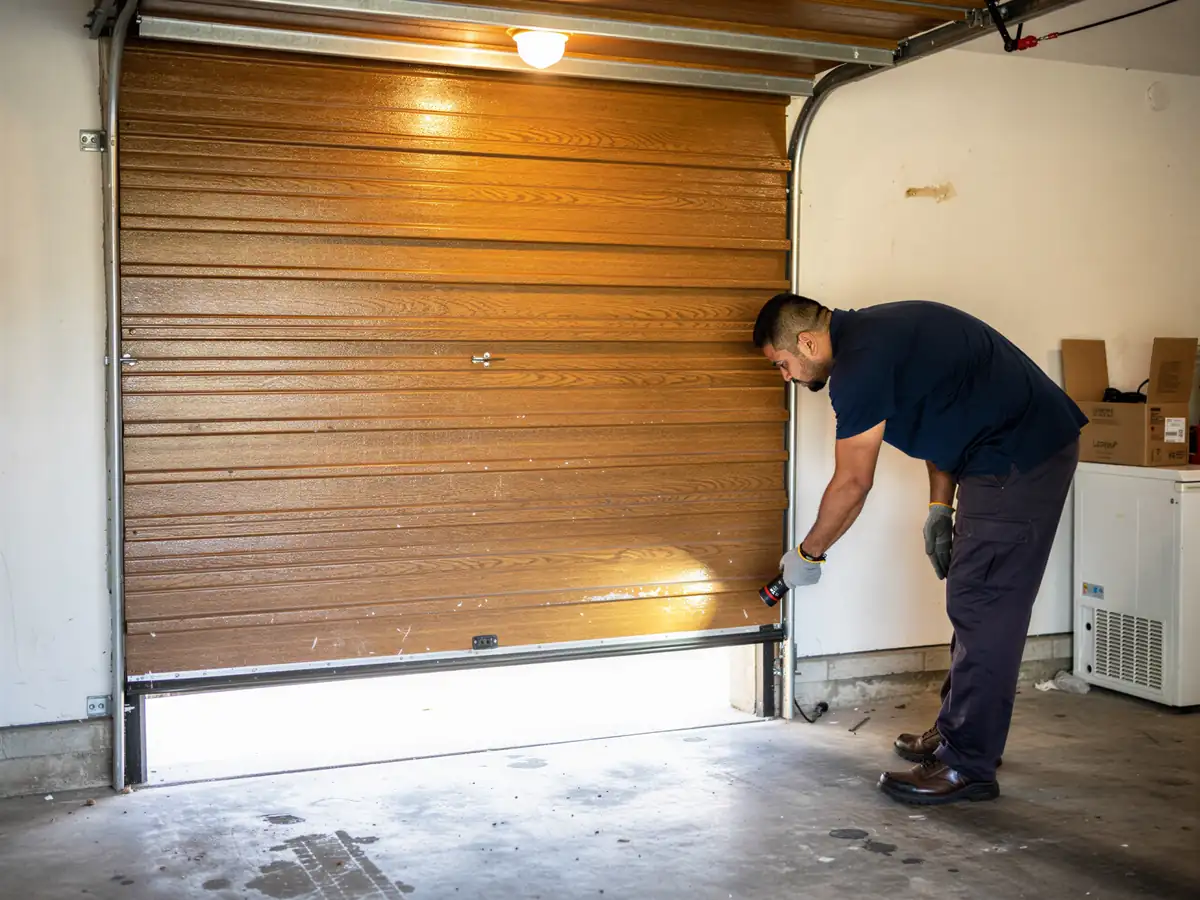
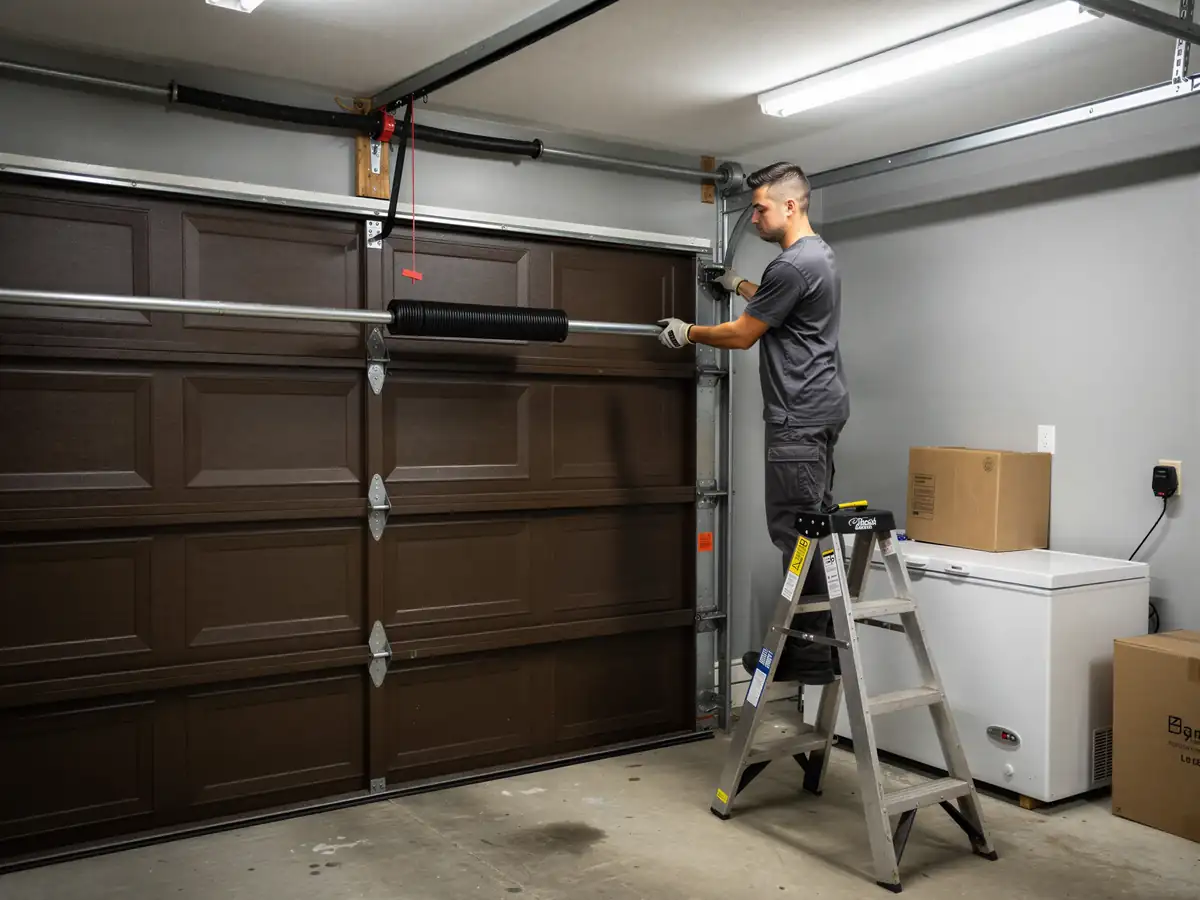
Lubricating hinges, rollers, and the opener chain is something most homeowners can do safely with a can of garage-door-specific lubricant, twice a year. Tightening loose bolts on the track brackets is usually fine too, as long as the door is down and the opener is unplugged. What you shouldn't touch: anything involving the torsion spring itself. Those springs are wound under enough tension to break a bone, and on a door this age the spring is often original or close to it, which means it's more likely to let go without warning than a newer one would.
If you can point to a specific noise, a specific day it started, and the door still opens and closes, that's a repair call, not an emergency. If the door is stuck, off its track, or the spring has already snapped, stop and call.
What the Fix Involves
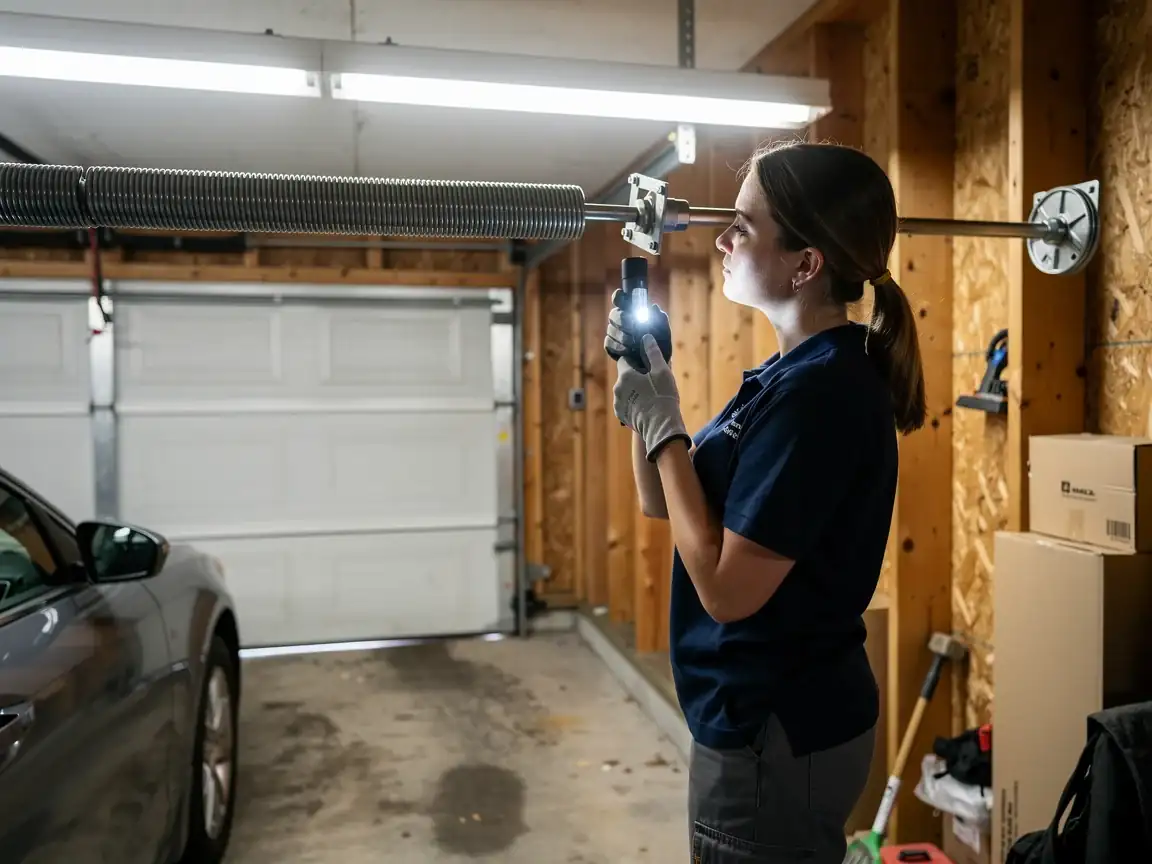
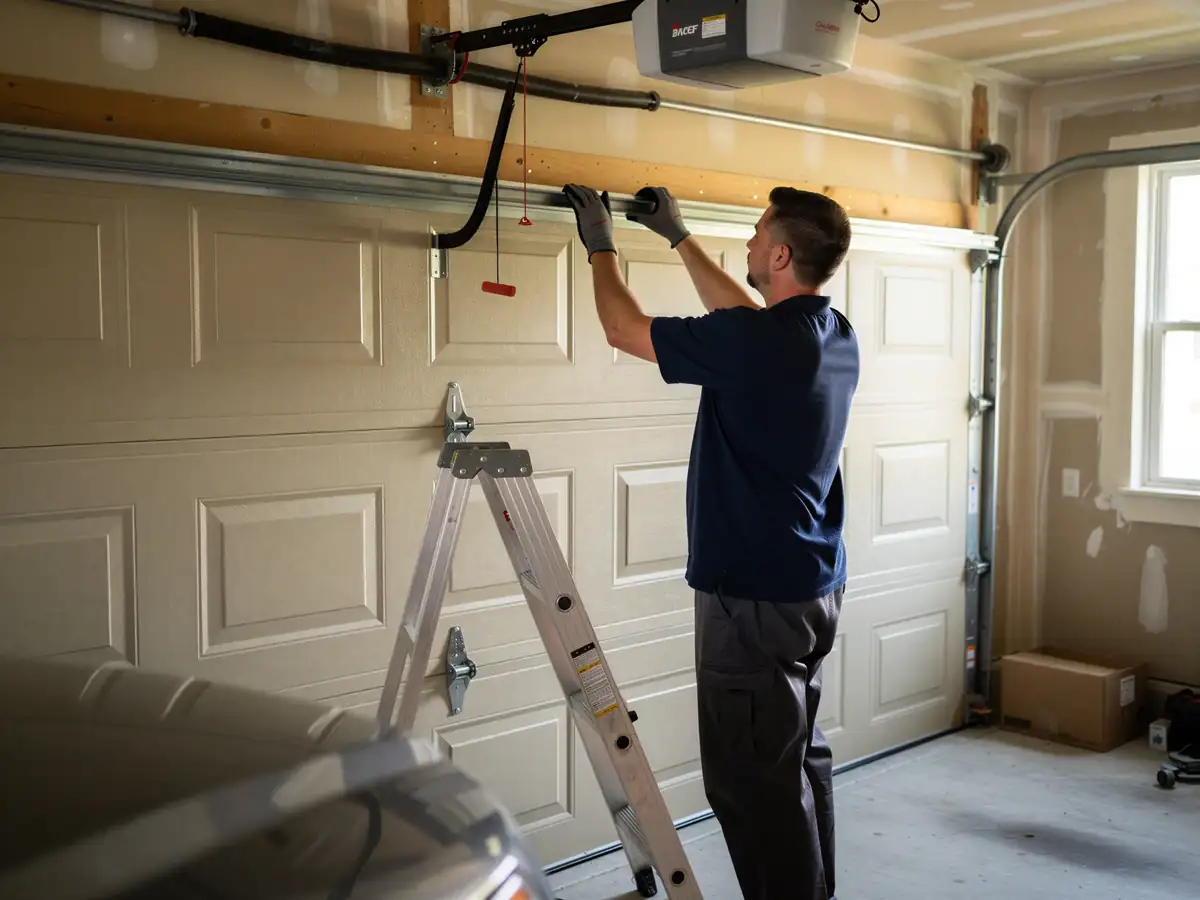
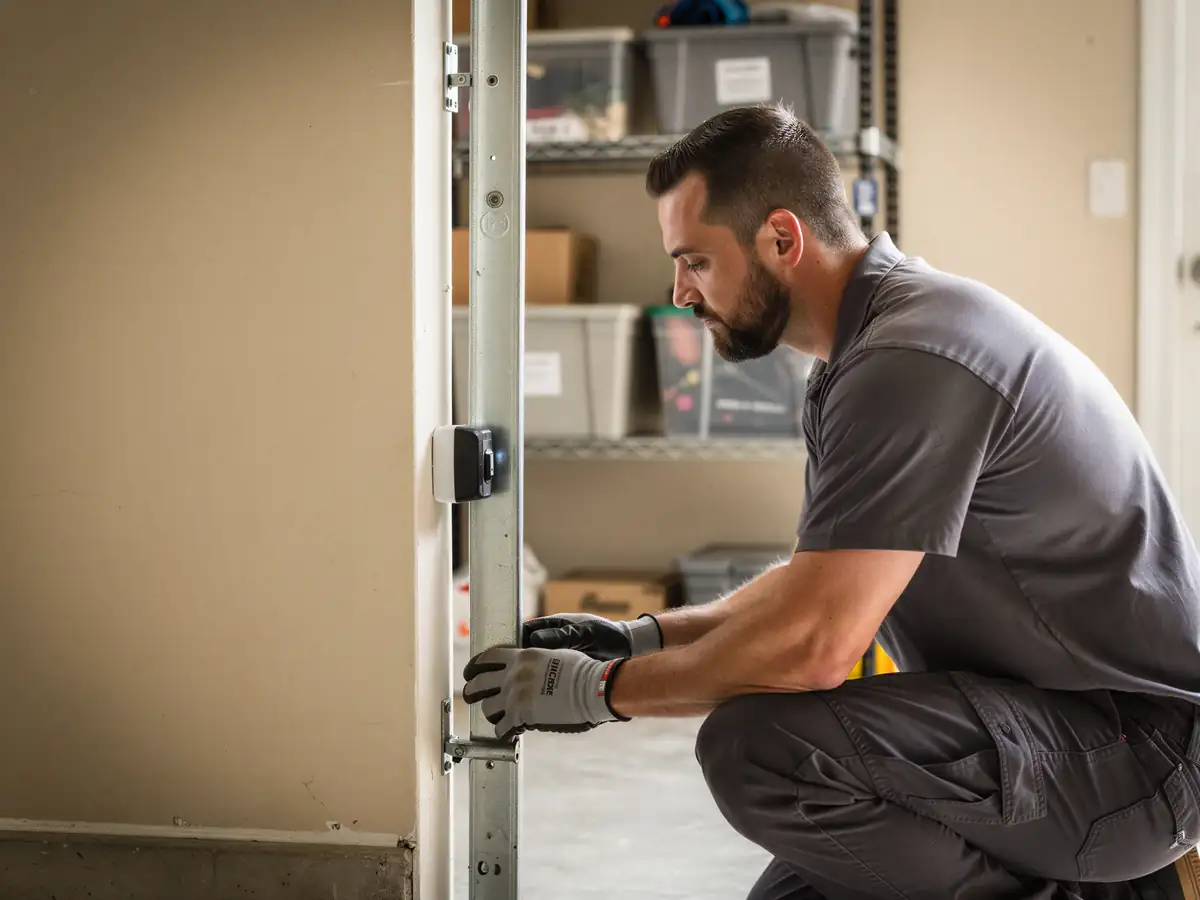
A standard maintenance visit on a Taylors home starts with the spring system
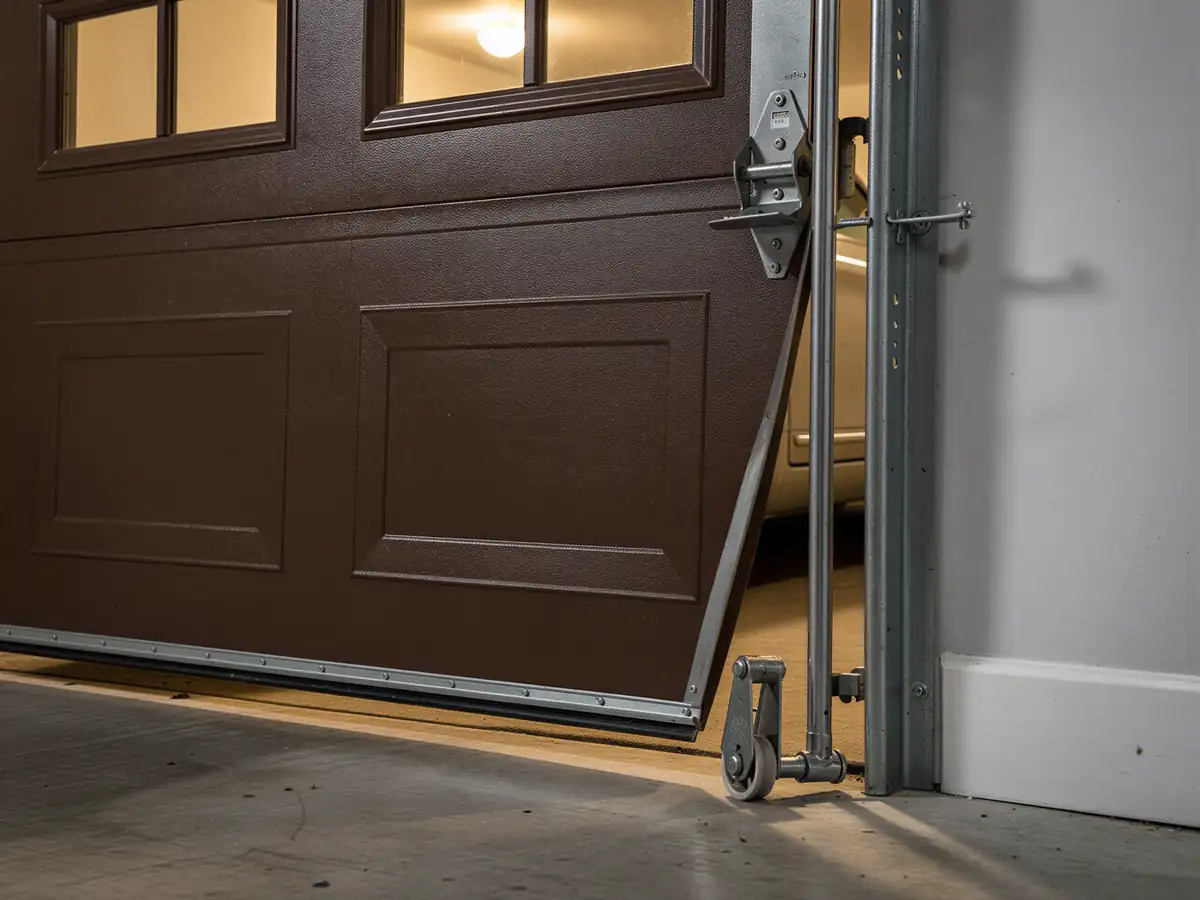
Since houses built around the early 1980s in this area were almost always fitted with torsion springs rather than the extension-spring setups you see on older stock elsewhere. We check spring wear, tension, and whether the winding cones are still true. From there it's rollers, hinges, and the track itself, looking for the kind of wear that shows up after years of South Carolina humidity swings - rust on steel rollers, play in the hinge pins, track bolts that have worked loose.
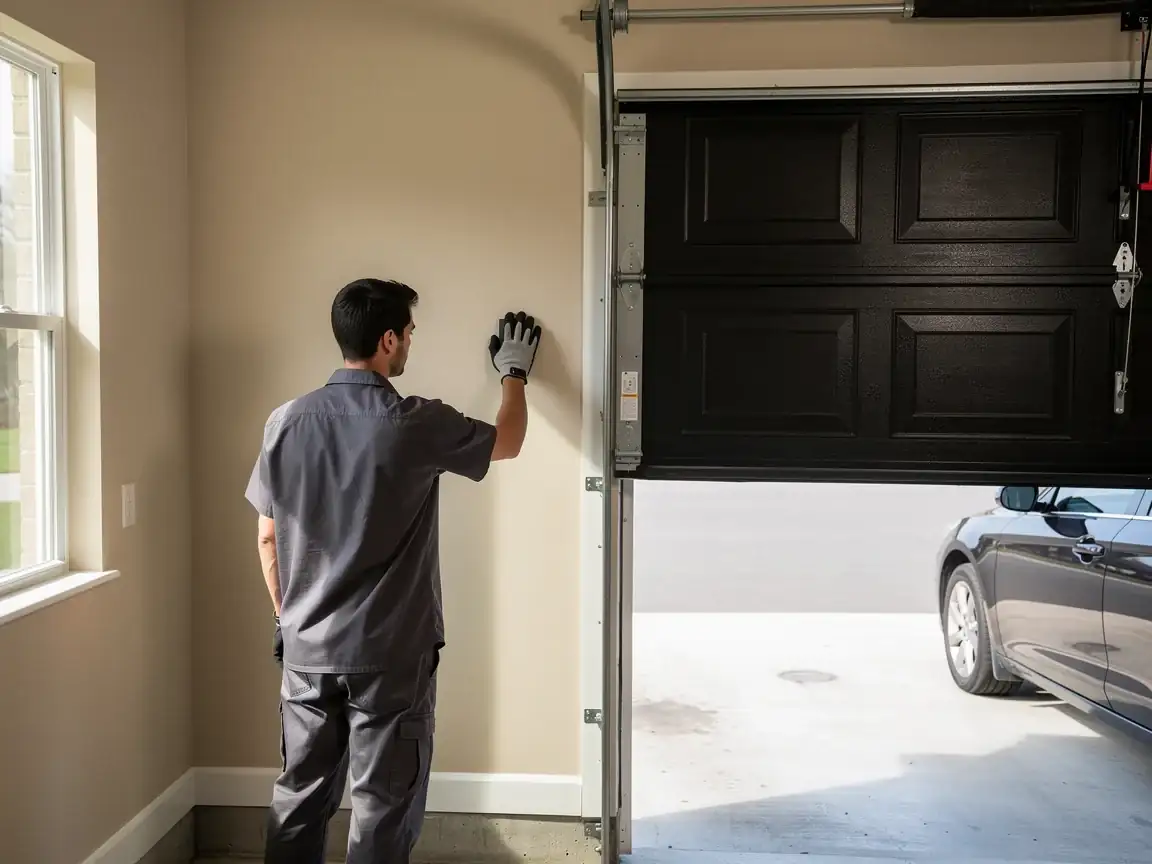
We also test the opener's force settings and safety reversal
Since a door that closes too hard on a slab or a toe is a liability problem before it's a mechanical one. On openers from this housing era, the gears and drive mechanisms are often nearing the end of their service life even if the door itself still looks fine - that's a judgment call we make on site, not something we can price sight unseen.
We don't replace parts that don't need it
If a roller still spins true and a hinge still holds square, it stays. A maintenance visit is cheaper than a repair call precisely because we catch the worn part before it fails, not because we swap everything on the door.
What Causes It Around Here
The climate band for this part of South Carolina is cold-moderate - real winter cold a handful of weeks a year, humid summers the rest of the time. That swing is hard on steel hardware. Springs that sit in a cold garage overnight and then get worked hard on a 90-degree afternoon lose their temper faster than springs in a climate that doesn't swing as wide.
Because so much of the housing in this area was built in the early 1980s, the torsion springs, cables, and openers in a lot of Taylors garages are either original or on their second generation of parts. That's not a flaw in the houses - it's just the math of a town where the median build year sits right around 1983. A spring rated for 10,000 cycles doesn't care what year it is; it cares how many times the door has gone up and down, and a four-decade-old door has usually put a lot of cycles on whatever's currently installed.
Humidity is the other factor. Rust on the torsion bar bearing or on roller stems is one of the more common things we find on a maintenance call out this way, more so than on drier-climate work.
Booking a Visit
We cover Taylors from our base in Greer, about 5 miles away, so there's no separate branch or local crew - it's the same team and the same trucks that work the rest of the service area. Booking a maintenance visit here works the same as anywhere else we cover: you tell us the age of the door if you know it, what's making noise or sticking, and we schedule a time to come out.
We don't do same-day emergency dispatch promises for every town in the service area, and we're not going to invent a response time for Taylors specifically - that's not a number we have. What we can tell you is that the drive from Greer is short, and a maintenance visit is a planned appointment, not an emergency call, so scheduling flexibility is usually not a problem.
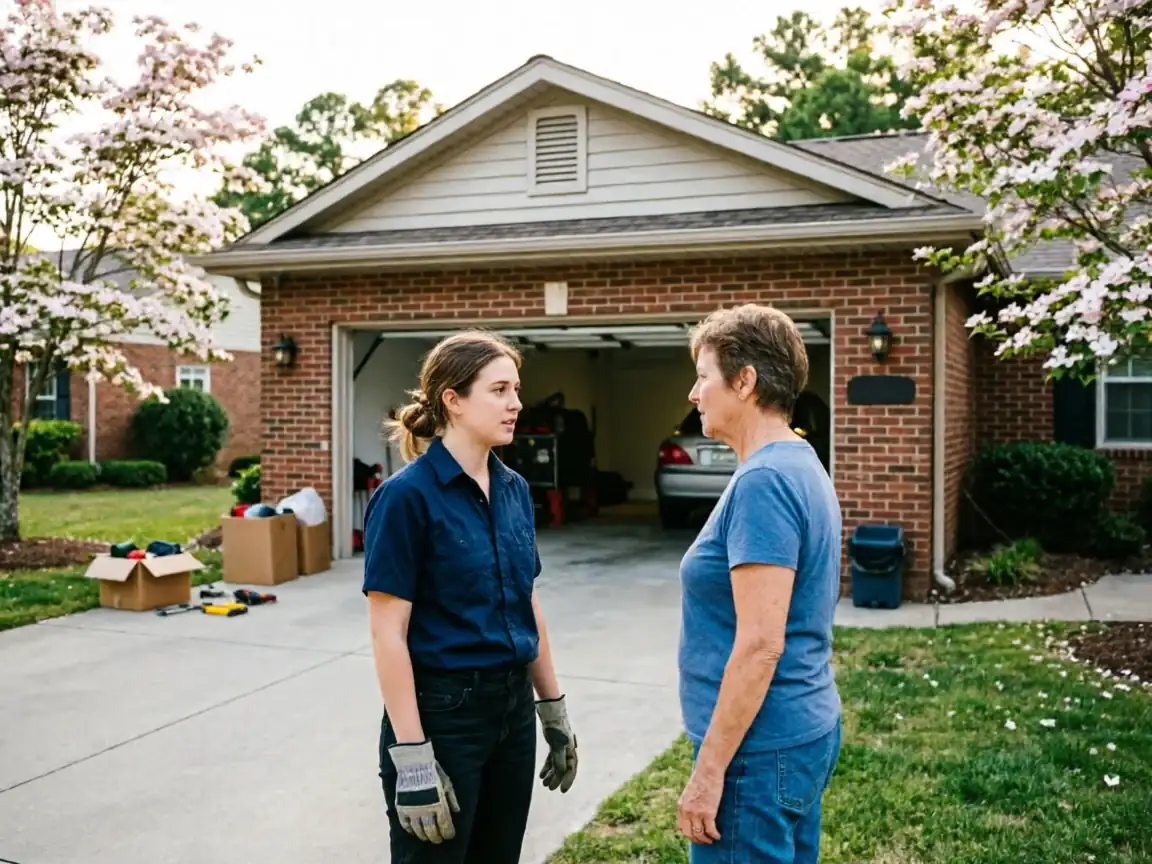
If you're not sure whether what you're hearing needs a maintenance visit or a repair call, say so when you book. A five-minute description of the noise and when it happens helps us bring the right parts on the truck instead of making a second trip.
The Cost of This Job
Median household income in Taylors runs higher than the wider Greer service area
$71,747 here - which in practice means we see more homeowners choosing to maintain a door proactively rather than waiting for a failure. That's the right call on a door from the early 1980s housing stock: a $150-range maintenance visit is cheaper than the $300-600 range emergency spring replacement that follows a snapped torsion spring, and it's a lot cheaper than full door replacement.
We can't give you an exact number without seeing the door
Spring size, opener model, and how much rust has built up on the hardware all change the math. What we can say honestly: if your opener is original to a house built in 1983, replacing it outright is often the better financial move over trying to keep patching a 40-year-old motor. We'll tell you straight if a repair isn't worth it rather than billing you for a patch job that fails again in six months.
See the Greer maintenance page for how pricing works across the wider service area
Or check Taylors service details for more on what we cover here.