The Cost of This Job
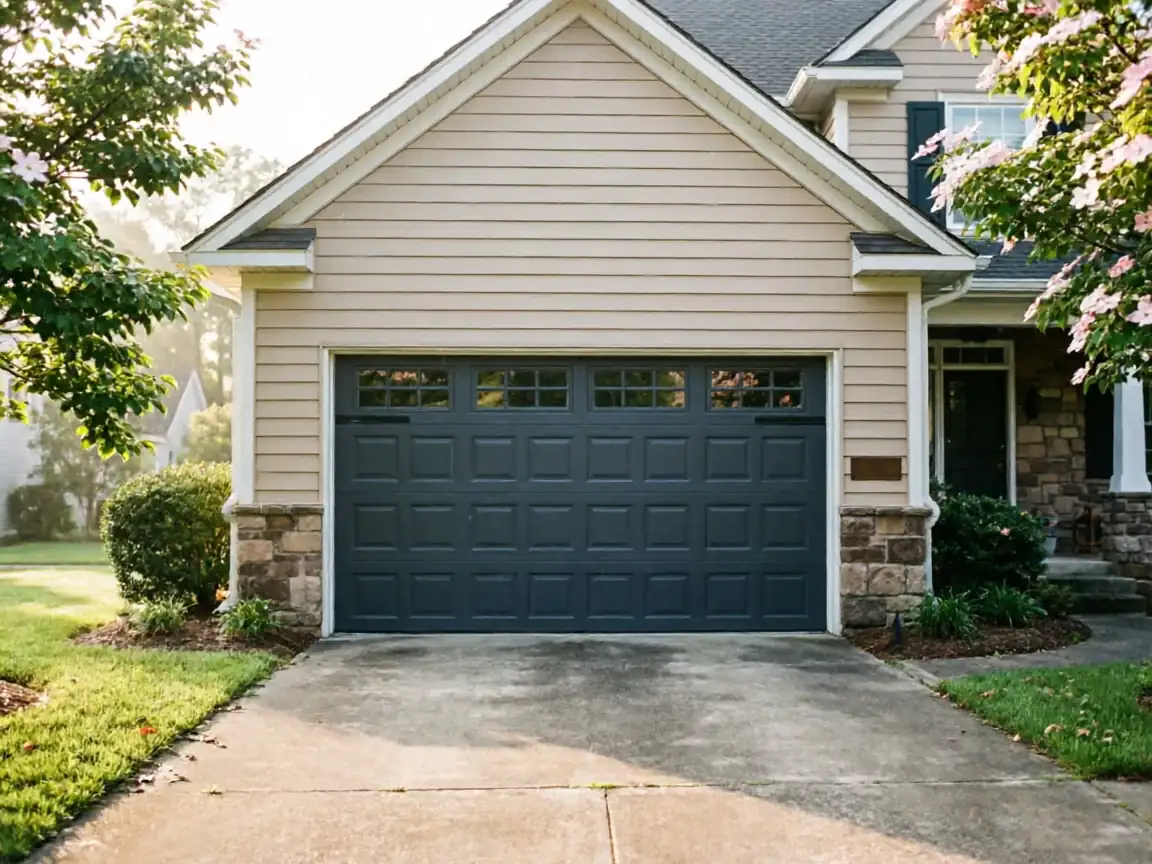
We travel from Greer to reach Mauldin, about 11 miles, and we price the job the same way we do anywhere else in the service area: by what's actually wrong with the door, not by the zip code. What changes the price in Mauldin more than anything is the age of the hardware. The broader service area has houses going back to 1938 with a median build year of 1983, but Mauldin's housing leans newer, with a median around 1994. That means fewer doors here are still running on the original torsion spring from the builder, and more of them have at least one replaced part already in the system - a different-gauge cable, a newer opener bolted onto older track. A tech has to price around whatever mix he finds on your door, not assume it's all-original. One honest limit: if your opener is original to a 1994 build, parts for that exact model may not exist anymore, and the real fix is a new unit, not a patched one.
The DIY Question
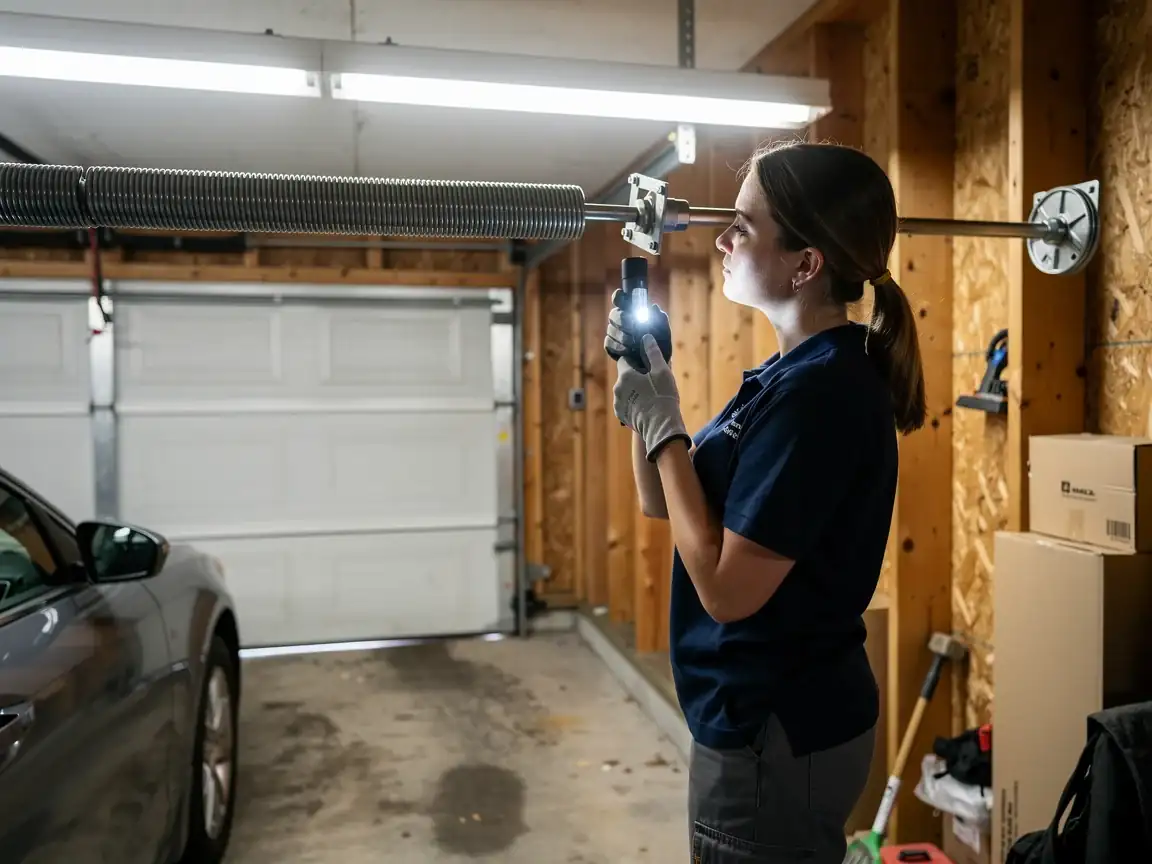
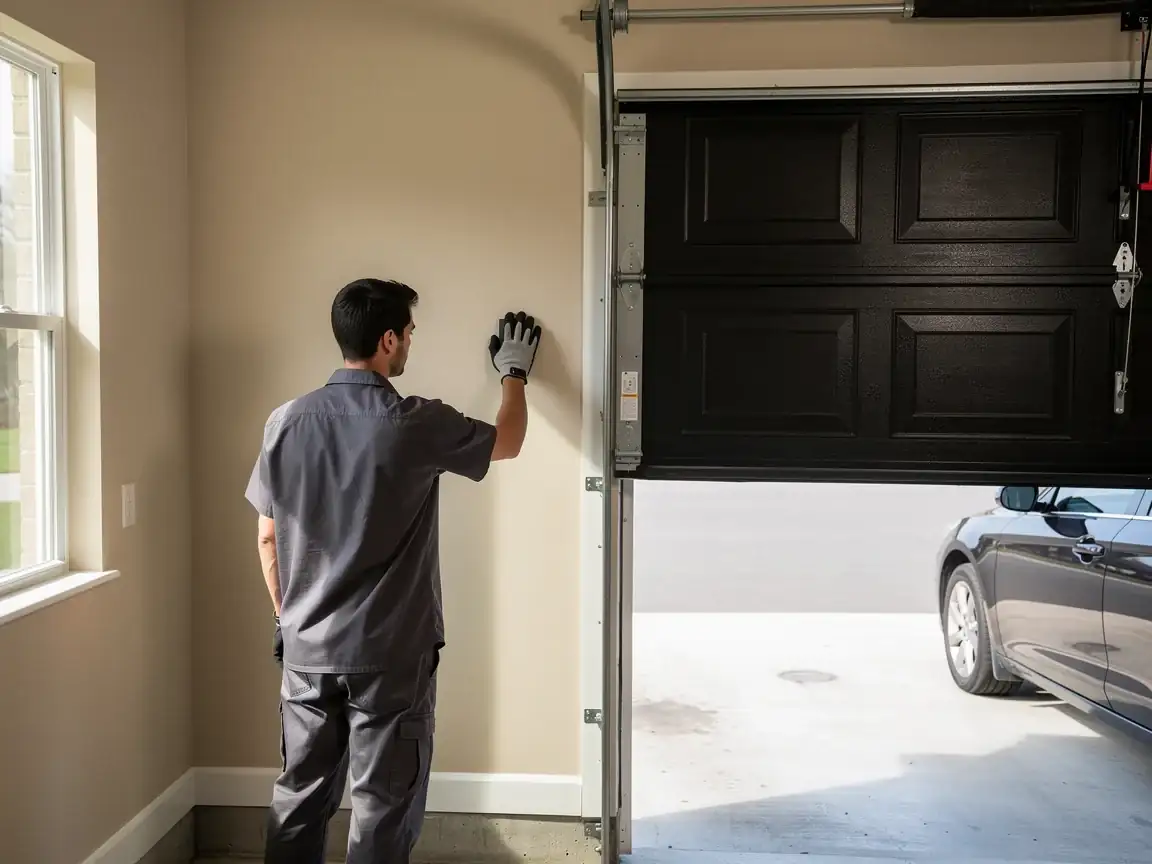
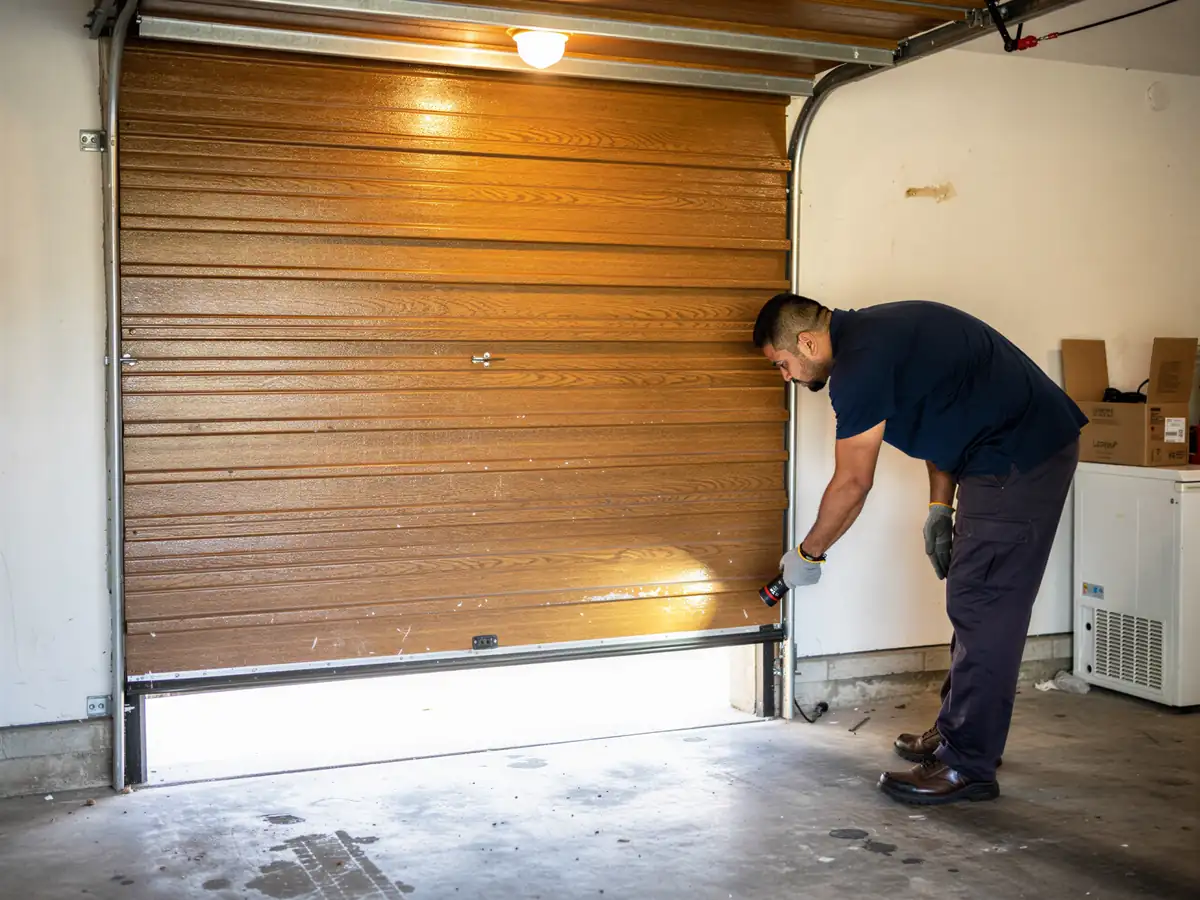
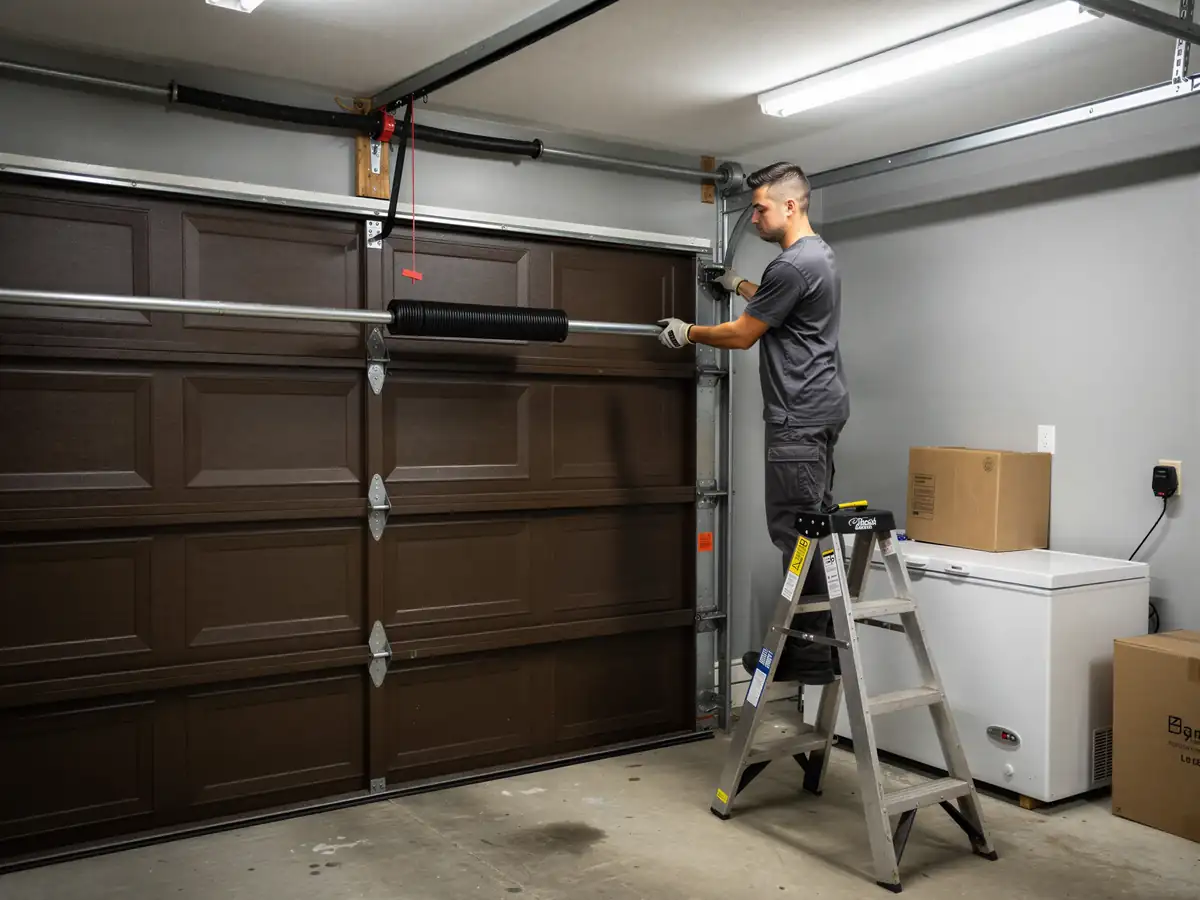
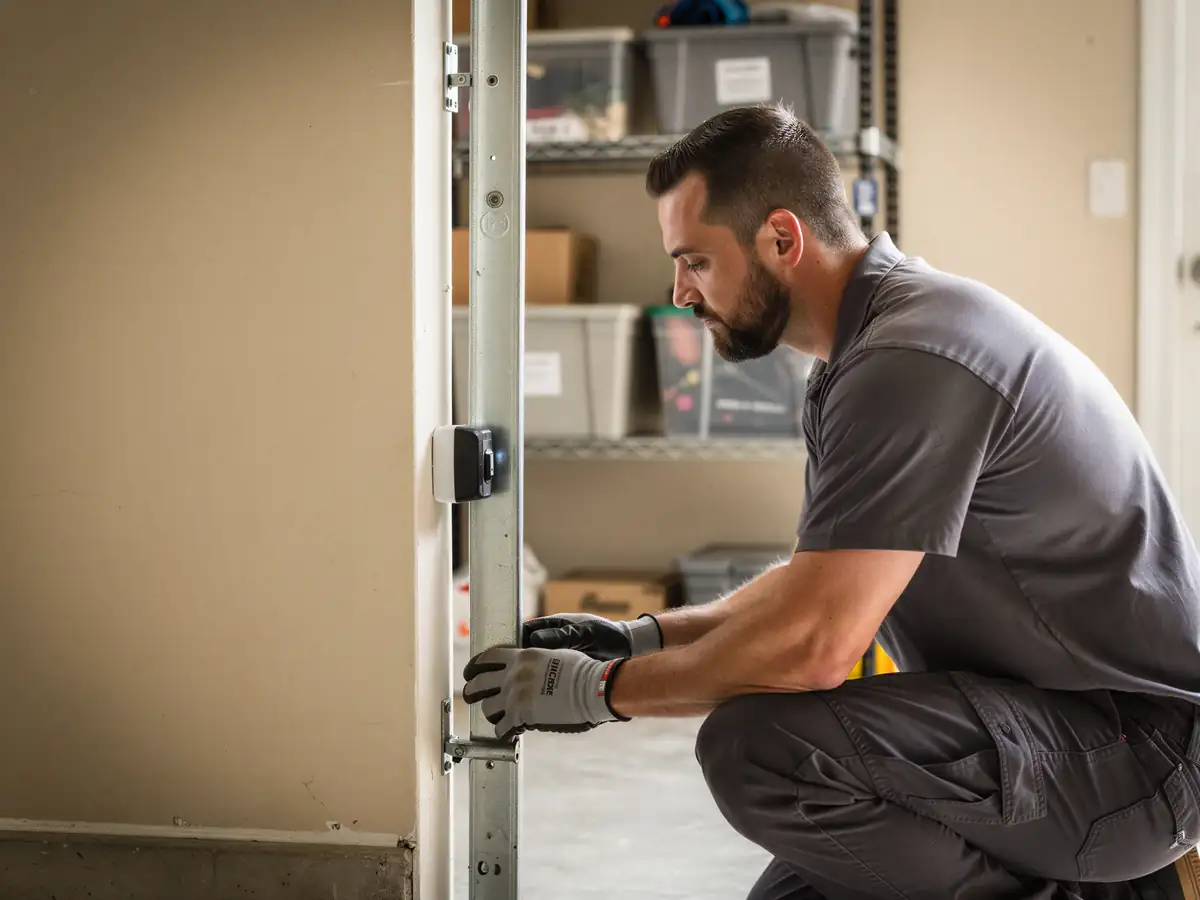
A 1990s door isn't as risky to work on as an original 1960s one-piece slab, but torsion springs are still wound under real tension and they don't care how new the rest of the house is. What you can check yourself: the photo-eye alignment (a knocked sensor is a five-minute fix and the single most common reason a newer door refuses to close), and the track for visible dents or gaps where a roller's jumped out. What you shouldn't touch: the spring itself, or the opener's internal force adjustment if you're not sure what it controls, since getting that wrong can make the door come down harder, not safer. If the door is original hardware from a 1994 build and something major fails - drum, spring, and cable all showing wear at once - replacing the whole system is often the better call over patching one part at a time.
What Can Go Wrong
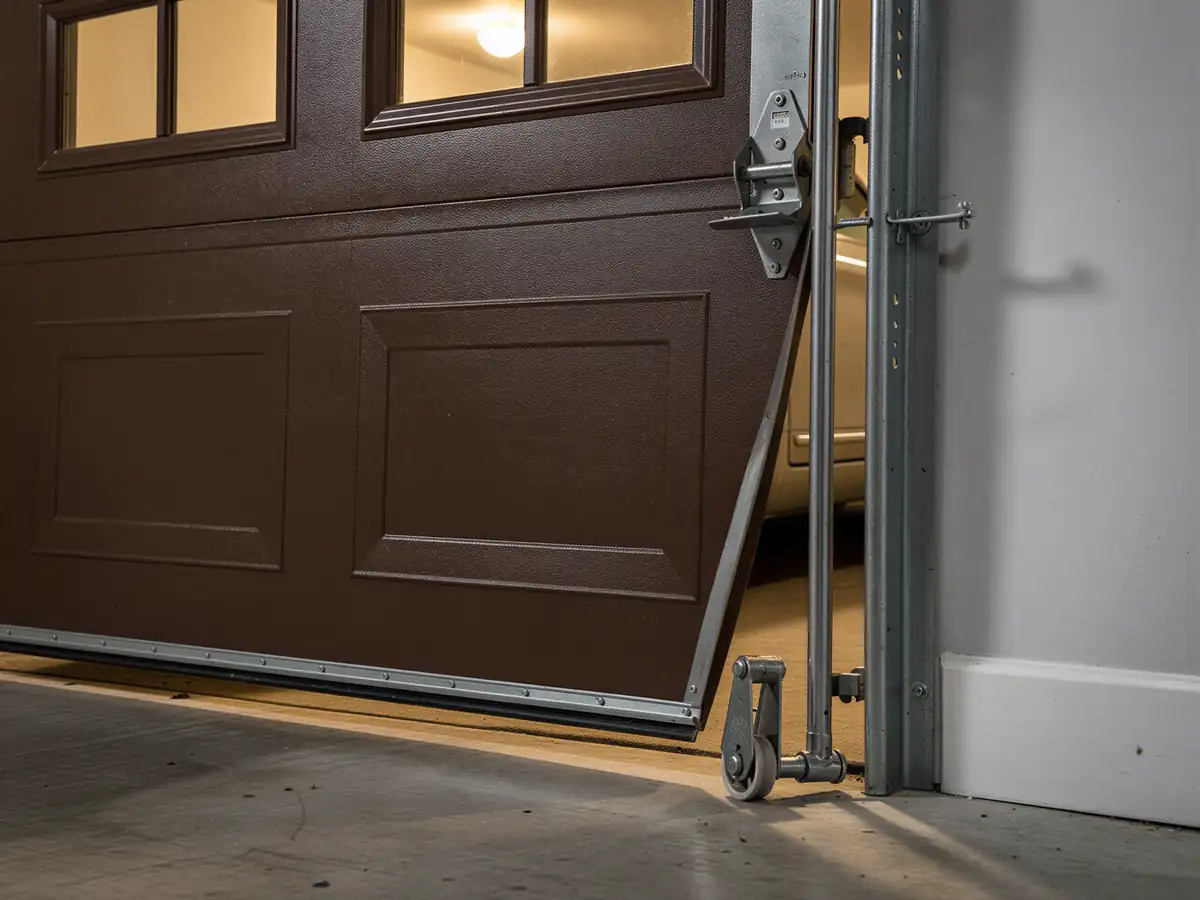
Left alone, a misaligned photo-eye usually just means a door that won't close, which is annoying but safe. Worn rollers are the quieter risk: as they wear, the door rides unevenly in the track, which puts side-load on the opener's drive gear and on hinges that were never designed to carry that stress. On houses in this part of the service area, built mostly after the early 90s, we see opener gear kits fail years before the spring does, because the gear is plastic and the spring is steel. The failure usually isn't dramatic - it's a door that gets slower and louder for months before the opener just stops engaging. Catching it early is a gear kit. Catching it late is a new opener.