What Can Go Wrong
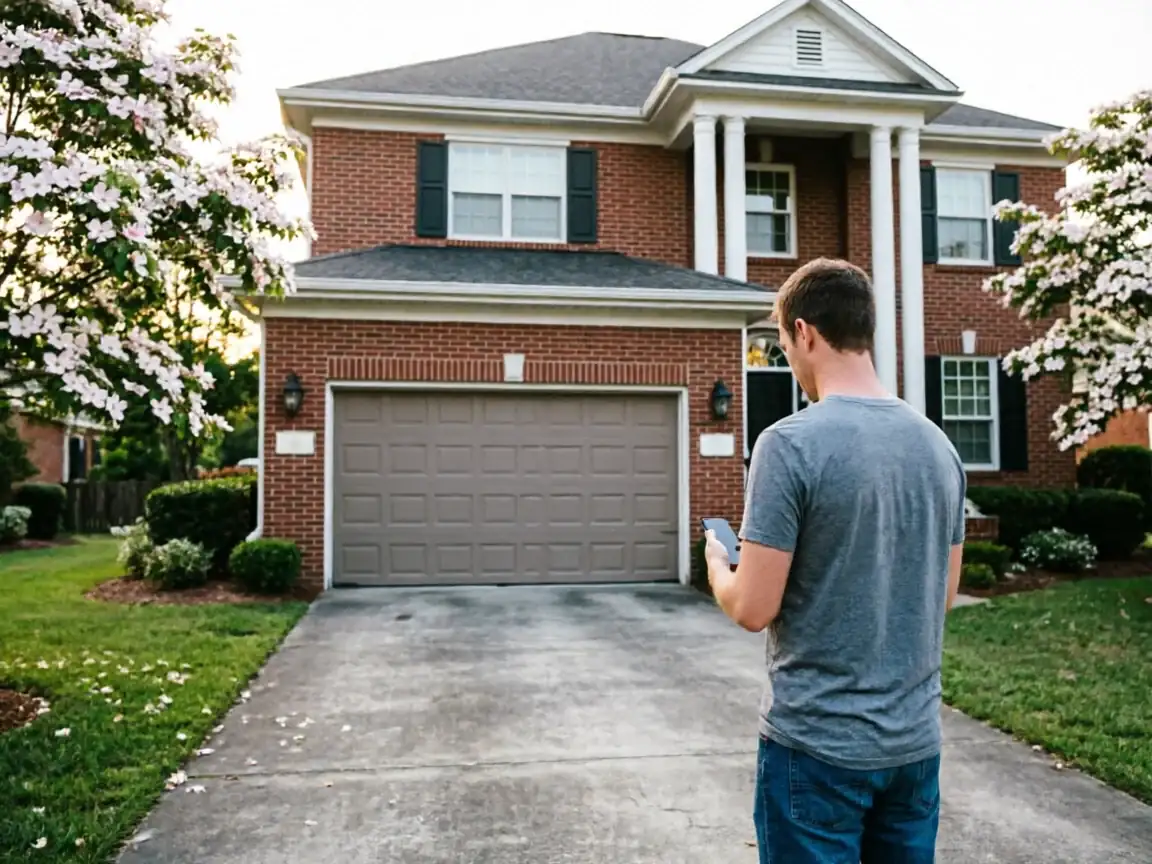
Duncan sits about five miles from our shop in Greer, which is close enough that a diagnostic trip here doesn't eat half a technician's day. That short drive matters less for speed than for scheduling - it means a call from Duncan slots in alongside the rest of the route instead of requiring a special trip.
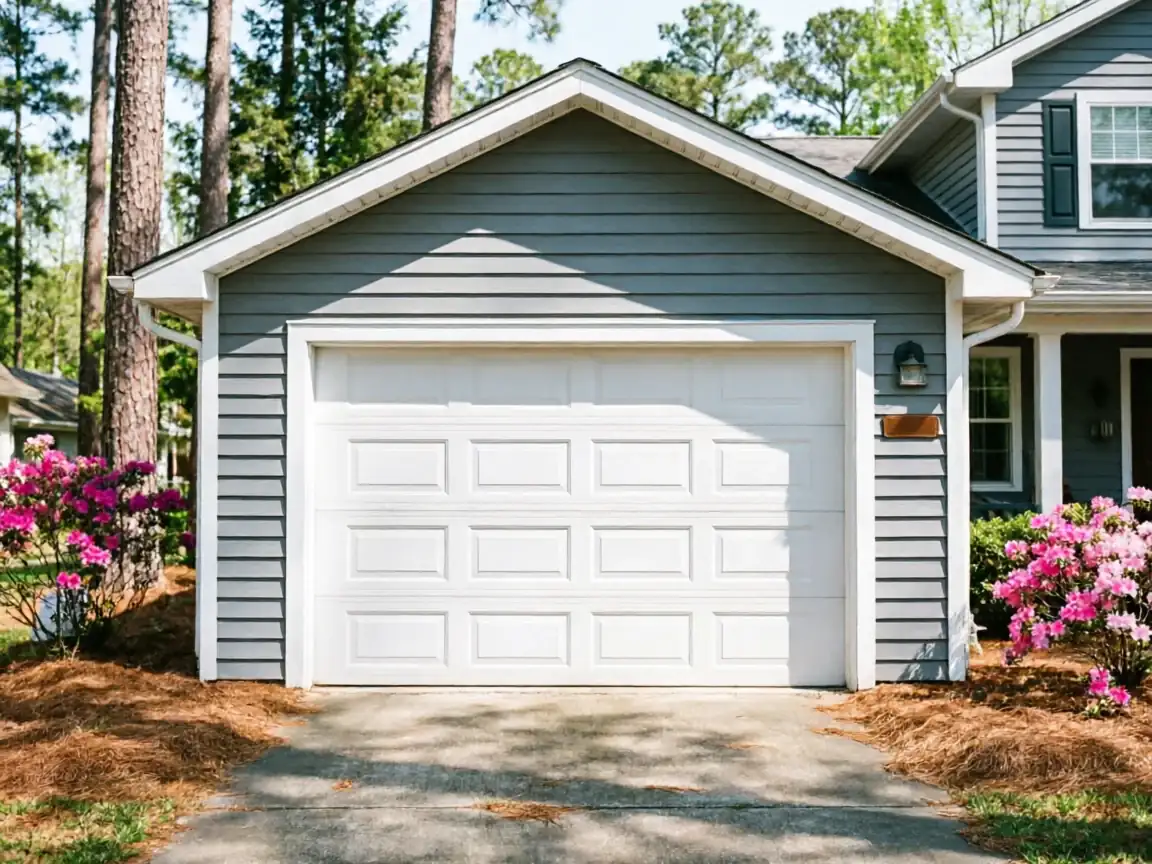
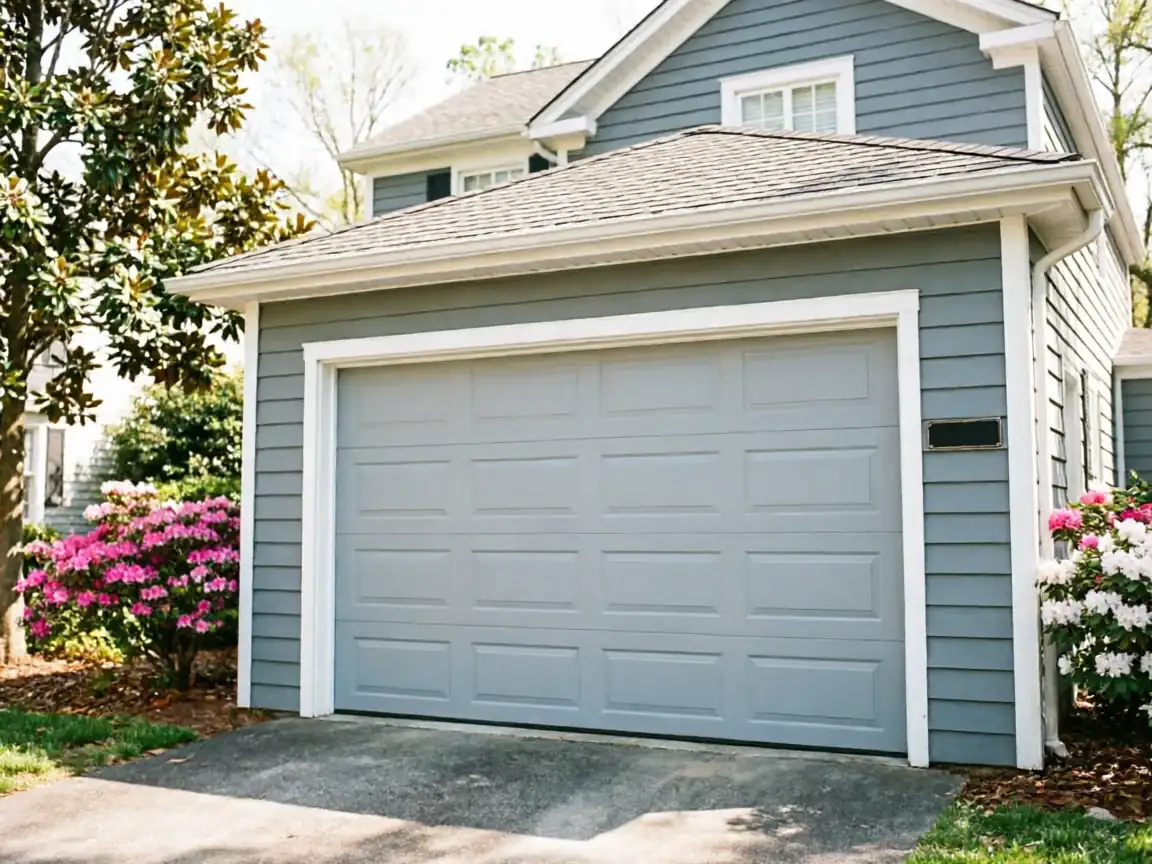
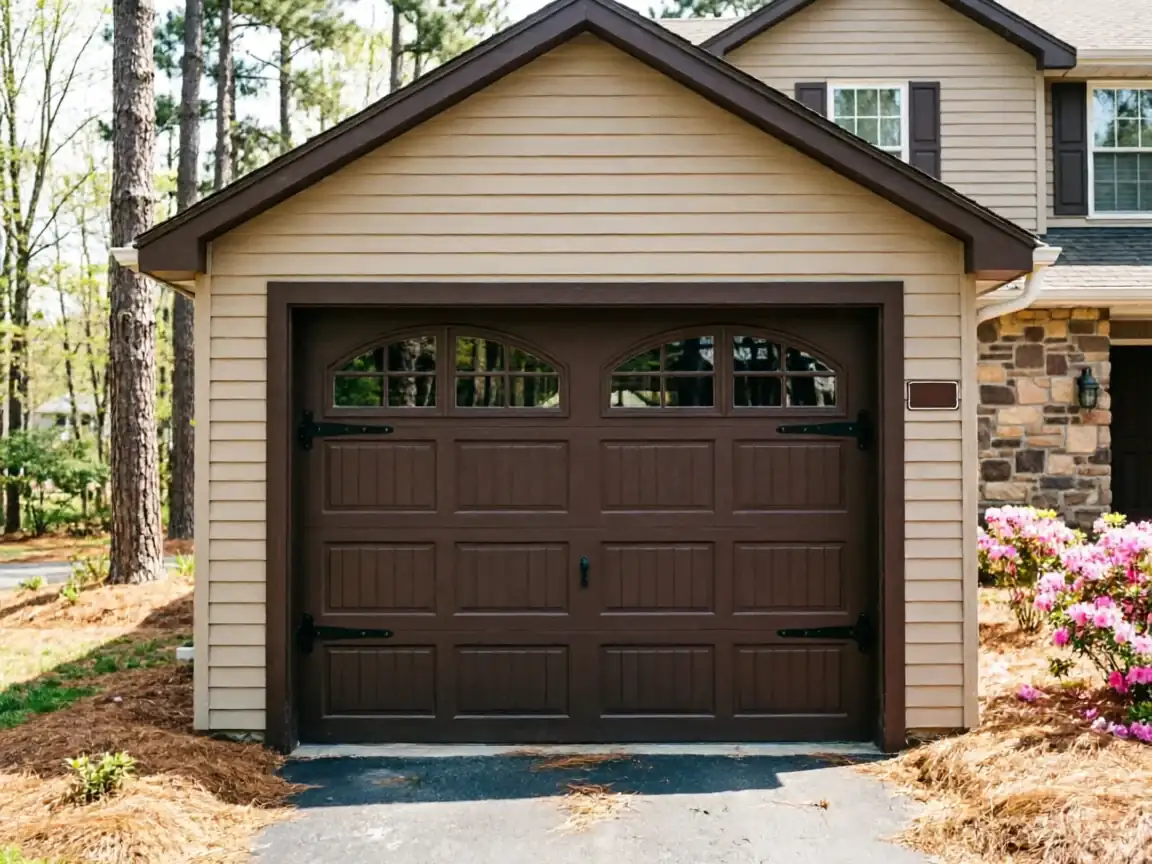
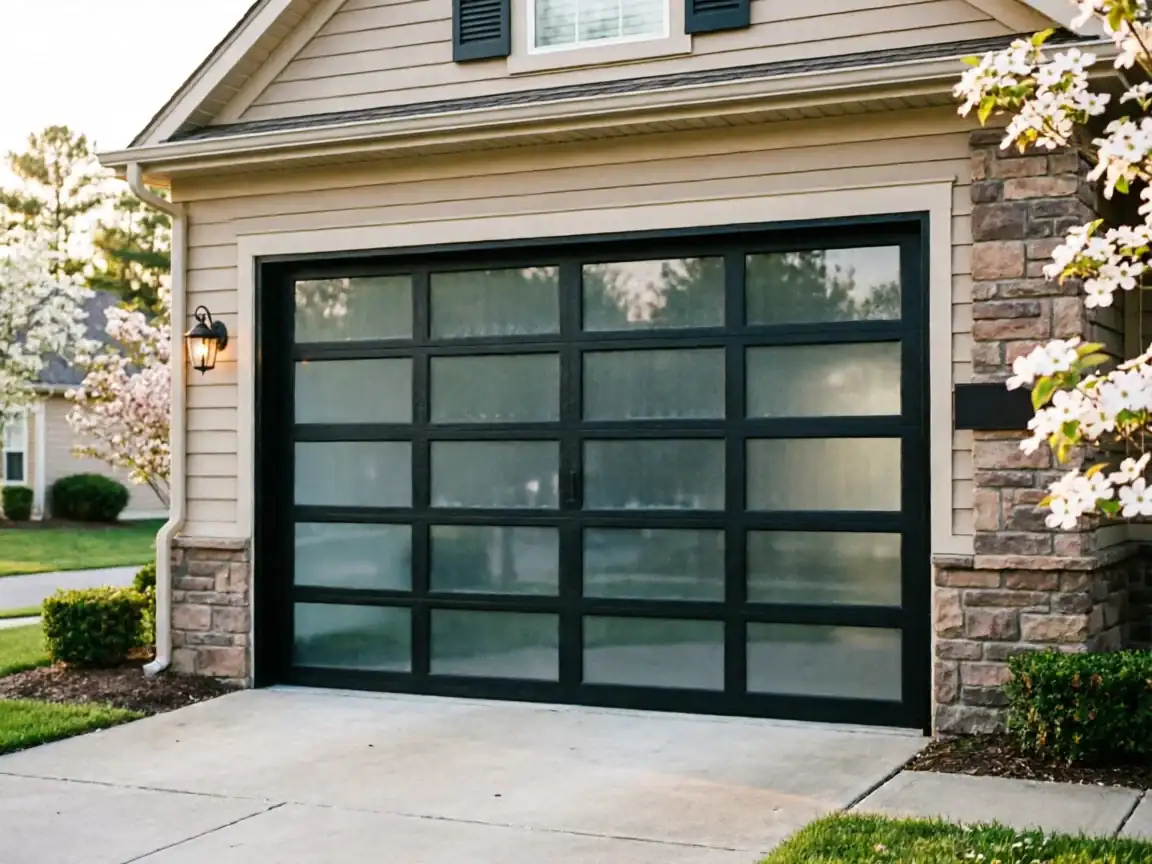
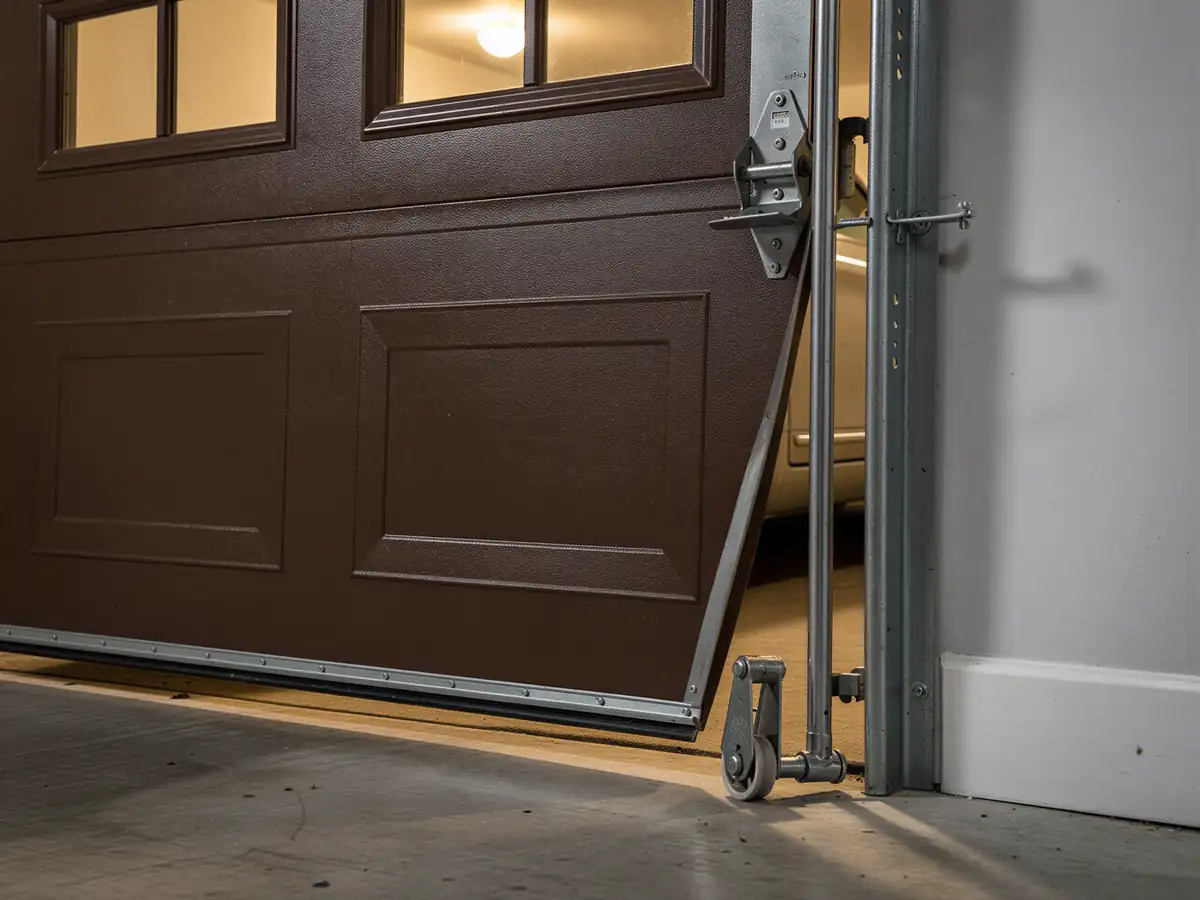
What actually breaks on a Duncan door depends on when the house went up. The median year built here runs around 2001, a good two decades newer than the 1983 median across the wider service area. That later build date usually means a steel sectional door on torsion springs matched to a chain-drive or screw-drive opener from the early 2000s. Those openers are now old enough that the drive gear strips, the logic board fails, or the original springs - rated for a specific cycle count - finally give out after two decades of daily use.
Cold snaps add wear here too, same as the rest of this climate band: grease stiffens, rollers bind, and a door that was already marginal on spring tension will start to groan or stick on the first truly cold morning. None of that is unique to Duncan, but the age of the hardware doing the groaning is.
The DIY Question
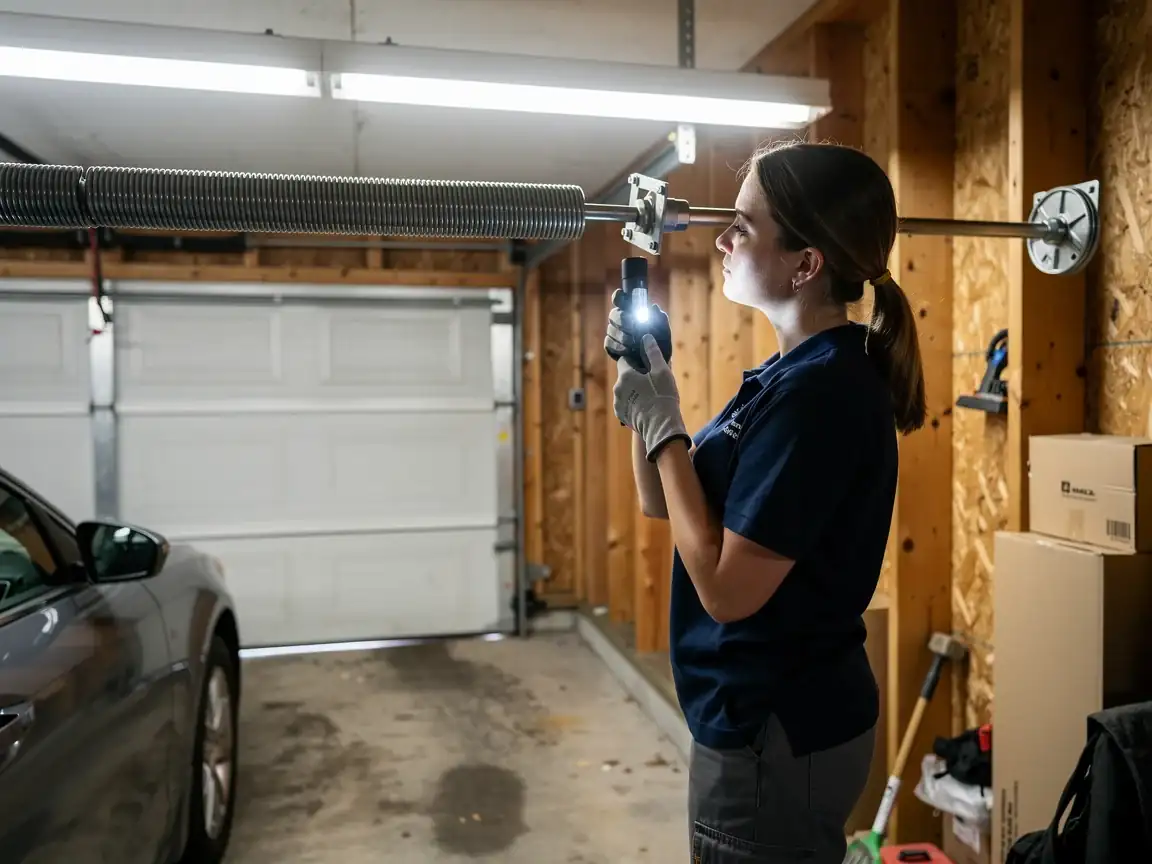
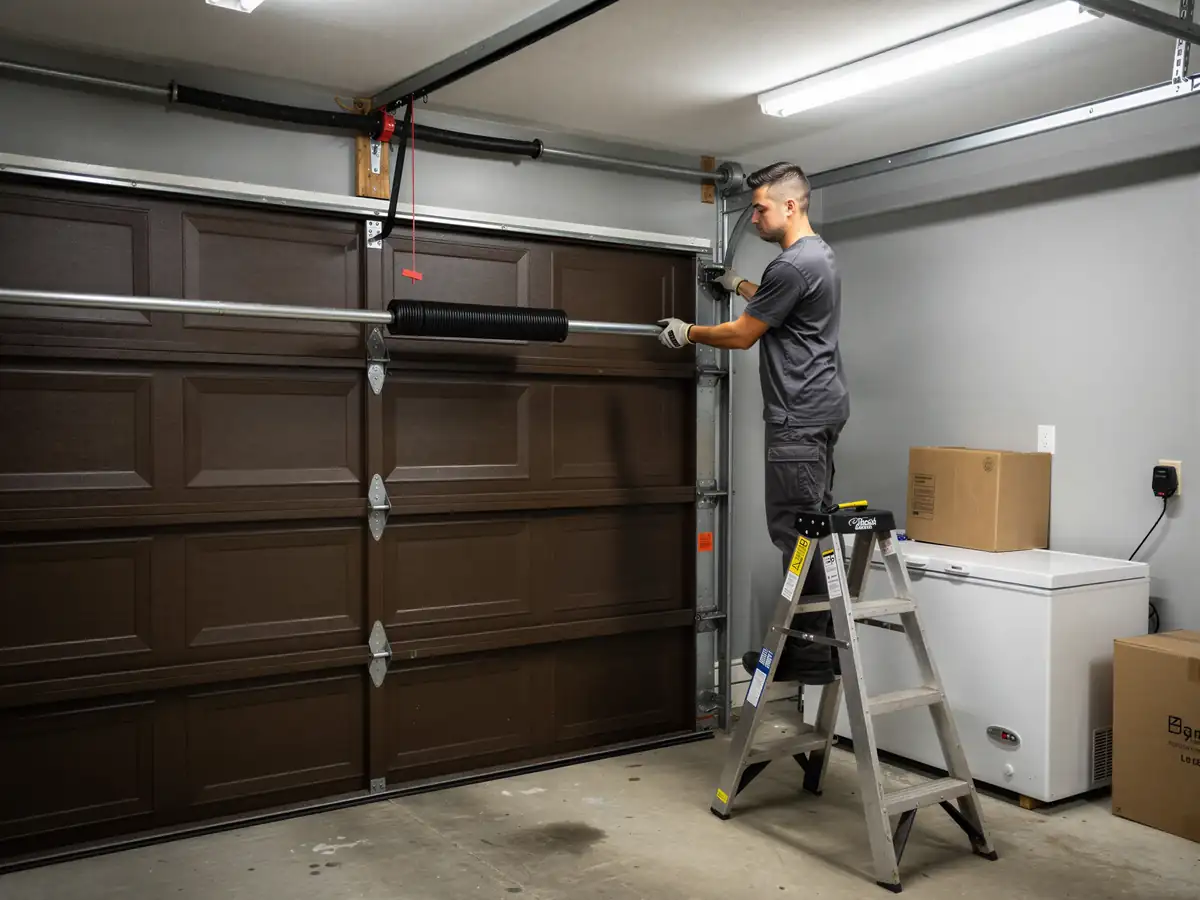
A torsion spring under tension is not a weekend project
And we won't talk anyone through replacing one over the phone - the spring is wound to a force that can break fingers or worse if it slips off the winding bar. That's the one job we tell every homeowner to leave alone, in Duncan or anywhere else.
What you can check yourself
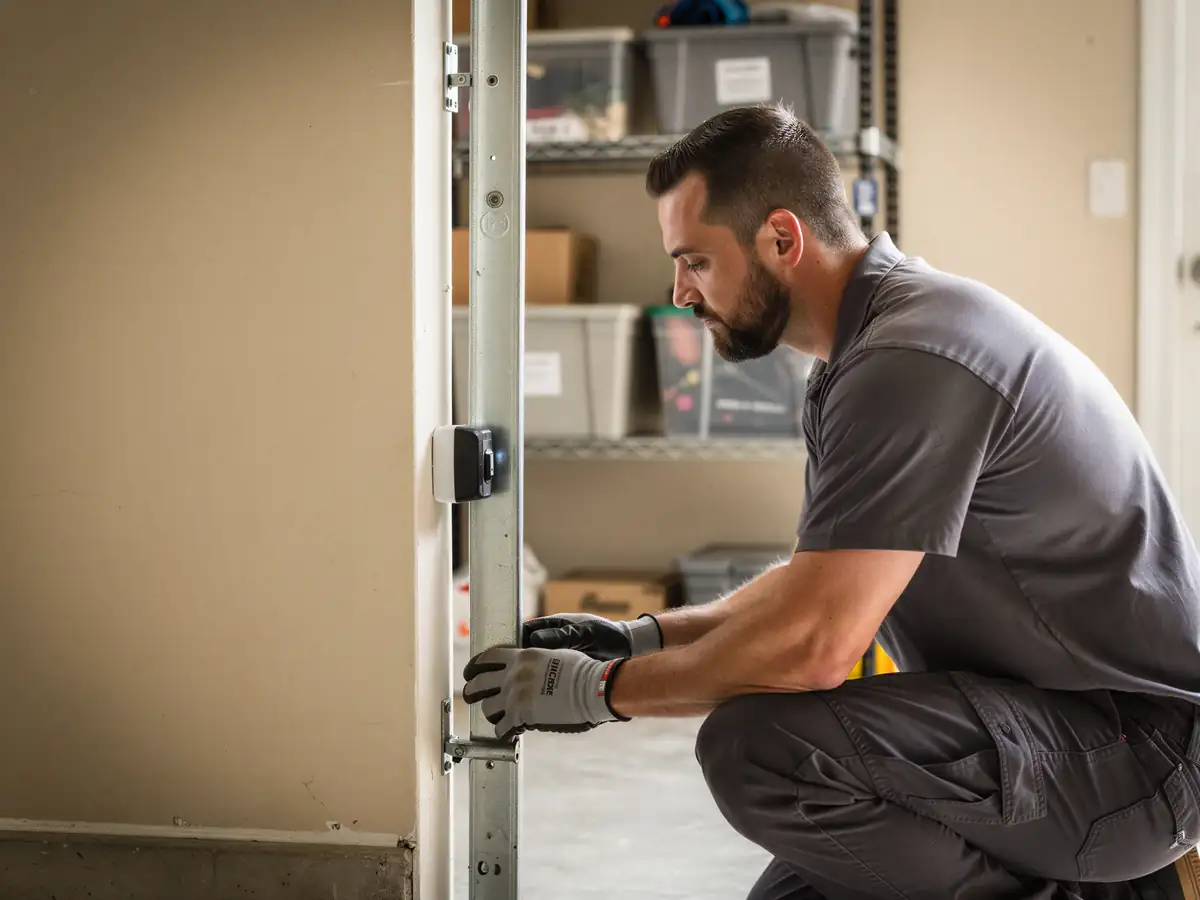
The track for visible dents or gaps, the sensor eyes near the floor for dust or misalignment (a blinking opener light often means nothing more than that), and the weatherstripping along the bottom panel for cracking. If the door reverses randomly or won't close at all, that's almost always a sensor or a safety-reversal issue, not a spring, and it's worth five minutes of your own time before you call anyone.
If the door is noticeably heavier to lift by hand than it used to be
Or one side drops faster than the other when you pull the release cord, that's spring wear talking. At that point, stop lifting it and get it looked at - a spring that's close to failing can snap the cable too, and that's a bigger repair than the spring alone.
The Cost of This Job
We don't have a Duncan-specific price list to quote here, and giving a number without seeing the door would be a guess dressed up as a fact. What we can say is that the age profile of Duncan's housing stock - mostly early-2000s builds - tends to put repairs in a different category than the older end of the territory. A door from 2001 is usually still fixable: springs, cables, rollers, and openers from that era are common parts, not discontinued ones.
That's the upside of newer stock. The downside is that builder-grade openers from the early 2000s sometimes used proprietary circuit boards that are harder to source than the mechanical parts, and if that board is the failure point, replacement of the whole opener can end up cheaper than chasing a part. We'll tell you straight which way that math goes once we're looking at the unit, rather than quoting a number sight unseen.
Booking a Visit
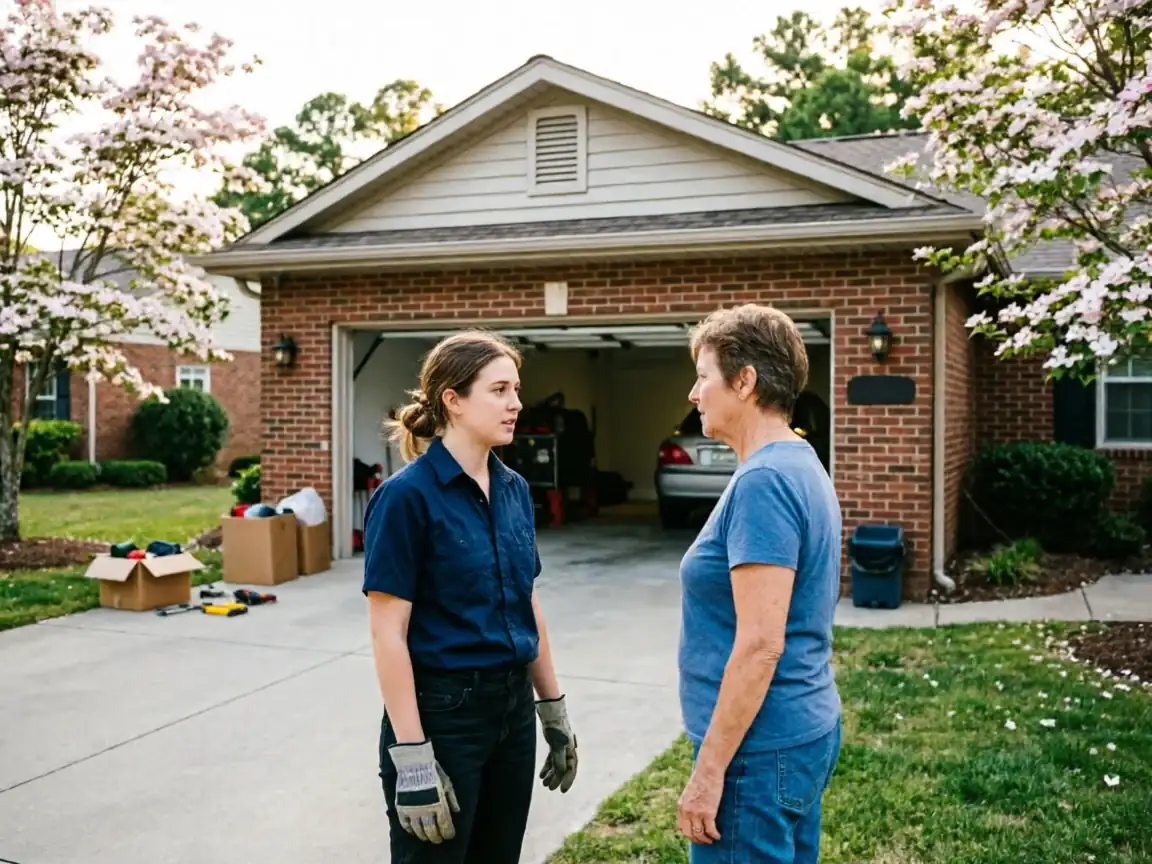
Calls from Duncan get routed the same way as the rest of the territory, out of our Greer location, so there's no separate dispatch or local crew to wait on - just a tech making the five-mile drive once a slot opens. You can see how Duncan fits into the broader area we cover on the Duncan service area page, and if you're comparing this to the general repair page for the hub town, that's here: garage door repair in Greer.
When you call, it helps to know the rough age of the house and whether the door is sticking, making noise, or not moving at all - that's usually enough for us to guess at the likely cause and bring the right parts on the first trip instead of a second one. Duncan's household count is modest, around 1,676 by the latest count, so we're not juggling a dense grid of same-day stops here the way we might in a bigger pocket of the service area; that can work in your favor on scheduling flexibility.
What the Fix Involves
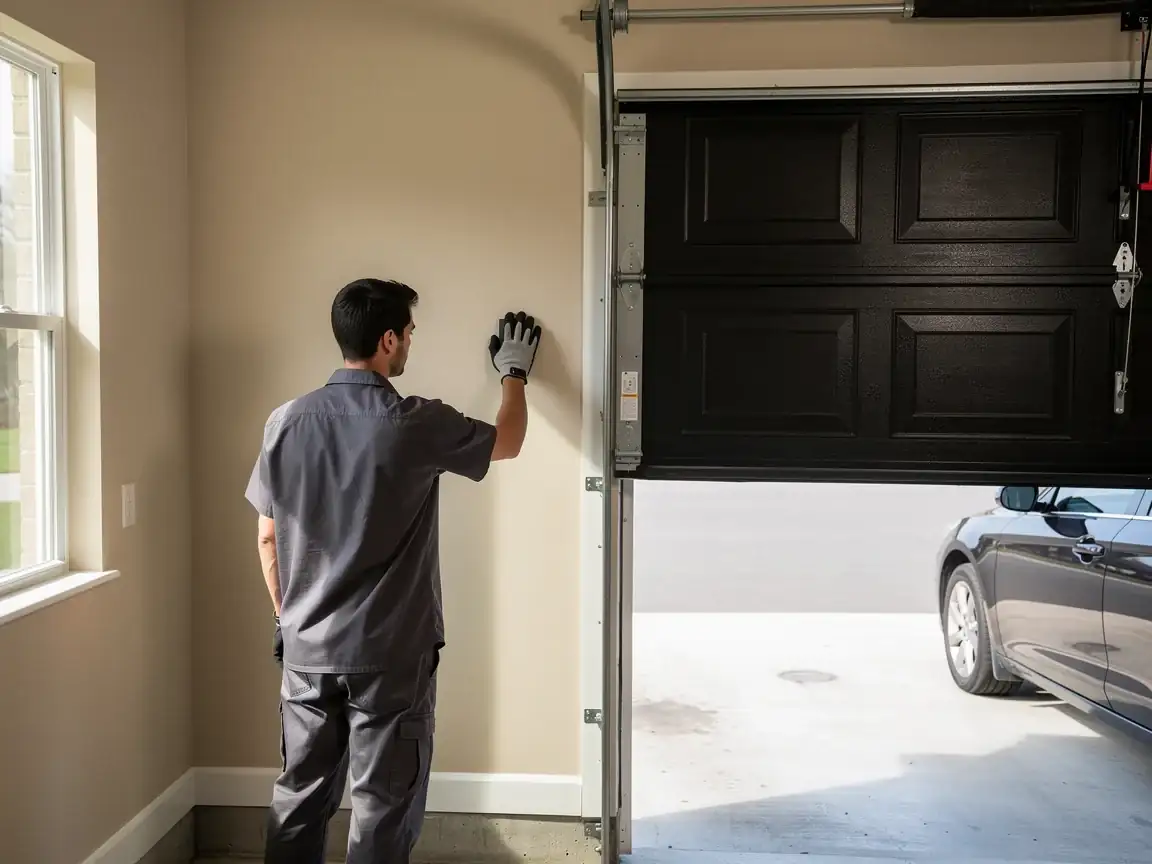
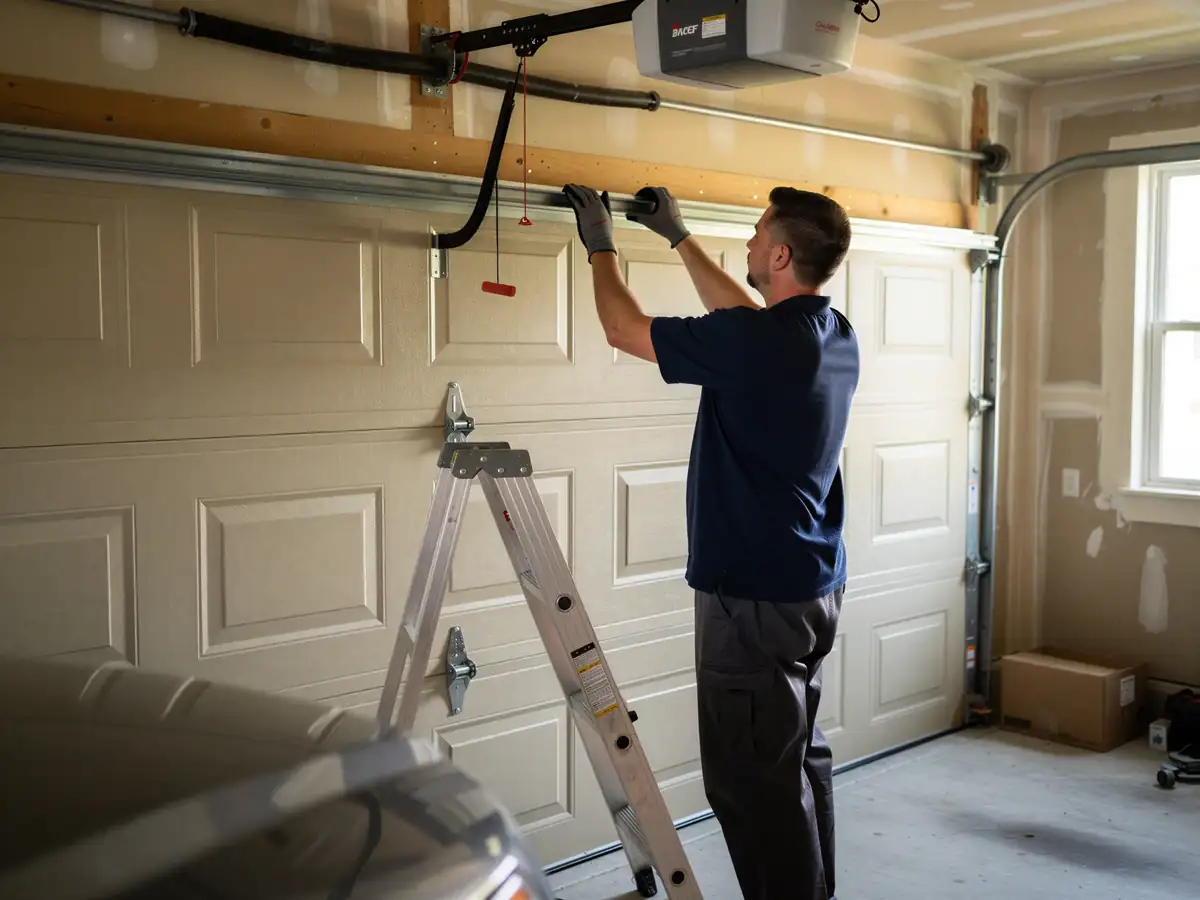
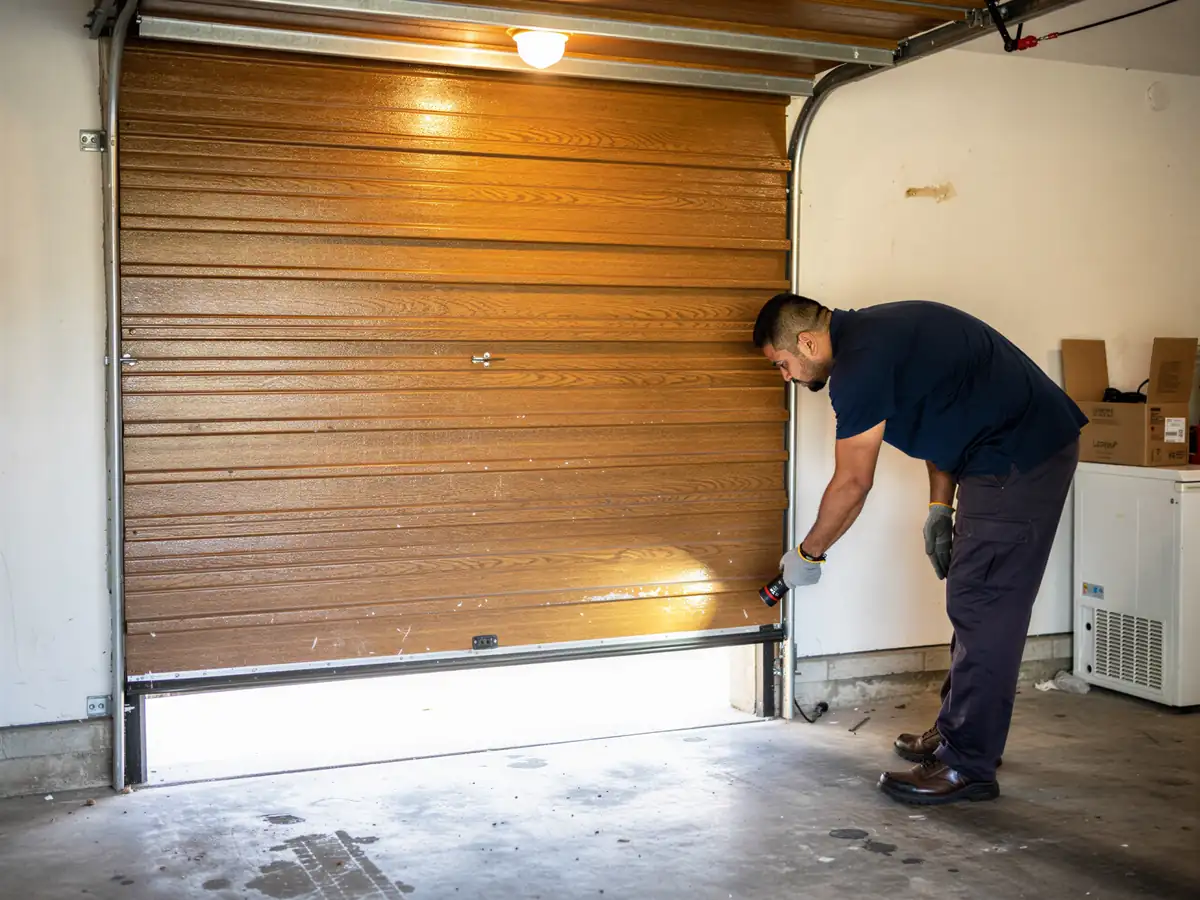
On a typical Duncan call, the first ten minutes are diagnostic
Cycle the door, check spring tension, look at the opener's force settings, and check the track alignment. For a house built around the 2001 median here, that usually means a torsion spring setup rather than the older extension-spring doors you'd find in the 1980s-era pockets of the territory - different parts, different repair.
If it's a spring, we replace both springs on a double door even if only one has broken
Since the other is on the same clock and close behind. If it's the opener, we test the logic board and the drive gear separately before recommending a swap, since one is a cheap part and the other usually means a new unit.
One limitation worth saying plainly
If a part is genuinely obsolete - some early-2000s opener boards fall into that category - we may not be able to get it quickly, and replacing the opener outright may be the faster and more sensible call. We'll say so rather than quote a wait time we can't back up.