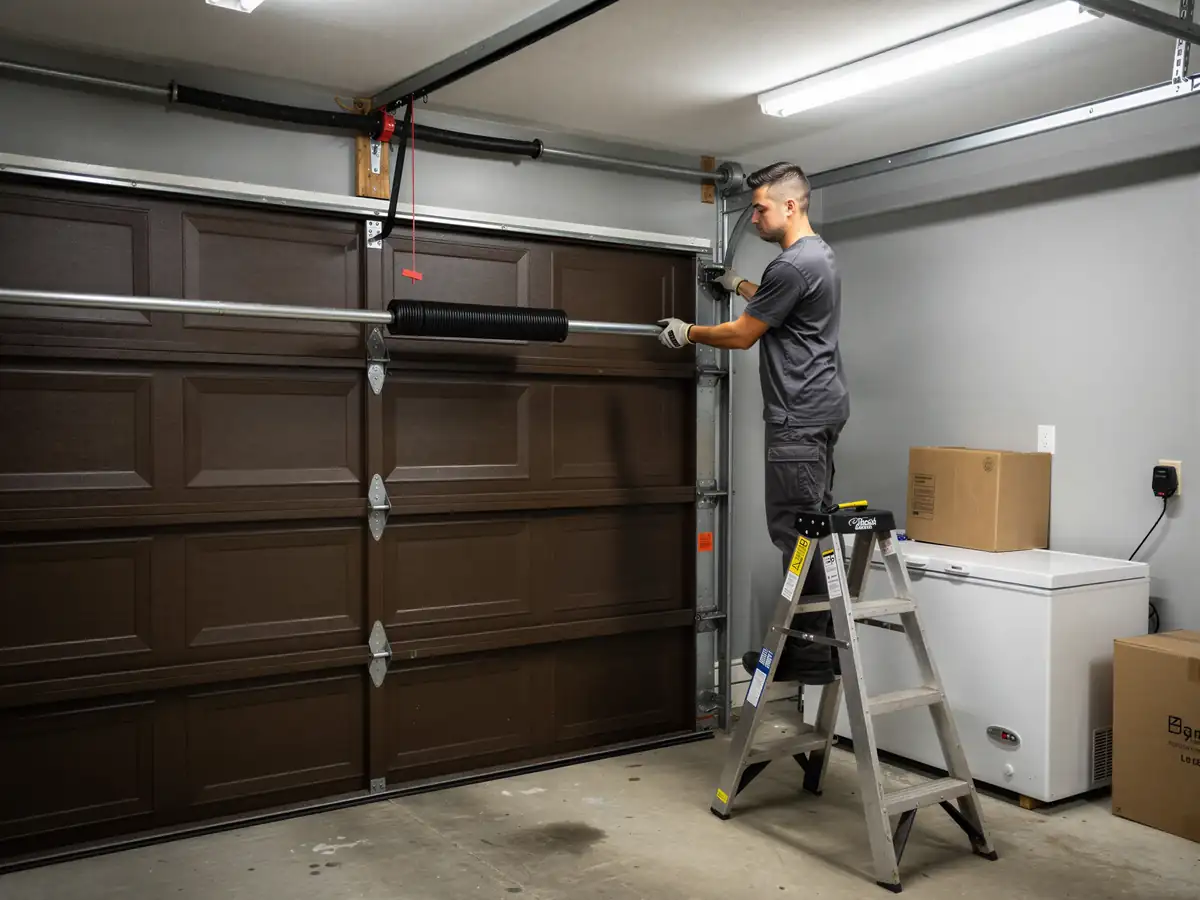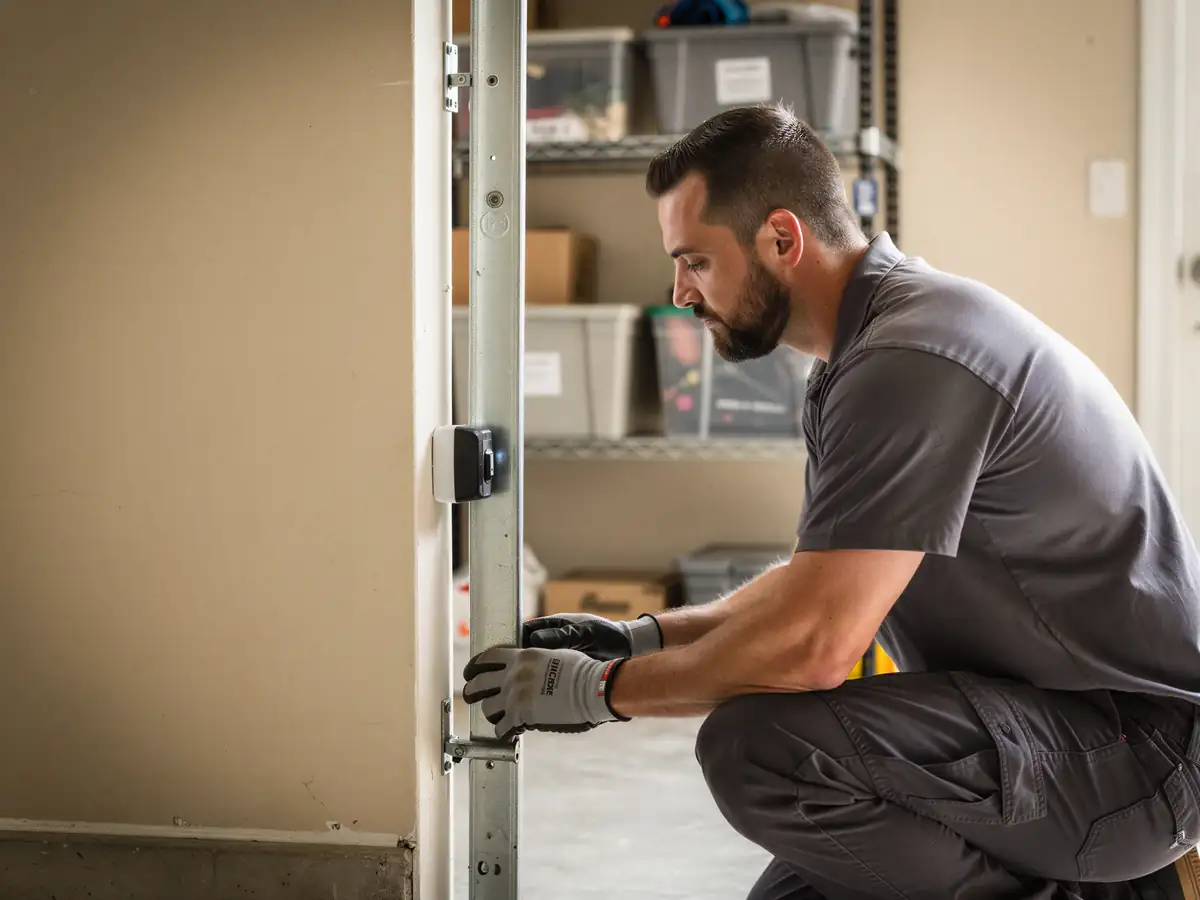
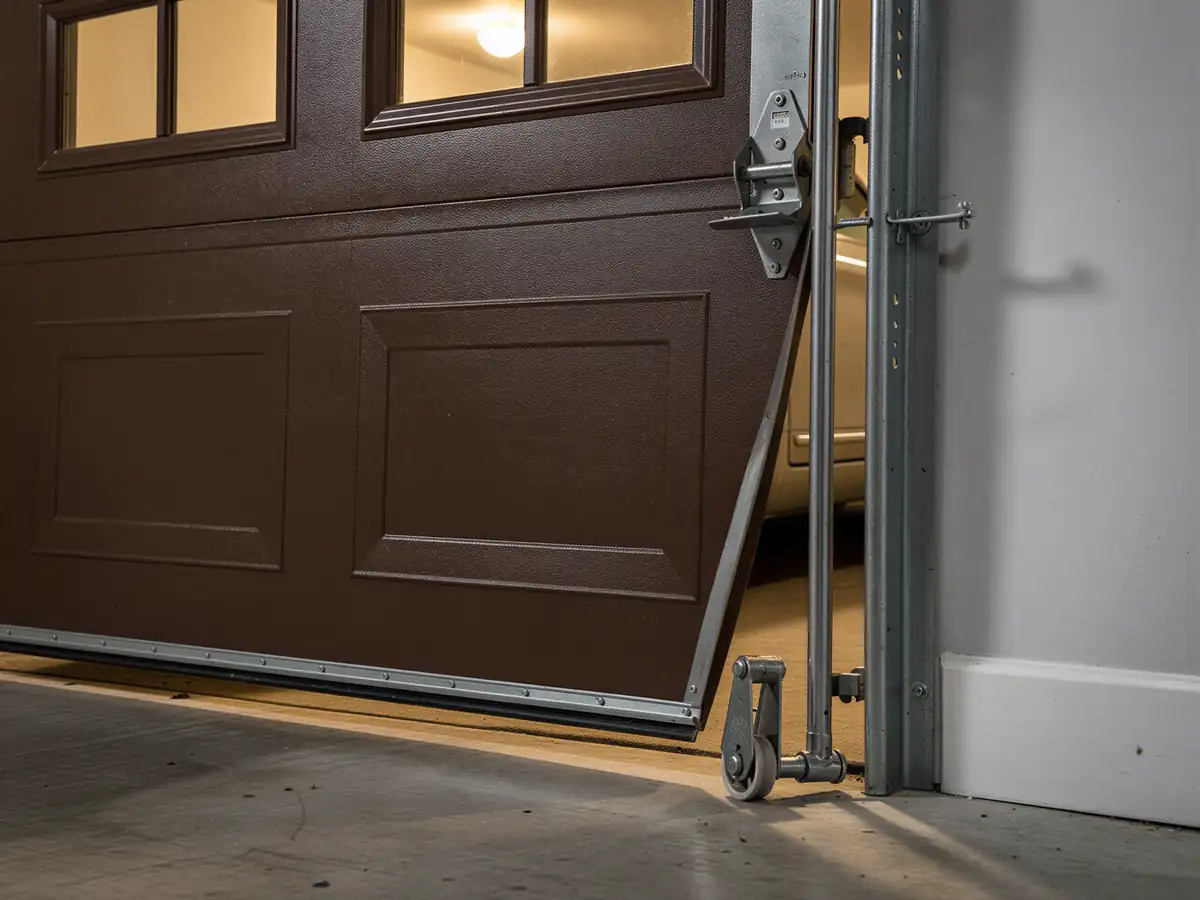
What Can Go Wrong
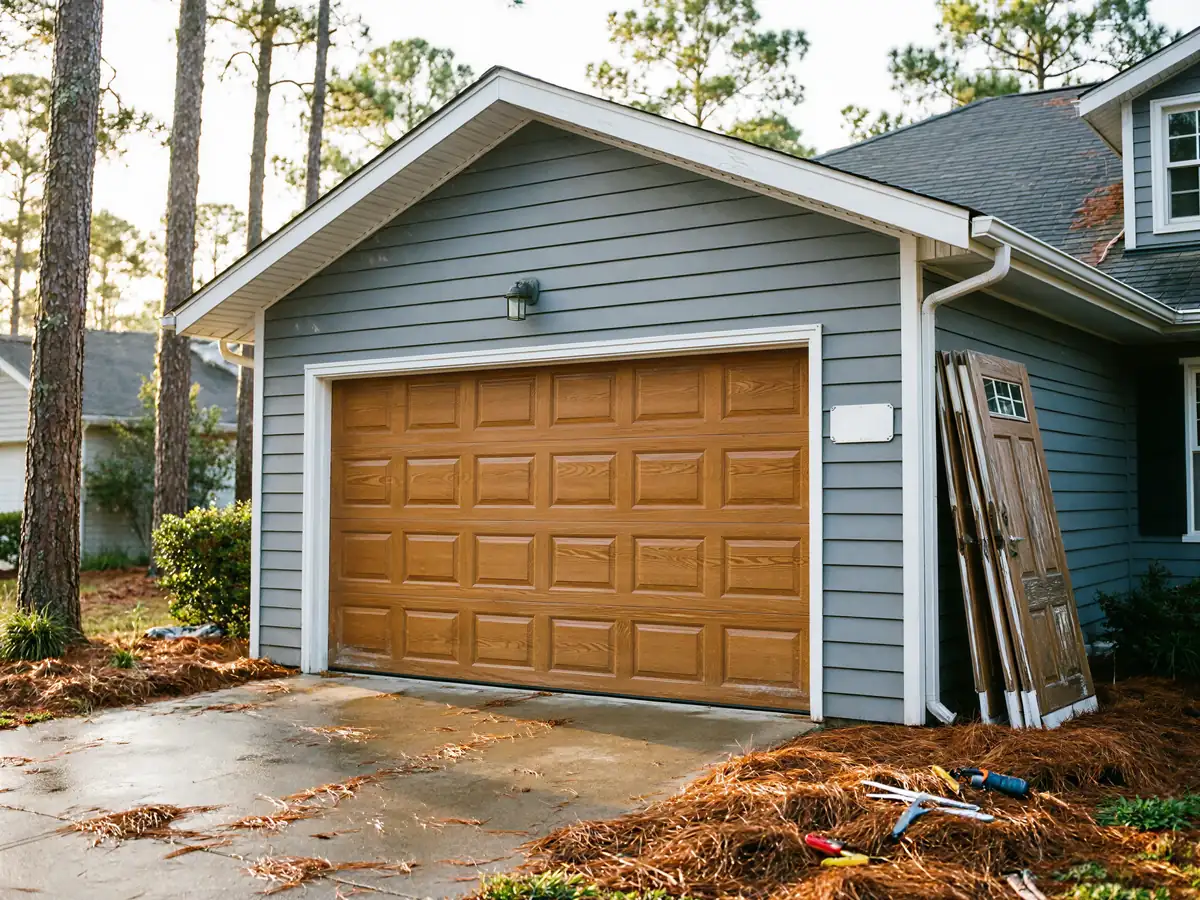
Most houses in Duncan went up around 2001, which puts this suburb a solid two decades newer than the service area's overall median build year of 1983. That matters for off-track calls. A lot of these doors still have their original rollers and track brackets, just not the same wear pattern you'd find on a house from the 80s stock that makes up so much of the wider area. The nylon rollers that shipped standard in the early 2000s hold up fine for years, then start chipping and binding right around now, and a chipped roller is one of the fastest ways to walk a door off its track.
The other factor is the cold-moderate winter swing here. Steel track contracts in a hard overnight freeze, and if a bracket was already loose from normal house settling, that little bit of shrink is sometimes all it takes for the door to jump the track on the next open. We also see it from a bottom panel getting bumped hard enough to bend the track rail itself, which looks the same from the driveway but needs a different fix than a loose bracket.
Either way, a door that's off its track isn't something to keep running through. Forcing the opener against a bent rail usually turns a $150 bracket job into a bent panel and a cracked stile.
The DIY Question
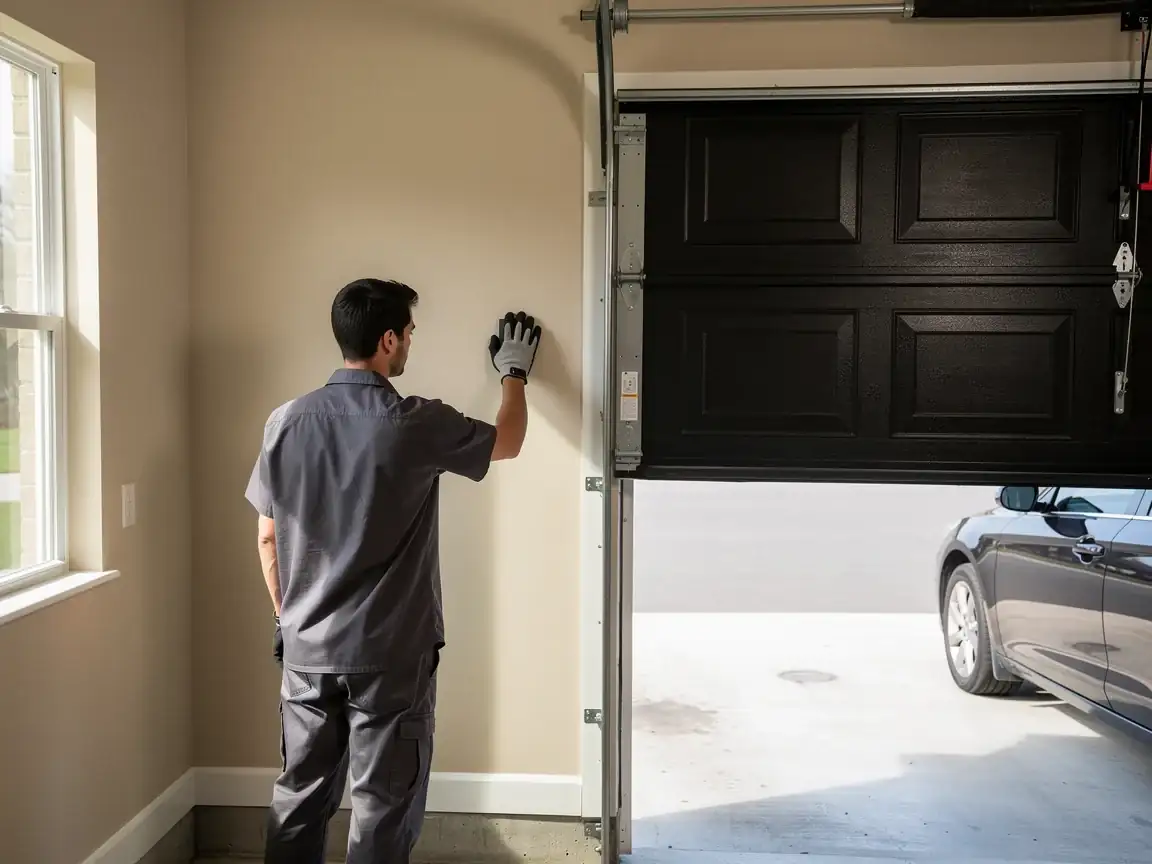
You can put a door back on its track yourself if the cable and spring are both still intact and the only problem is a roller that slipped out of the rail
Pull the release cord, lift the door by hand, and see if it tracks straight with light pressure. If it does, re-seating the roller is a reasonable DIY job.
Where we tell people to stop is anything involving the spring side
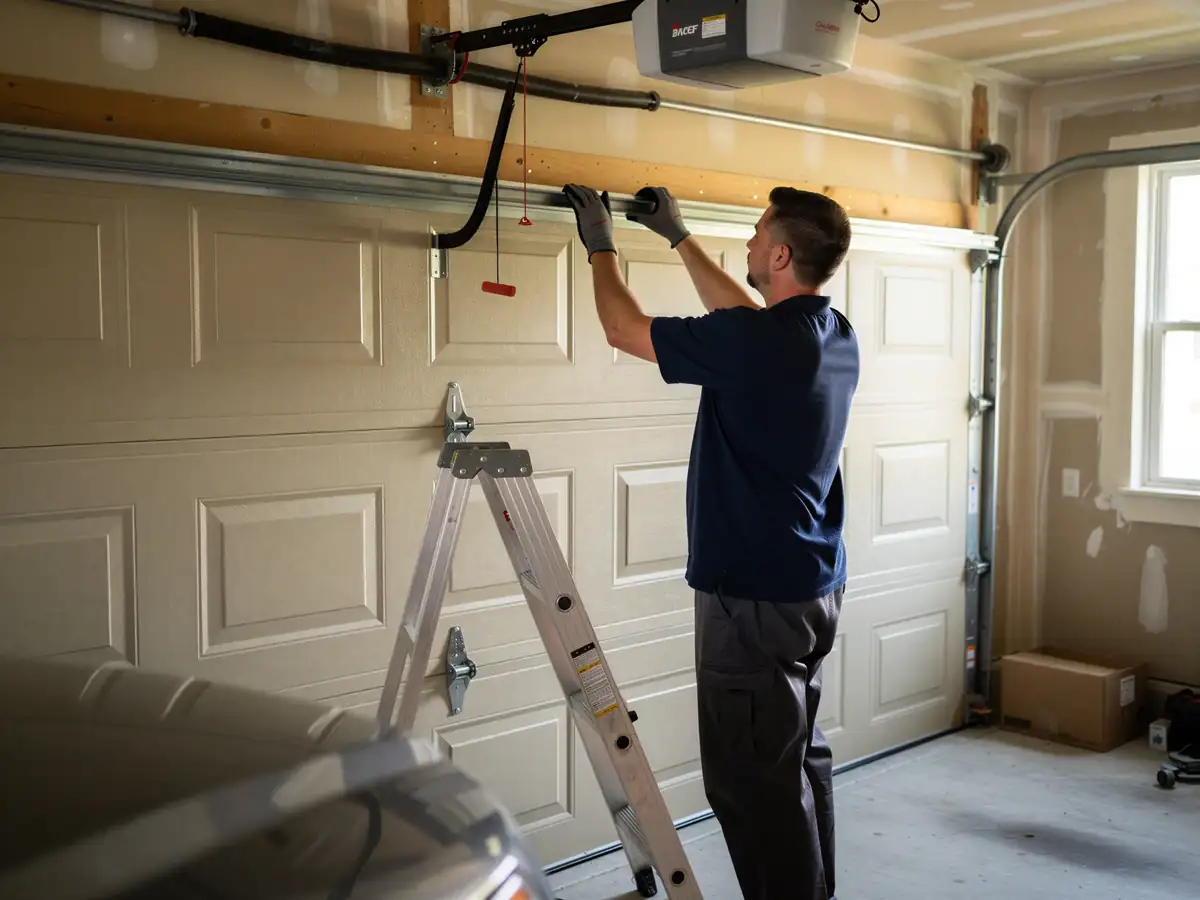
If the door won't stay up on its own, or one side of the track is visibly bent, or a cable has come off the drum, that's not a roller problem anymore and the door is under load that can snap back hard. We'd rather you call than end up in the ER over a torsion spring that looked fine until it wasn't.
One honest limitation
We can't always tell over the phone whether it's a simple roller re-seat or a bent track that needs replacing. Bent track almost never bends back true, even with a come-along, so if your bracket is pulled out of the framing or the rail itself has a kink, plan on a track section getting swapped rather than straightened.
The Cost of This Job
We don't have a flat number to quote here since the range depends on whether it's a roller re-seat, a bracket re-mount, or a bent track section that needs replacing, and Duncan's housing age means we see all three. A loose bracket on a 2001-era door is usually the cheapest fix in the lineup, since the hardware itself is rarely worn out, just shifted.
What pushes the number up is a bent rail. Once track is kinked, patching it rarely holds, and the honest move is replacing that section rather than charging you twice when it comes off again in six months. Duncan's median household income runs around $51,596, a few thousand below the $55,671 median across the wider Greer service area, and we keep that in mind when a homeowner asks whether a repair or a track swap makes more sense for their situation. We'll tell you straight if the cheaper fix is a false economy.
Booking a Visit
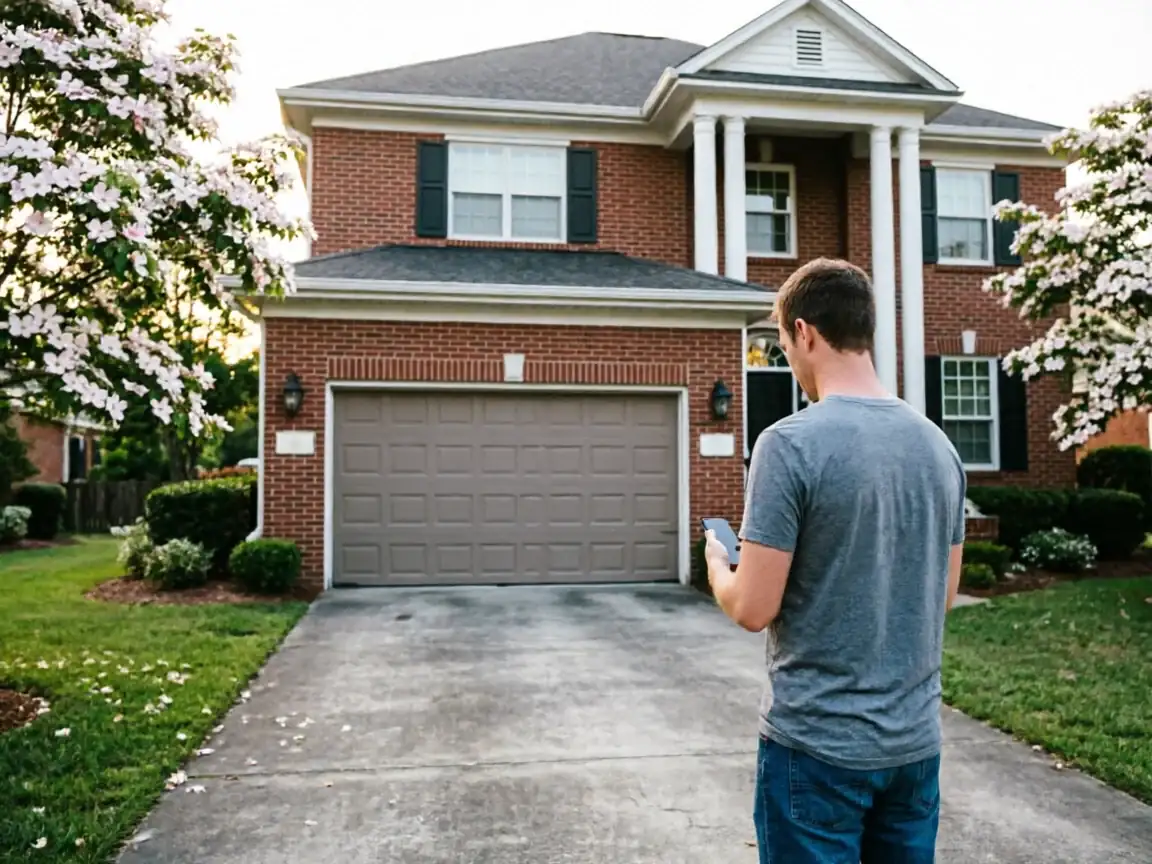
We run out of Greer, and Duncan sits about five miles from there, so this is a short drive for us, not a stretch call. When you reach out, tell us whether the door is stuck open, stuck closed, or still movable but grinding against the track, since that changes what we bring on the truck.
If you can safely get a phone photo of where the roller sits relative to the rail, send it along. With roughly 1,676 households in Duncan and a housing stock that's mostly newer builds rather than the older stock found elsewhere in the service area, we're usually dealing with a narrower set of causes here than in some other towns we cover, and a photo helps us bring the right bracket size the first time instead of guessing.
See our Duncan service area page for what else we handle out this way, or check the Greer off-track repair page for how the job runs on the Greer side of things.
What the Fix Involves
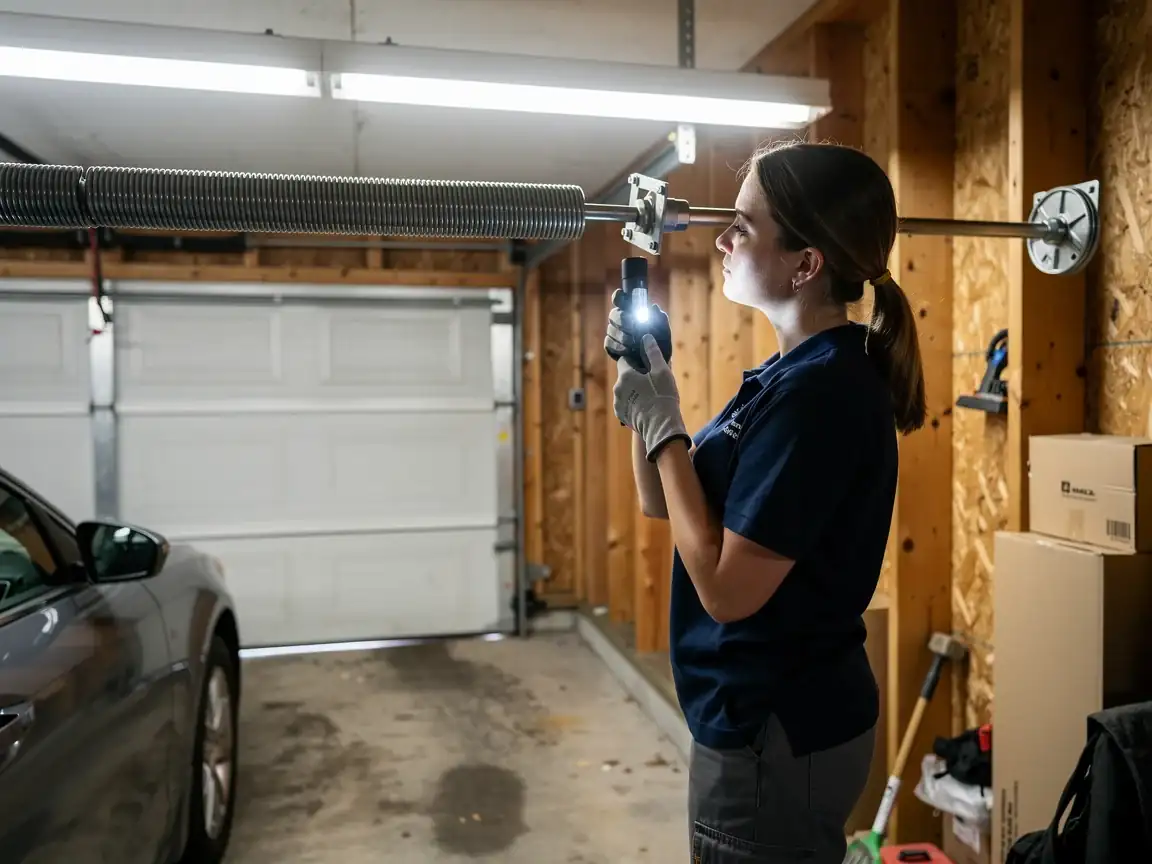
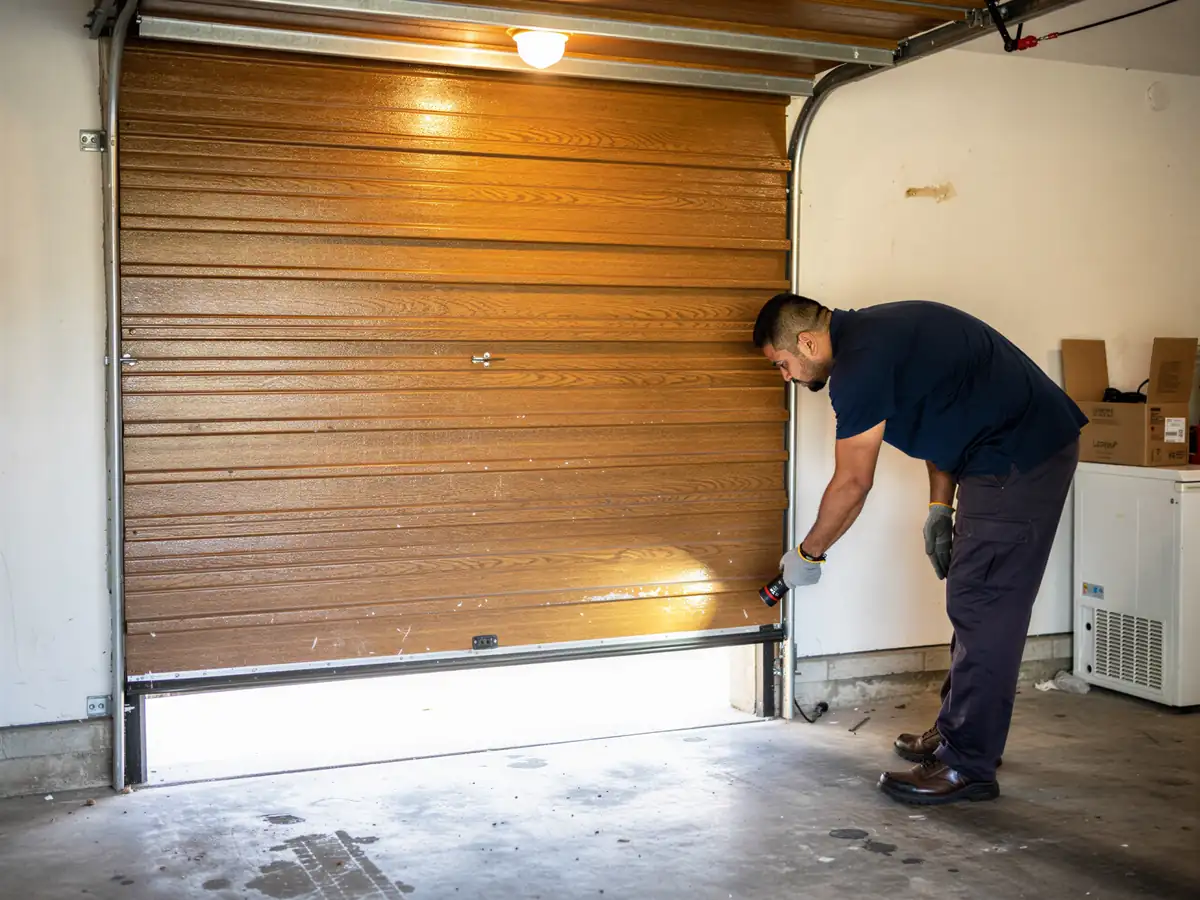
First we check whether the door is actually off the track or just binding against it
Since those look similar from across the garage but fix differently. If a roller has popped loose, we release tension, guide the panel back into the rail, and check the bracket torque before letting the door run again.
If the track itself is bent, we pull that section and replace it rather than trying to bend it straight
Because a straightened rail almost always drifts back out of true within a season. We also check the other rollers along the same side while we're in there. On a door built around 2001 that hasn't needed work until now, there's a decent chance the rest of the hardware is original too, and replacing one roller while its neighbors are about to fail the same way just means another call later.
Last step is a full open-and-close cycle test under load, not just a push by hand
Since that's the only way to catch a bracket that's still a little loose before you're the one finding out at six in the morning.