What Can Go Wrong
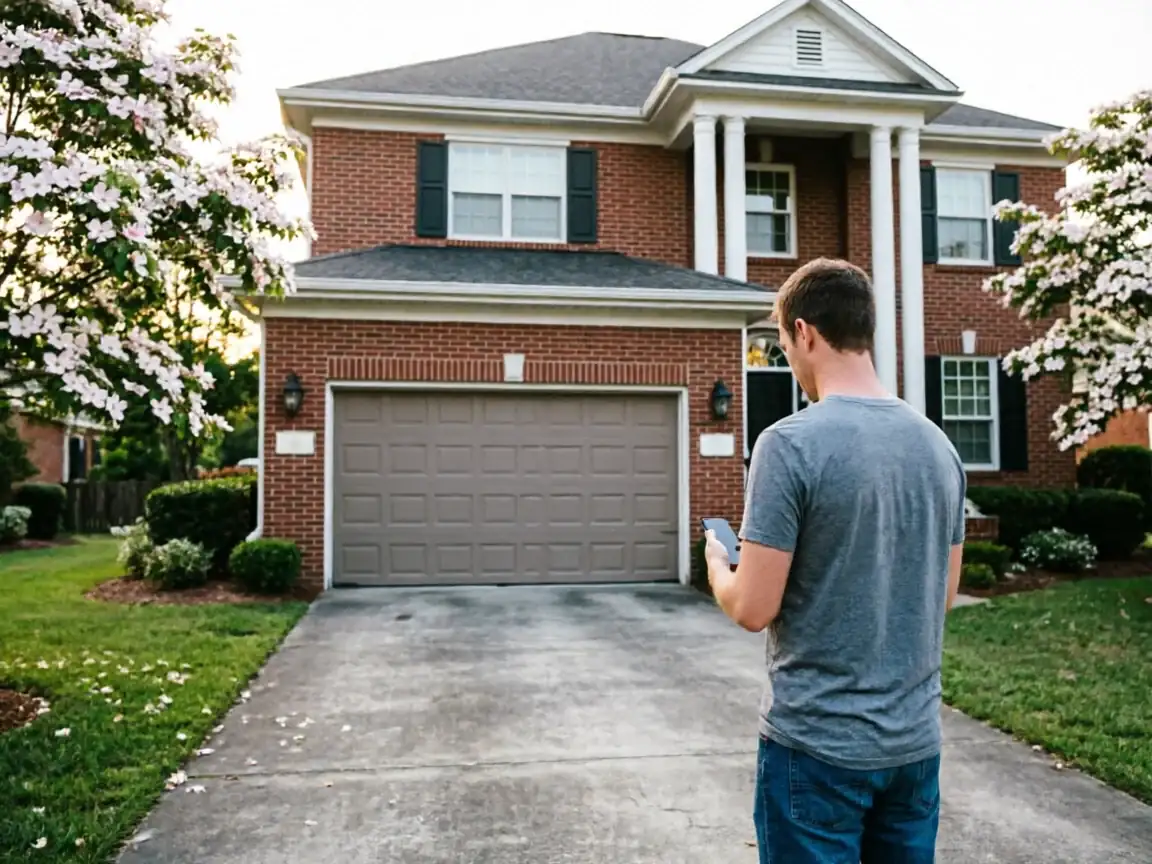
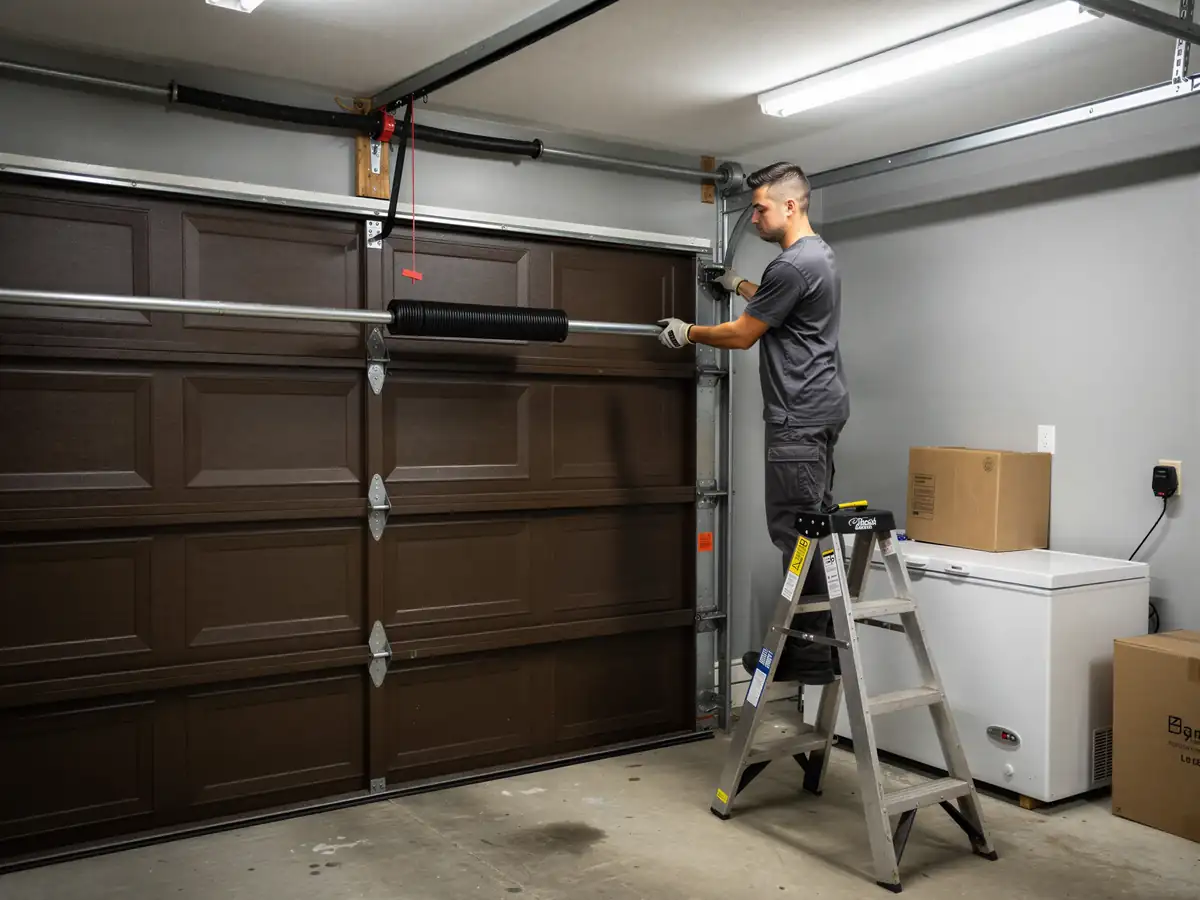
Most of the faults we get called out for in Duncan aren't the ones you'd expect from an older town. With a median build year around 2001, the doors here are younger than a lot of what we service closer to Greer, and that changes what fails first. You're looking at opener circuit boards aging out, photo-eye sensors drifting out of alignment after a decade or more of door travel, and torsion springs rated for lighter residential doors starting to lose tension right on schedule. It's wear, not neglect.
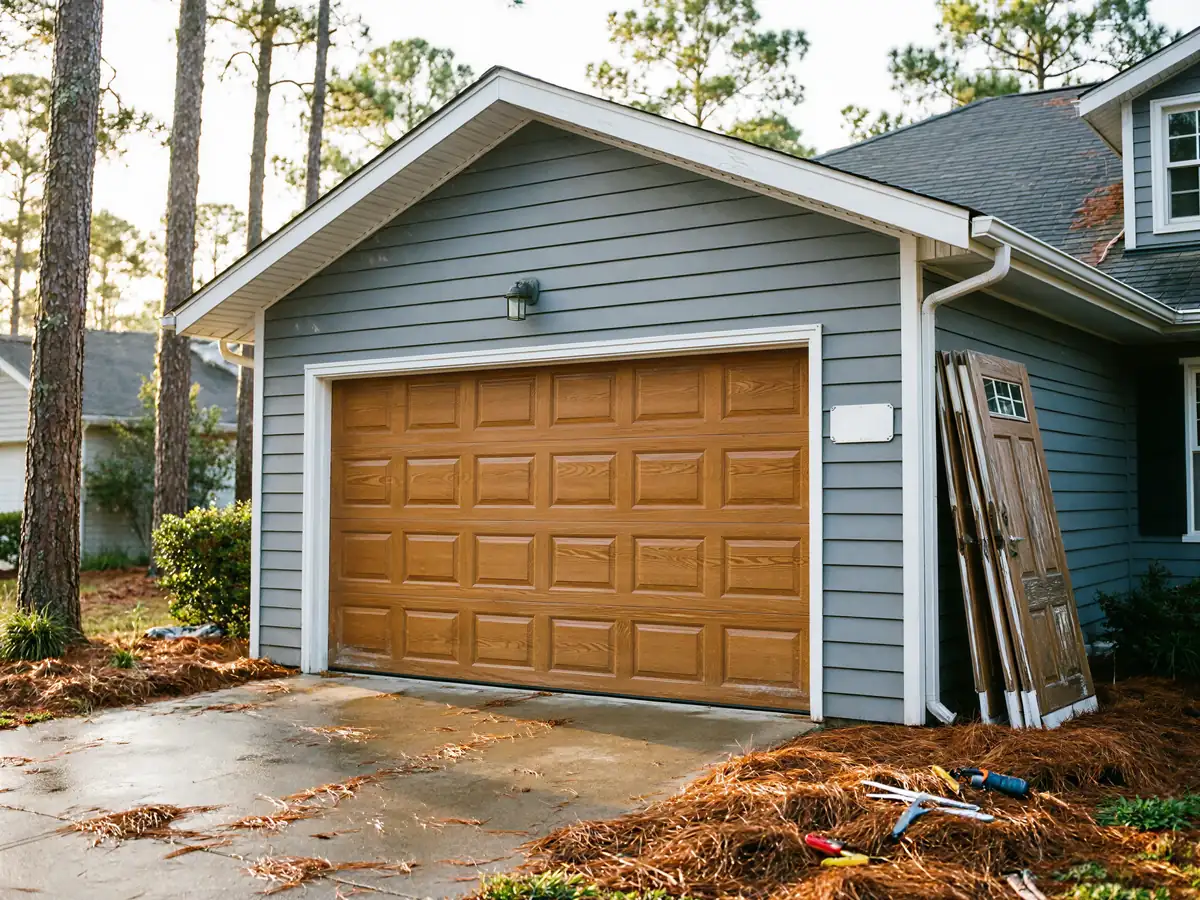
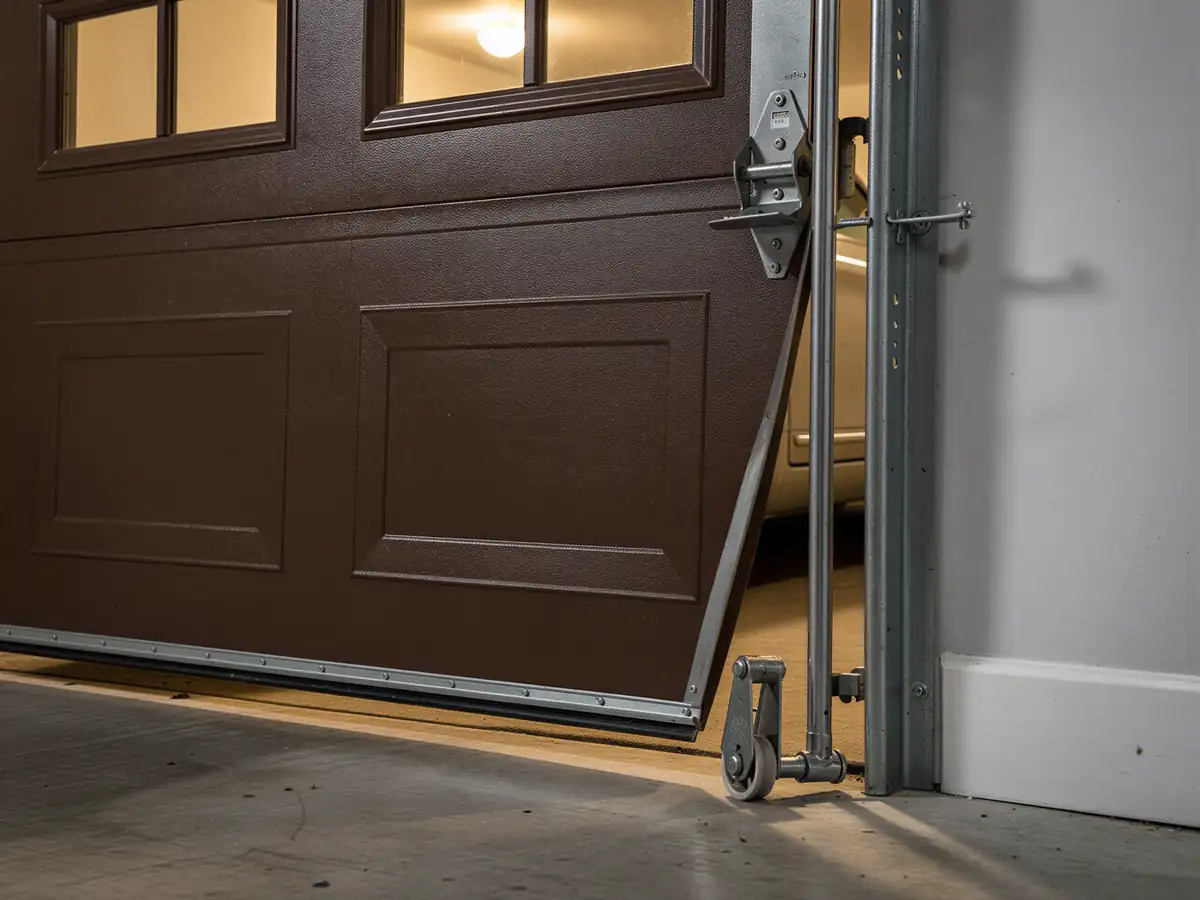
Because this stock went up mostly in the 1990s and 2000s rather than the 1960s-80s mix you see in older parts of the service area, you don't see the same volume of rotted wood jambs or single-piece doors on worn-out extension springs. What you do see is nylon rollers cracking, cable fraying at the drum, and openers that still work but chatter and reverse without warning. None of that fails loud. It fails quiet, until the spring lets go on a cold morning and the door won't move at all.
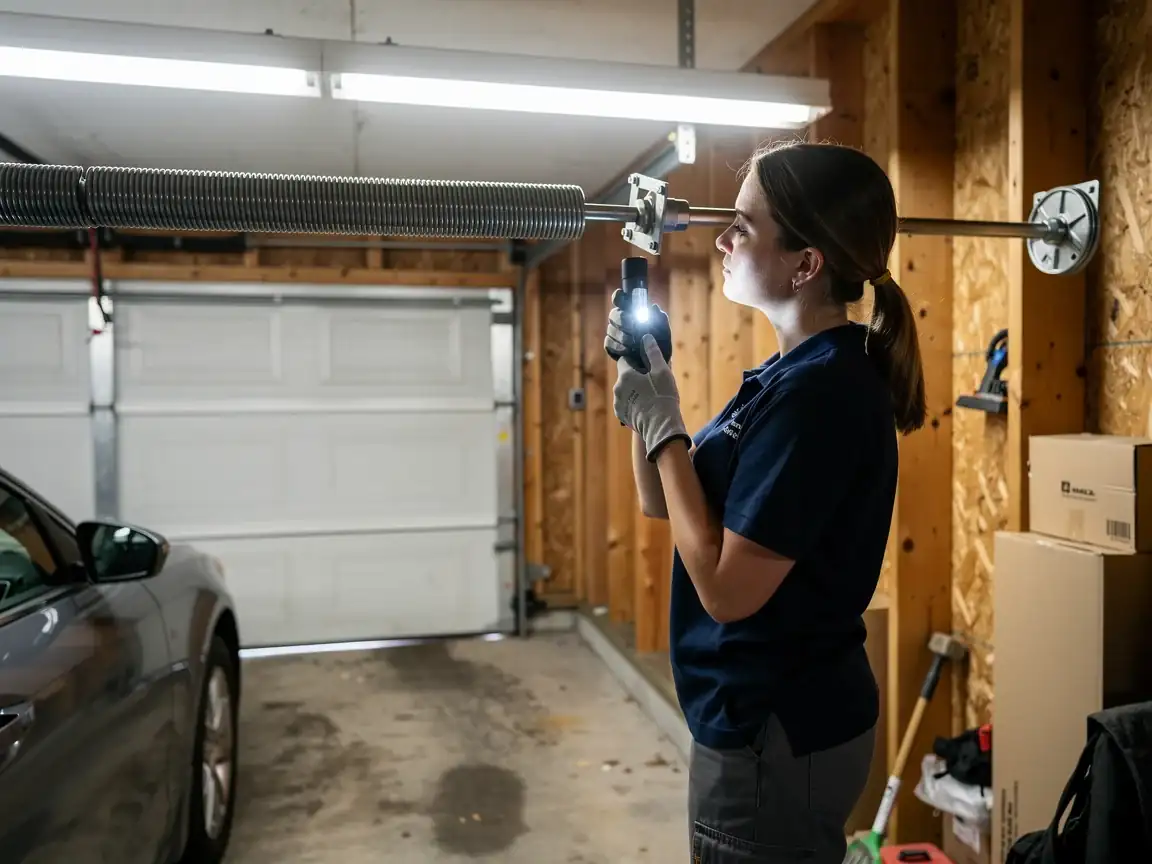
A maintenance visit catches most of this before it becomes a no-go call. We check spring tension, roller condition, track alignment, and opener force settings, and we adjust what's drifted instead of waiting for it to snap.
The DIY Question
There's a chunk of this job a homeowner can do without a torque wrench or a trip to the hardware store
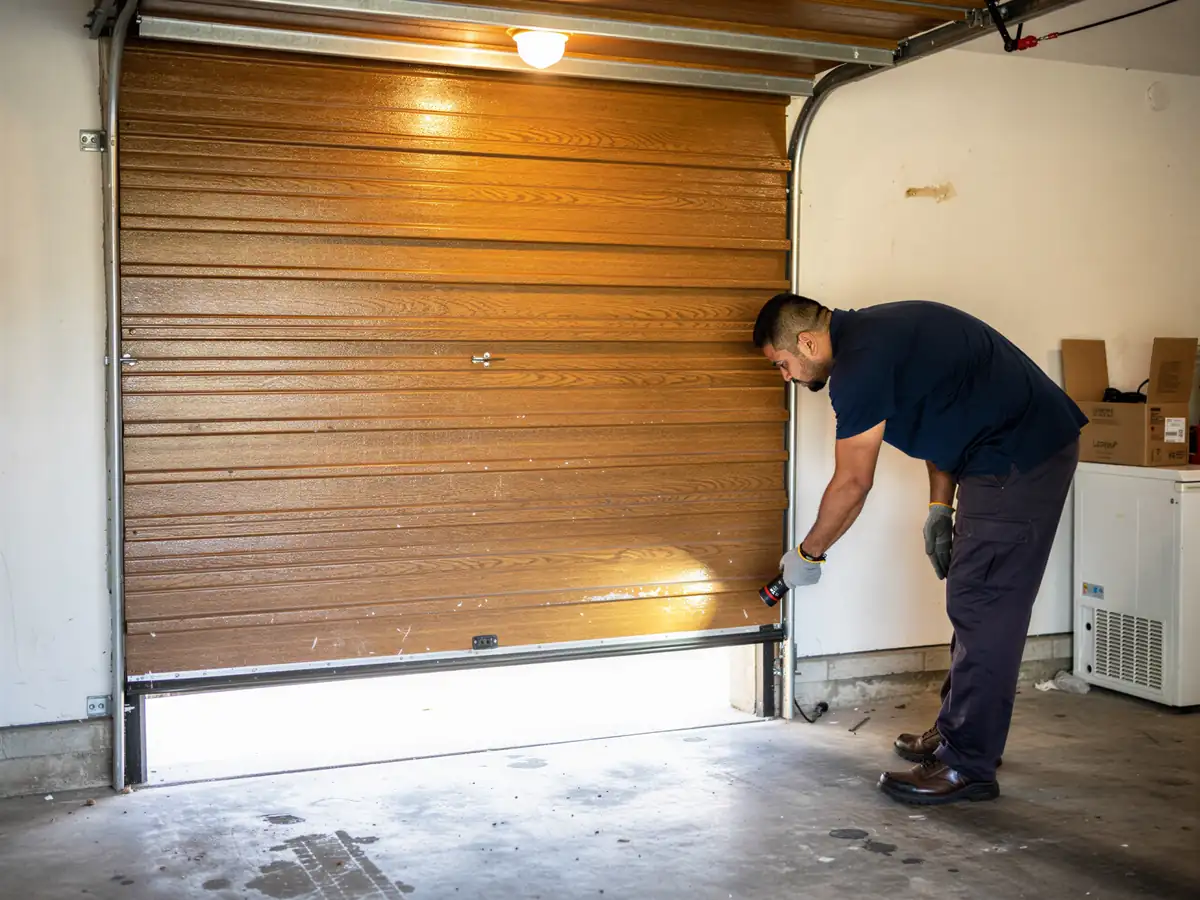
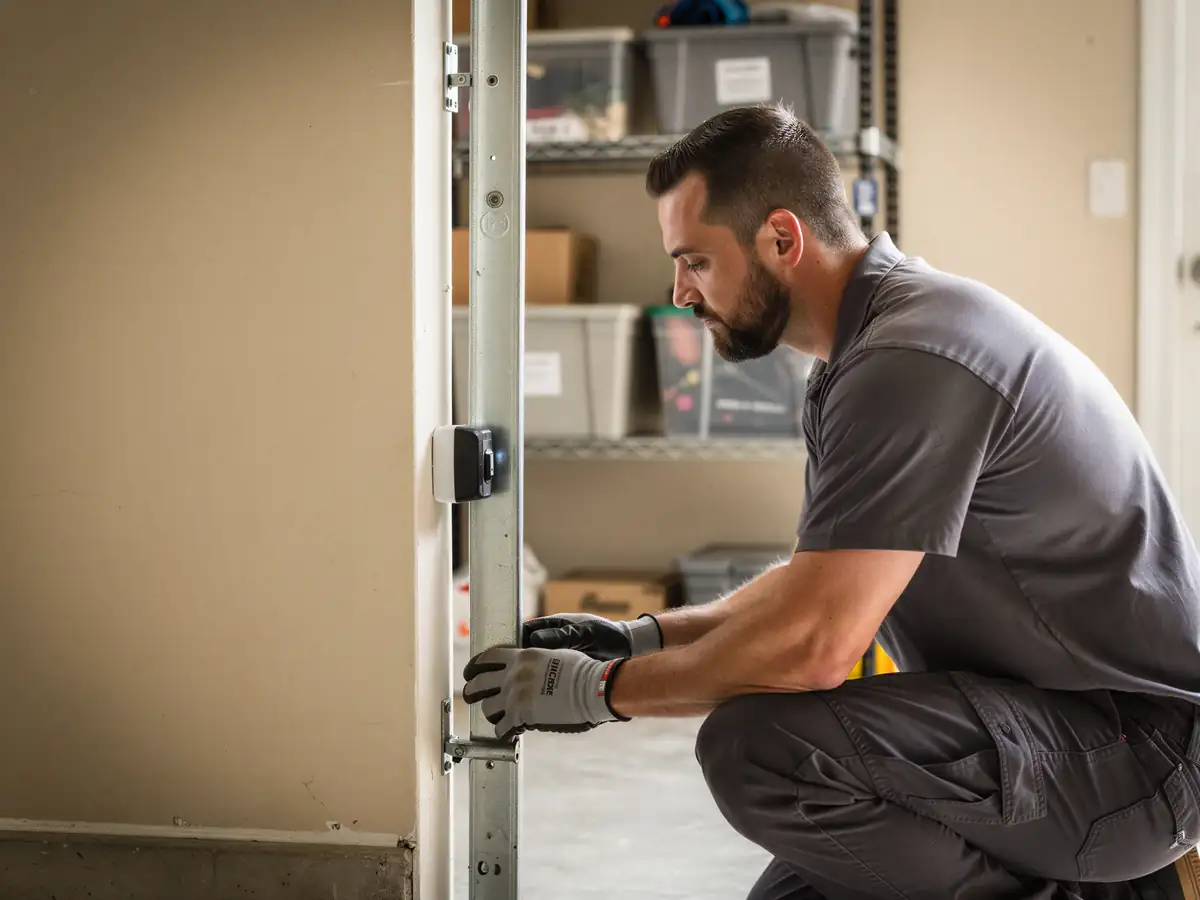
Wipe down the tracks, check that the photo-eye sensors are lined up and the lenses are clean, and listen for new grinding or popping sounds when the door runs. Lubricating hinges and rollers with the right product, not WD-40, is something most people can manage twice a year.
Where we tell people to stop is the spring
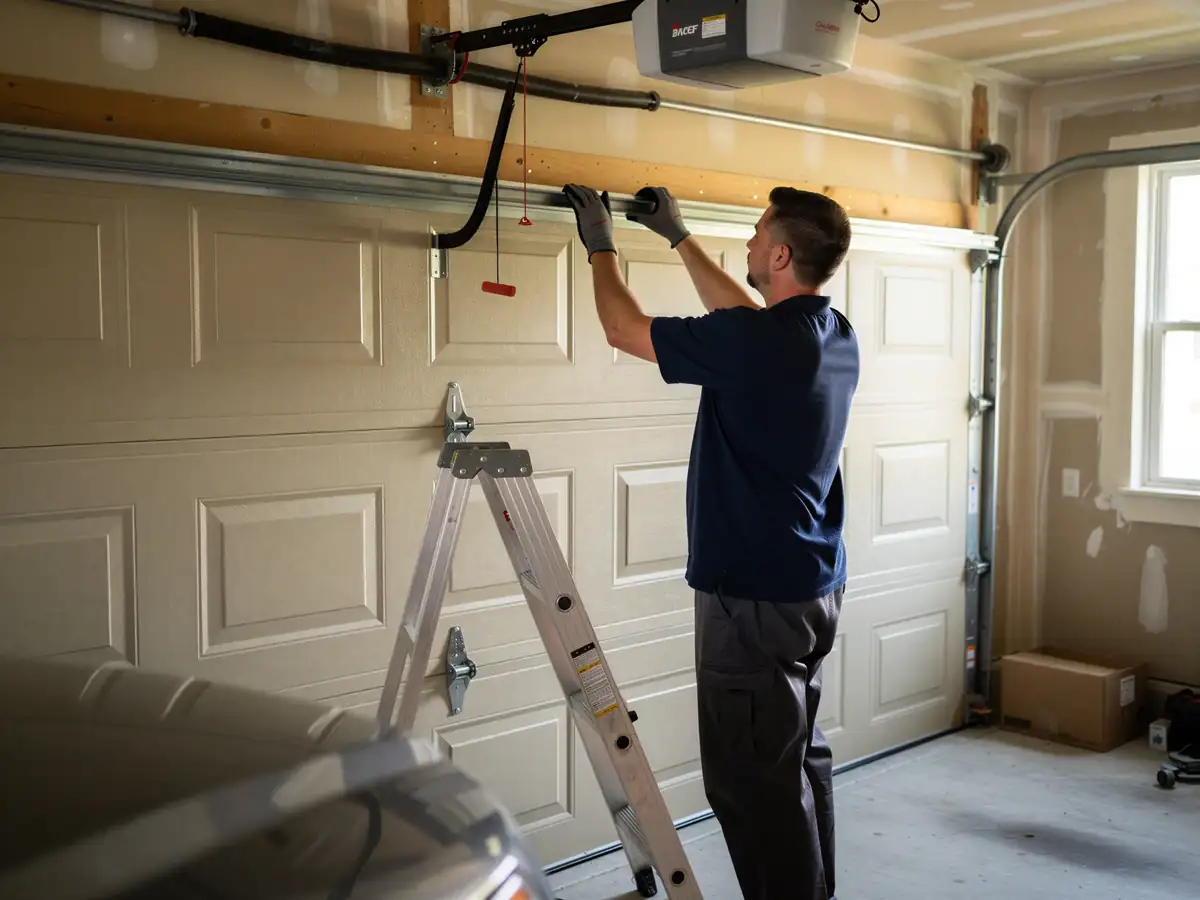
Torsion springs on a standard double door hold enough stored force to break a bone or worse if the winding bar slips, and that risk doesn't change because the door is newer. A 2001-built house doesn't mean a lighter-duty spring is any safer to touch than an older one - it just means it's probably closer to end of life if nobody's serviced it yet. Same goes for cable replacement and anything involving the bottom bracket under tension.
If your door is slow to respond, reverses for no reason, or the opener light blinks a code you don't recognize, that's an opener-logic issue
Not a tightening job. Those get worse with guesswork.
The Cost of This Job
We don't have a flat number to quote here, because what a maintenance visit costs depends on what we find once we're under the door. A straightforward tune-up, lubrication, sensor alignment, and tension check runs different than a visit where a cable's already frayed or a roller's seized. What we can tell you is that catching wear during a maintenance call is consistently cheaper than the emergency version of the same fix, because a spring that lets go under load usually takes a cable or a bottom bracket with it.
Duncan's median household income sits around $51,596, a bit below the wider service area's $55,671, and that's part of why we don't push replacement parts that aren't failing yet. A tune-up is built around what the door actually needs, not a checklist of upsells. If a part's got life left, we say so.
Booking a Visit
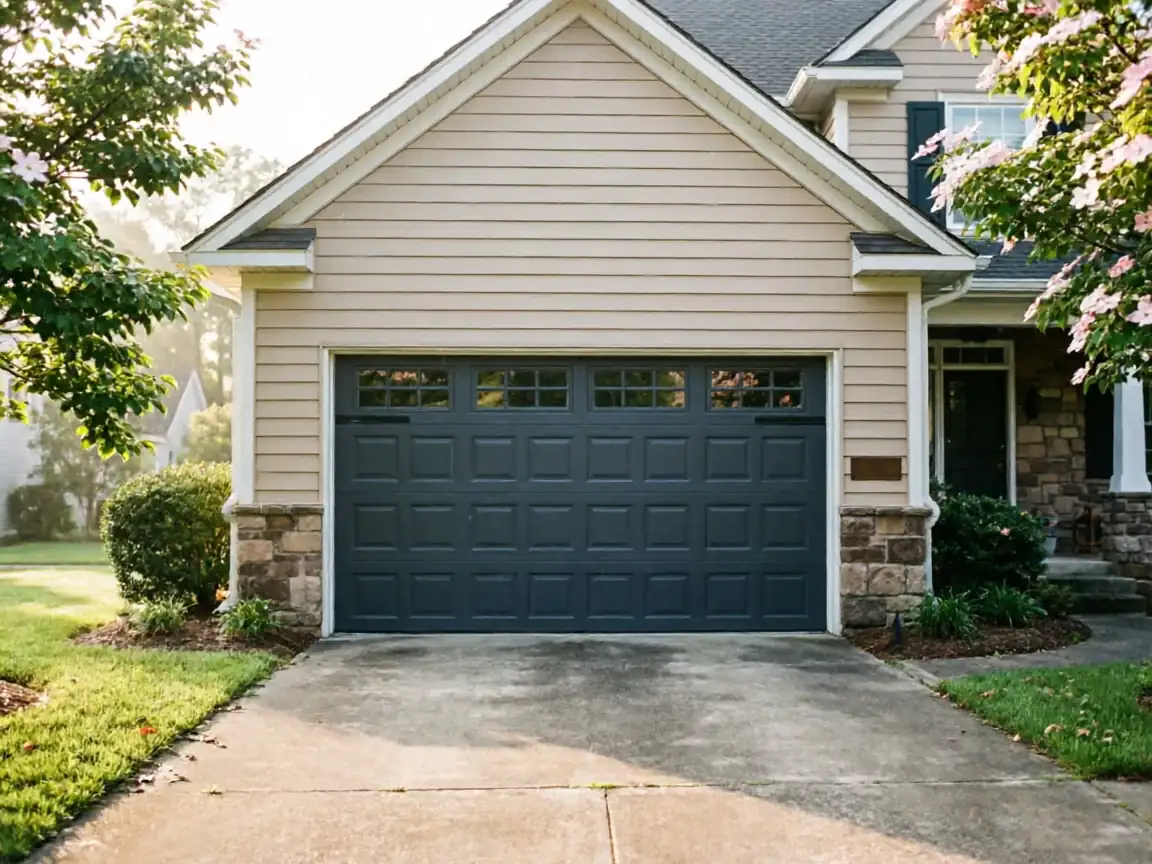
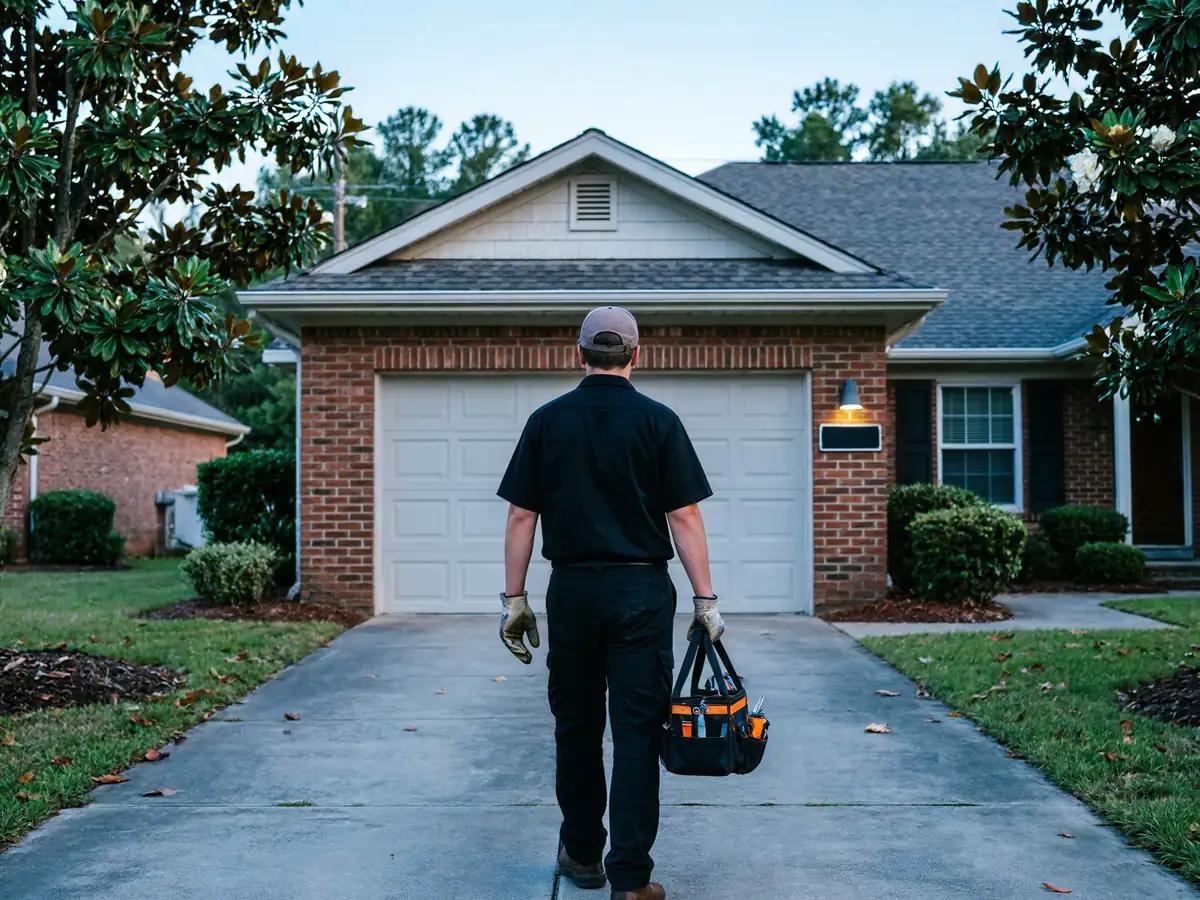
We cover Duncan out of Greer, about 5 miles up the road, so we're not running a local branch or promising a same-hour window here - we schedule the drive into the visit like we would any stop in the service area. With roughly 1,676 households in Duncan, most of them built around the same two-decade window, we see a lot of the same opener models and the same spring specs call to call, which makes diagnosing faster once we're on site.
You can book through our service area page for Duncan, and if you're after a broader look at everything we handle out of Greer, the Greer maintenance page covers the full list of services rather than just this one.
What the Fix Involves
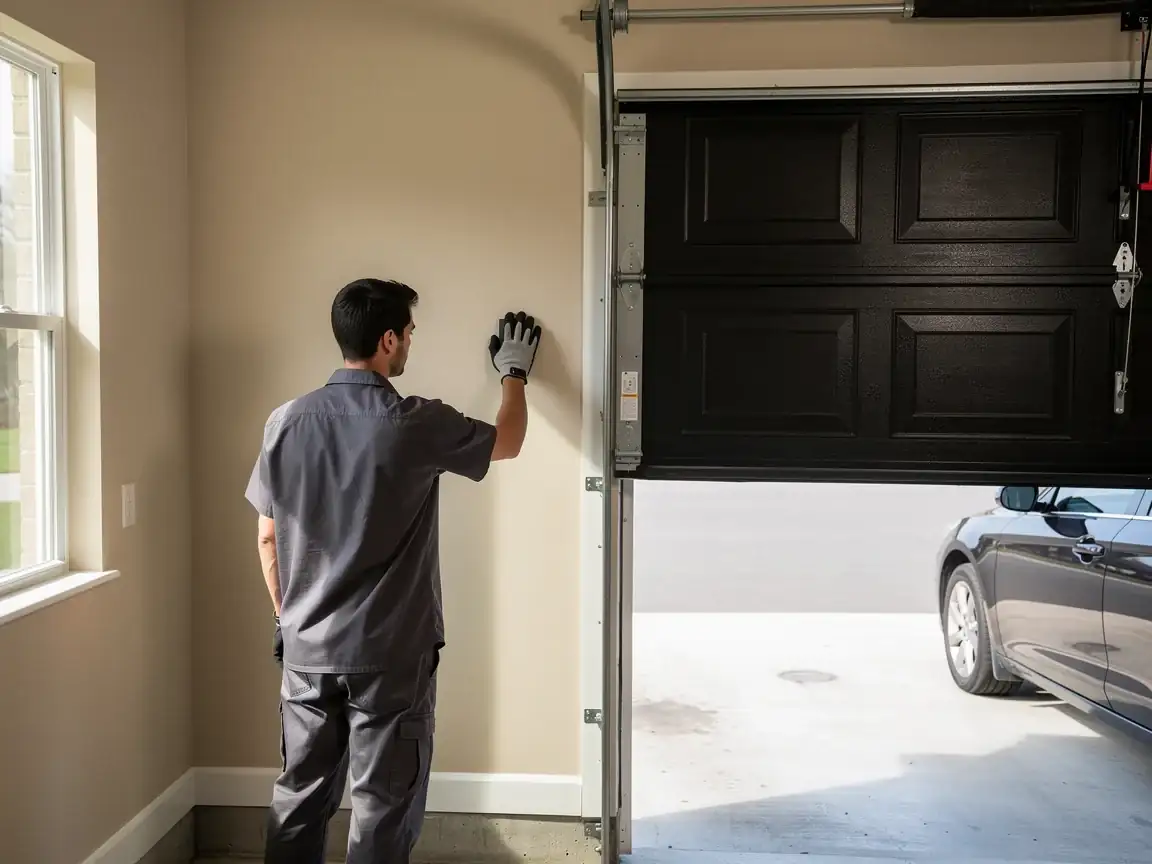
A standard maintenance visit on a Duncan door starts with a full cycle test
Watching the door open and close while we listen and watch for drag, binding, or off-balance travel. We check spring tension by hand, since a door that's out of balance by even a few pounds puts extra load on the opener motor every single cycle.
From there we inspect rollers and hinges for wear
Check cable condition at the drum and bottom bracket, confirm the photo-eye sensors are aligned and firing, and verify the opener's force and limit settings are set correctly for the door's actual weight - not just left on factory defaults from however many years ago it was installed. We lubricate moving metal parts with the right product for the weight and climate, tighten hardware that's worked loose, and flag anything that's close to failing but not worth replacing today.
We don't replace parts that still have service life left in them
If a roller's got another year or two in it, we'll say that instead of swapping it out to pad the invoice. That's the limitation worth knowing going in: a maintenance visit extends what you've got, it doesn't reset the clock on a door that's genuinely at the end of its run.